
Ever wondered how some websites seem to capture massive traffic spikes right when a topic explodes in popularity?
Google Trends is a powerful yet underutilized tool that reveals the bigger picture of search demand – showing you not just what people are searching for, but when and why those patterns change over time. While most SEOs focus solely on raw search volume data from keyword research tools, they’re missing crucial timing and context information that could dramatically improve their content strategy.
Well, in this comprehensive guide, we’ll be going over:
- How can you use Google Trends data to predict seasonal traffic opportunities months in advance?
- What complementary tools like Answer Socrates can extract even more actionable insights from trending topics?
- How can understanding search trend patterns help you capitalize on viral moments before your competitors?
Let’s dive into the strategies that major news outlets and savvy content creators use to stay ahead of the curve and capture massive traffic spikes.
Understanding Google Trends Data
Before diving into strategies, it’s important to understand what Google Trends data actually shows and how to enhance it with complementary tools.
Google Trends doesn’t display raw search volumes. Instead, it shows relative popularity on a scale of 0-100, with 100 being the peak popularity for that term.
For example, here’s what the trend line looks like for “gift ideas”:
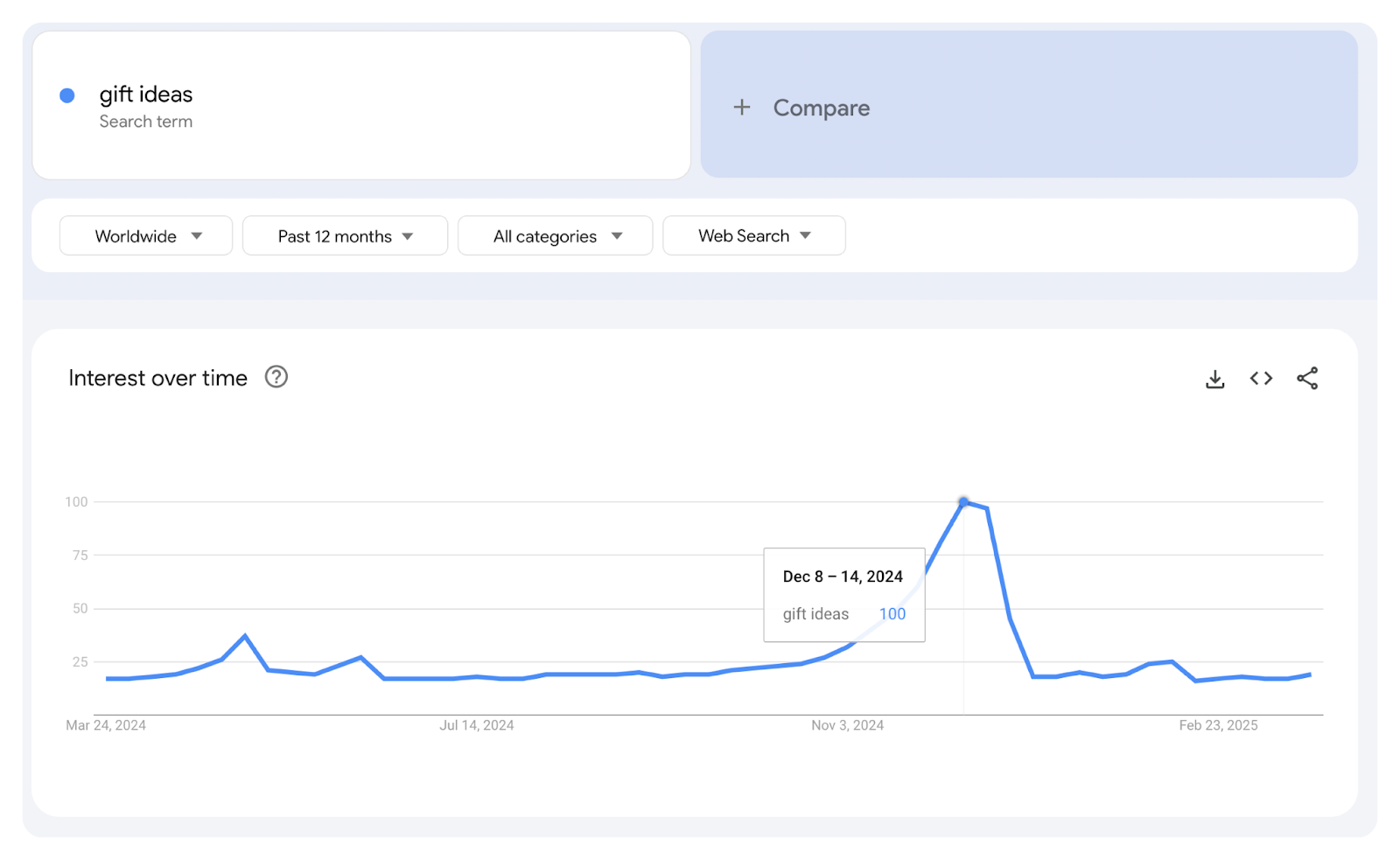
Notice the clear seasonal spikes every December? This pattern tells you when to start creating, updating, and promoting gift-related content.
To extract maximum value from trend data, pair Google Trends with Answer Socrates – a powerful trending topics tool that reveals the actual questions people are asking around trending topics.
This combination helps you not only identify trending topics but understand the specific information needs driving those trends.
Case Study: The Mike Tyson Glove-Biting Phenomenon
Let me share a perfect example of capitalizing on trend insights. During Mike Tyson’s fight against Jake Paul in 2024, savvy content creators noticed something interesting in real-time trend data: searches for “Why does Mike Tyson bite his glove?” were skyrocketing.
While most sports publishers focused on general fight coverage, websites that quickly published specific content about Tyson’s glove-biting ritual captured massive traffic. This wasn’t just a random spike – it represented genuine information needed. Viewers watching the fight were curious about this specific behavior and turned to Google for answers.
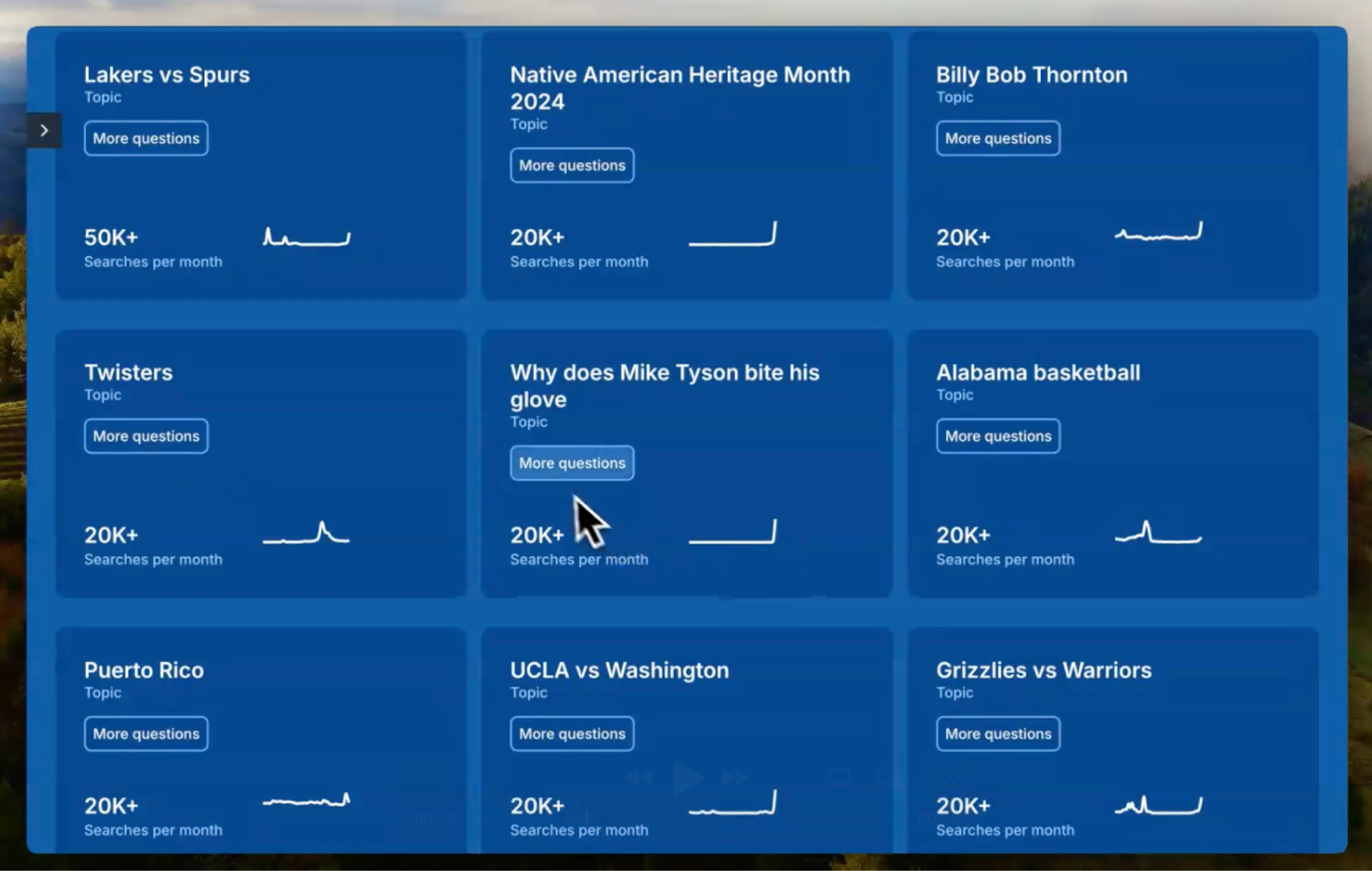
The publishers who identified this trend early and published targeted content saw:
- Significant Google Discover traffic
- Higher click-through rates than general fight coverage
- Content that continued to perform well after the event
This exemplifies “information gain” – identifying and filling a specific knowledge gap when interest is peaking. Major news outlets use this exact tactic to capture traffic during live events, product launches, and breaking news stories.
A friend of Answer Socrates, own’s a huge publishing business and used this tactic, and… these were the results 

Key Google Trends Features for SEO
1. Compare Multiple Search Terms
One of the most powerful features is the ability to compare up to 5 search terms:
- See which terms are growing vs declining
- Compare seasonal patterns
- Identify regional differences
- Spot emerging alternatives
For example, comparing “running shoes” vs “training shoes” vs “sneakers” shows you which term is most popular in different regions.
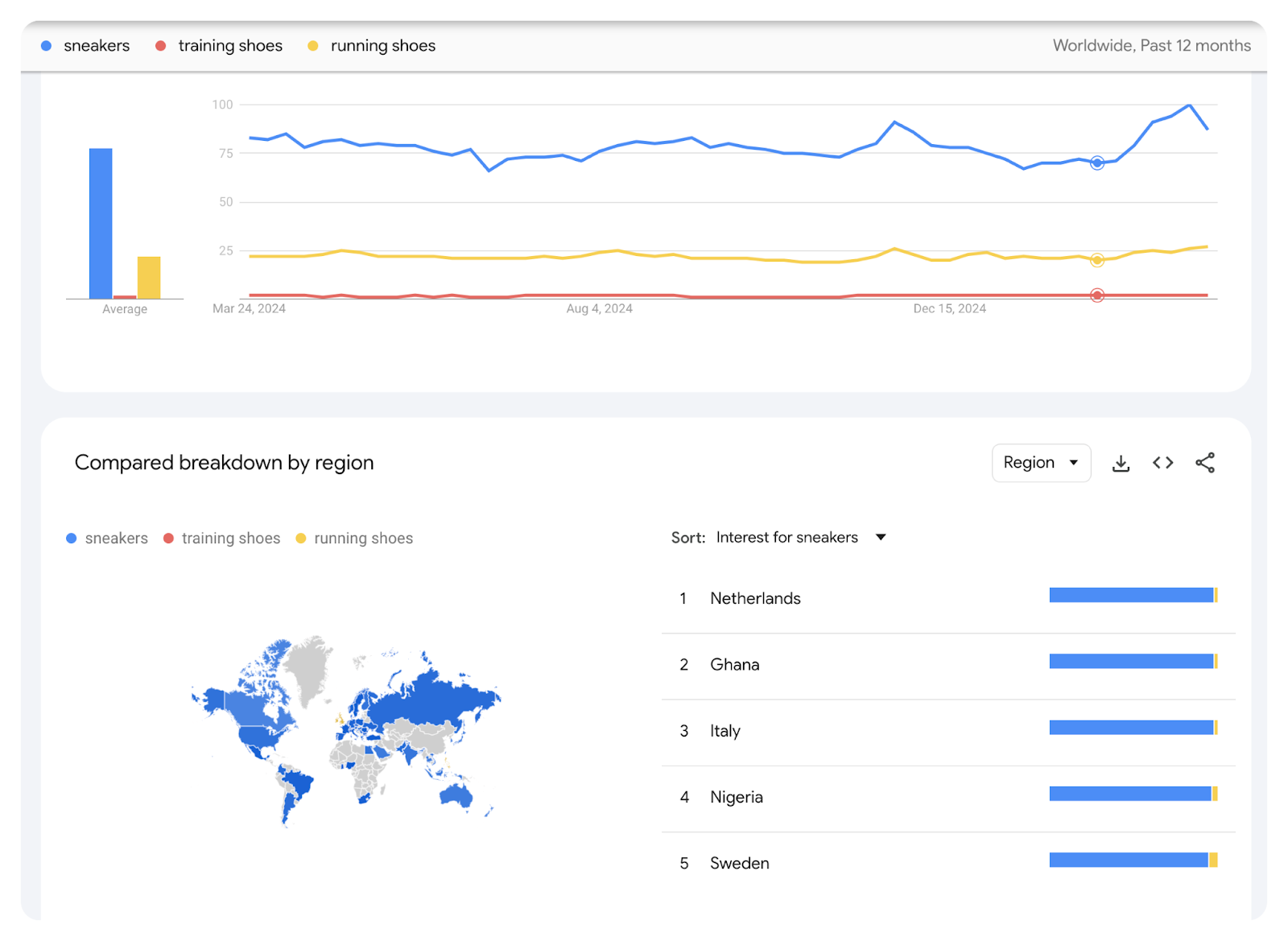
2. Analyze Geographic Data
Google Trends shows you where terms are most popular:
- By country
- By region/state
- By city
- By metro area
This helps you:
- Target local content
- Adjust language for different markets
- Find location-specific opportunities
3. Explore Related Topics & Queries
At the bottom of every Google Trends report, you’ll find:
- Related topics – broader themes people are interested in
- Related queries – specific searches people are making

This data helps you:
- Find new content ideas
- Understand user intent
- Spot emerging trends early

Strategic Ways to Use Google Trends
Here are proven ways to leverage Google Trends for better SEO results:
1. Plan Your Content Calendar
Use historical trend data to time your content:
- Look back 2-3 years to confirm seasonal patterns
- Start creating content 2-3 months before peak interest
- Begin promotion 1 month before the trend rises
- Have everything ready when demand peaks
Pro tip: If you get your content ready in a CSV upload it to our content calendar tool.
2. Find Growing Keywords
Instead of just chasing high-volume keywords, use trends to find terms with growing search interest:
- Enter your main keyword
- Check “Rising Related Queries”
- Look for terms marked “Breakout” or with high growth %
- Target these terms before they become competitive
3. Validate Keyword Choices
Before investing heavily in content, use Google Trends to validate your keyword strategy:
- Check if interest is stable, growing, or declining
- Look for seasonal patterns that affect timing
- Verify geographic relevance
- Compare against alternative terms
4. Identify Local Opportunities
Use geographic data to find location-based opportunities:
- Check where your target terms are most popular
- Look for regional variations in language
- Identify locations with growing interest
- Adjust content strategy for different markets
Advanced Google Trends Tactics
Once you’ve mastered the basics, try these advanced strategies:
Use Categories
Filter trends by category to get more accurate data. For example, “apple” means different things in different contexts:
- Computers & Electronics – Apple Inc.
- Food & Drink – The fruit
- Education – Teaching resources
Leverage YouTube Search Data
Google Trends includes YouTube search data, showing you:
- Video topic trends
- Seasonal video interests
- Growing video queries
This helps inform your video SEO strategy.
Combine with Other Data Sources
For best results, use Google Trends alongside:
- Other trending topics tools
- Traditional keyword research tools
- Google Search Console data
- Social media trends
- Industry reports
This gives you a complete picture of search behavior.
Real-World Application Example
Let’s see how this works in practice.
Say you run a fitness website. Looking at Google Trends reveals:
- “Home workout” peaks in January (New Year’s resolutions)
- “Beach body” rises in spring
- “Healthy holiday recipes” spikes in November-December
Using this data, you would:
- Create home workout content in October-November
- Launch beach body content in February-March
- Develop holiday recipe content in September-October
This ensures your content is ready when demand peaks.
Common Google Trends Mistakes
Avoid these common pitfalls:
- Only looking at short time periods
- Ignoring geographic differences
- Not filtering by category
- Missing seasonal patterns
- Focusing only on rising trends

Making Google Trends Part of Your SEO Workflow
To get the most from Google Trends:
- Check trends during keyword research
- Review seasonal patterns when planning content
- Monitor rising queries monthly
- Analyze geographic data quarterly
- Track year-over-year changes in your niche
Remember – Google Trends is most powerful when used as part of a comprehensive SEO strategy, not in isolation.
The key is using a tool for trend data to make better decisions about what content to create and when to promote it. Start implementing these strategies and you’ll stay ahead of seasonal changes and emerging opportunities in your market.
Have you used Google Trends for SEO? What insights have you discovered? Share your experiences with this post on social media.
Share:
About the Author