Let’s face it: In 2025, traditional SEO isn’t enough.
With AI Overviews, ChatGPT results, and Gemini summaries pulling content straight into the SERPs, we’re no longer just ranking webpages. We’re optimizing to be referenced by AI.
TL;DR: The Best GEO Tools Right Now is Answer Socrates. Full AI suite including tracking brand mentions, and it’s best for keyword discovery, clustering, for writing content LLMs can actually use.
This is what Generative Search Optimization (GEO) is all about:
➤ Showing up in AI Overviews (they steal over 35% of clicks)
➤ Getting mentioned by ChatGPT, Claude, Perplexity, and Gemini
➤ Structuring content so it’s used by large language models (LLMs) as reference material
And if you want to stay ahead of these new AI search engines, you need tools built for this shift.
We tested a stack of GEO tools — and two stood out.
Here’s the full breakdown 👇
🔍 Quick Comparison Table
| Tool | Starting Price | Best For | Key Strengths | Caveats |
| Answer Socrates | Free – $49/mo | SEOs, content teams, bloggers | 1,000+ questions/cluster; LLM brand tracking | No backlink tools |
| SEOTalos | $29 – $59/mo | Hybrid traditional + GEO workflows | AI Overview visibility, SEO testing, annotations | Still building AI coverage |
| WorkDuo.ai | $33 – $299/project/mo | AI brand tracking across LLMs | Multi-model tracking, regional filters, unlimited seats | No SEO/backlink tools; tracking limits |
| Perplexity Pro | Free / $19.99/mo | Visibility in Perplexity & AI Overviews | Proprietary keyword recall; real-time prompt data | Limited trend insights |
| Semrush AI Toolkit | $119.95/mo (add-on) | Share-of-voice + AI sentiment | Covers AI Overviews, ChatGPT, Gemini, Copilot | Expensive tiers; steeper learning |
| Hall | Free tier / $99/mo | Multi-model LLM citation & agent analytics | Tracks brand in ChatGPT, Perplexity, Google Overviews, and more | Enterprise plan restricts platform |
| Profound | Custom pricing | AI search volume + deep analytics | Search-volume estimates, ChatGPT Shopping tracking | Cost prohibitive for SMBs |
| LLMrefs | Free – $79/mo | AI Search ranking by keyword across LLMs | LLMrefs Score, multi-model tracking, real‑time keyword = SERP data | Fewer trend analysis features |
| SE Ranking | $129/mo | Hybrid SEO/GEO Campaigns | Competitor benchmarking; Unified dashboard | No citation sentiment data yet |
1. Answer Socrates – Best for GEO Keyword Discovery
Answer Socrates started as a keyword idea tool, but in recently it’s become a full GEO powerhouse.
If you want to own SERP coverage before the AI even answers, this is your tool.
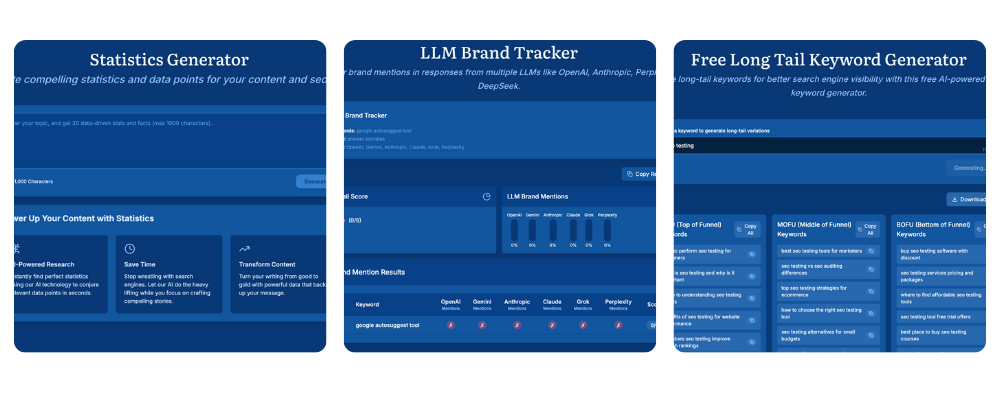
You can input a seed keyword and it reverse-engineers what users are searching for, you get thousands of autocomplete-based questions (real user queries) then cluster them, export them with volume/CPC/competition, and even run wildcard searches with their DeepSeek engine.

What sets it apart?
→ It tracks if your brand is showing in ChatGPT, Claude, Gemini, DeepSeek, Grok, Deepseek, and Perplexity.
→ It helps you find keywords specifically to be cited by LLMs.
Perfect for finding GEO-friendly keywords and structuring content to feed AI systems.
What You’ll Love:
- Clusters 1,000+ keyword questions in seconds
- CSV exports with SEO metrics
- Trending Topics Engine for fresh angles
- LLM Brand Tracker to see if your site appears in AI results
- AI suite includes Title Generator, Stat Generator, Content Hooks
Drawbacks:
- Doesn’t offer backlink analysis
- Free plan limited to 3 searches/day
Best For:
- Blog writers
- SEO strategists
- YouTube/TikTok content planners
- Founders creating new content workflows
Price:
- Free: 1,500 credits/month
- Pro (Seneca Plan): $29/month – 12,000 cluster credits, 500 searches, full AI suite access
👉 Try Answer Socrates for Free if you want to start with keyword clusters optimized for AI.
2. SEOTalos – Best AI Mode & AIO Tracking
SEOTalos is the first SEO testing platform built for the post-AI search era.
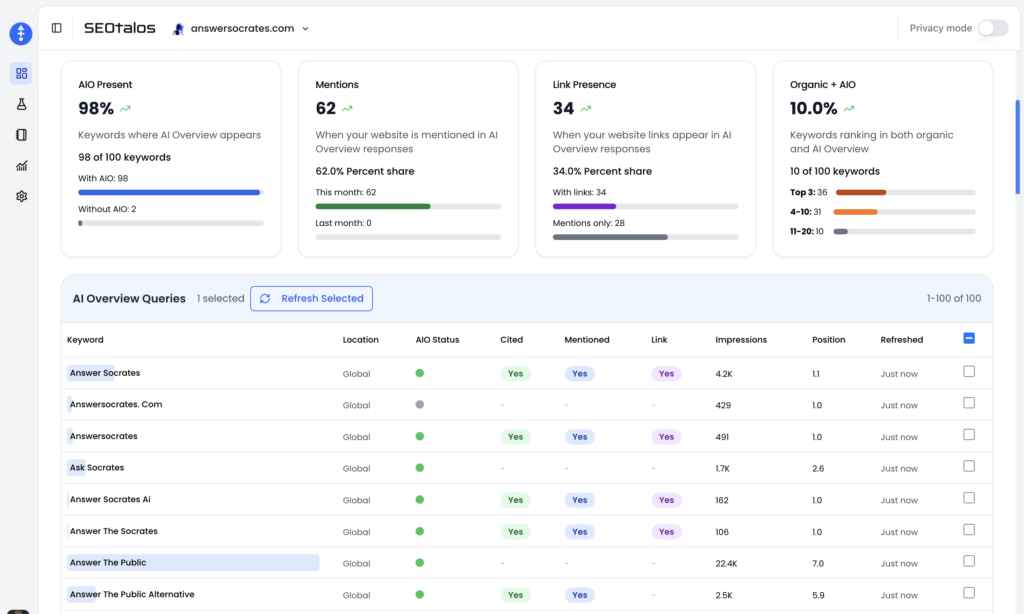
You can monitor your site’s presence in Google’s AI Overviews, run controlled SEO tests using your real Google Search Console data, and even past algorithm updates. ALL across multiple domains in one dashboard.
It’s built for SEO professionals and agencies who want to know what’s actually driving traffic now that AI summaries are competing with traditional blue links.
It also lets you annotate updates, track core algorithm impacts, and group pages into topic clusters or content groups for better testing.
What You’ll Love:
- Tracks AI Overview mentions automatically
- Run SEO tests on URLs, clusters, or entire sites
- Tag-based organization, Google update overlays, privacy blur
- Built for agencies: team permissions, KPI overlays, quick regex filters
Drawbacks:
- Only keyword research with GSC data (use Answer Socrates alongside it)
- Requires GSC connection
Best For:
- Sites hit by AI Overview drops
- Site portfolio owners
- SEO agencies and consultants
- Advanced SEOs testing site changes
Price:
- From $29/month
- 7-day free trial (no credit card)
3. WorkDuo.ai – Best for AI Brand Tracking Across Generative Models
WorkDuo.ai is a tool built to help brands monitor their visibility and mentions across multiple AI search responses and generative models. Instead of focusing on classic SEO alone, it tracks how often your brand, product, or chosen entities show up when different AI models generate answers like ChatGPT,
Perplexity, or others. This kind of visibility tracking is becoming a core pillar of brand SEO as AI systems increasingly shape how users discover and trust brands.
WorkDuo lets you define tracking entities and watch how frequently those entities are referenced across selected models and regions, giving you insights into AI search exposure, not just organic rank.
What You’ll Love
- Track up to 20 entities per project, with extended coverage on higher plans
- Monitors responses from multiple AI models (varying by plan)
- Regional model tracking to see how generative engines perform in different geos
- Unlimited user seats even on lower tiers
Drawbacks
- No traditional SEO rank tracking or backlink insights
- Tracking quotas on lower plans
How It’s Commonly Used
- Measuring brand visibility in generative AI responses
- Comparing entity mentions across multiple AI models and regions
- Identifying which AI responses include your tracked terms most often
Perfect For
- Brands concerned with AI search visibility
- SEO/marketing teams monitoring AI citation trends
- Agencies managing entity exposure for multiple clients
Price
- Starter: $33/project/mo
- Basic: $99/project/mo
- Pro: $299/project/mo
4. Perplexity Pro – Best for Real-Time Source Monitoring
Perplexity is technically a research assistant, but its Pro plan gives you visibility into the sources it uses — and whether your content is one of them.
Why It Works
- Perplexity is used in Google SGE-like results
- You can test queries, monitor mentions, and adjust based on coverage
What You’ll Love
- Fast citation-based tracking
- Great for branded GEO tracking
- Real-time interface with copyable answers
Drawbacks
- No SEO tools
- Source panel sometimes hides exact citations
Price
- $20/month
5. Semrush AI Toolkit – Best for Enterprise GEO Campaigns
If you’re running large-scale SEO and brand visibility efforts, Semrush’s AI Toolkit is one of the most robust platforms for tracking performance across traditional and generative search engines.
It monitors Google AI Overviews, ChatGPT, Gemini, and Microsoft Copilot to see how often your brand is mentioned and linked in AI-generated content. You also get share-of-voice data, prompt analysis, and competitive gap tracking to help you stay ahead of rival brands in AI search.
What You’ll Love
- Tracks visibility across multiple LLMs and AI-powered search results
- Includes prompt-level insights and citation tracking
- Competitive benchmarks show how often you’re mentioned vs. other top domains
- Helps identify content gaps most likely to trigger AI Overviews
Drawbacks
- High learning curve for non-enterprise users
- Expensive for small teams and solo SEOs
How It’s Commonly Used
- Enterprise SEO + AI visibility reports
- Monitoring brand mentions across AI search models
- Competitor analysis and strategic content planning
Perfect For
- Large brands
- Agencies managing high-budget clients
- Teams with established SEO workflows looking to expand into AI search
Price
Starts at $119.95/month (AI Toolkit add-on required for full GEO functionality)
6. Hall – Best for Real-Time AI Mentions Across LLMs
Hall is one of the most complete GEO tracking platforms, designed to monitor how your brand is referenced across generative engines like ChatGPT, Perplexity, Gemini, Grok, and other conversational agents.
You’ll get exact citation locations, agent-level analytics, and domain-level visibility scores — all neatly visualized in dashboards and updated as models change their behavior.
What You’ll Love
- See precise snippets where your brand is mentioned in AI answers
- Supports multi-agent tracking, not just OpenAI or Google
- Provides visibility scoring, endorsement tracking, and exportable insights
Drawbacks
- Full access is limited to paid plans (free tier has feature limits)
- May overwhelm small teams with its level of depth
How It’s Commonly Used
- Tracking LLM-based brand visibility
- Reporting on multi-model SEO performance
- Surfacing citations and prompts used in generative content
Perfect For
- GEO-focused SEOs
- Reputation and brand managers
- Content teams that want to monitor impact across AI tools
Price
Free tier available. Paid plans start at $99/month
7. Profound – Best for AI Search Volume + Product Tracking
Profound is an enterprise-grade AI visibility platform focused on ChatGPT Shopping, keyword-triggered AI search volume, and trend forecasting across LLMs.
Its unique Conversation Explorer reveals how often certain questions or phrases return branded mentions. You also get agent-level breakdowns and compliance-grade infrastructure.
What You’ll Love
- See search volume estimates for AI-generated answers
- Tracks brand/product mentions inside ChatGPT Shopping
- Includes SOC 2 compliance and advanced API access
- Conversation-level logs reveal how and where keywords appear in context
Drawbacks
- Expensive (no public pricing for smaller businesses)
- Lacks the DIY usability of lightweight GEO tools
How It’s Commonly Used
- Monitoring product mentions in LLM eCommerce queries
- Enterprise-level AI SEO tracking
- Supporting market intelligence teams with keyword + answer data
Perfect For
- eCommerce brands
- Fortune 500s and large content teams
- Agencies with enterprise clients
Price
Custom enterprise pricing (no free tier)
8. LLMrefs – Best for Weekly AI Search Keyword Tracking
LLMrefs offers one of the cleanest ways to see how your keywords rank across ChatGPT, Gemini, Perplexity, Claude, Grok, and other LLMs.
It gives you a unique LLMrefs Score that shows keyword consistency across models. Great if you want ongoing visibility tracking, CSV exports, and lightweight GEO reporting without bloated features.
What You’ll Love
- Weekly tracking of keywords across 5+ LLMs
- LLMrefs Score highlights cross-model keyword consistency
- Lightweight interface with CSV exports + team access
Drawbacks
- Fewer content or trend forecasting tools
- Doesn’t include citation context (like Hall does)
How It’s Commonly Used
- Keyword visibility monitoring in generative search
- GEO report building for internal or client use
- Lightweight tracking across AI answer engines
Perfect For
- Bloggers and affiliate site owners
- GEO beginners
- Teams with limited GEO budgets
Price
Free tier (1 keyword). Paid plans from $79/month with more keywords + team features.
9. SE Ranking – Best for Competitor AI Benchmarking
SE Ranking is excellent for tracking your own AI performance, but where it really stands out is spying on your competitors. While many tools just tell you if an AI Overview appeared, SE Ranking tells you exactly who was cited in it.
It is used to track brand presence across ChatGPT, Perplexity, AI Mode, AI Overviews, and Gemini side-by-side with standard Google rankings. It’s particularly good for agencies who need to show clients hard data that proves “we are losing ground to Competitor X in AI results.”
What You’ll Love
- See standard Google rankings and AI citations in a unified dashboard.
- Identifies exactly which competitors are winning AI answers for your target prompts.
- Tracks mentions in ChatGPT, Perplexity, and Gemini, not just Google AI.
Drawbacks
- Doesn’t include sentiment analysis, only cached answer copies to check responses.
- It can be a little complex for solo bloggers who just need simple keyword ideas.
How It’s Commonly Used
- Creating “share of voice” reports to show AI market share.
- Monitoring which specific content types (like tables or lists) trigger AI citations.
- Agency reporting that combines SEO and GEO metrics.
Perfect For
- Mid-sized agencies managing hybrid SEO/GEO campaigns
- Deep competitor analysis
- Brands needing specific “share of voice” data
Price
- Standard plans start at $129/mo and include AI search features.
- AI Search Add-on offers more limits and features (starts around ~$70/mo extra).
Why GEO Tools Matter in 2025
Google’s AI Overviews, SGE experiments, ChatGPT Browse, Perplexity and Claude are rewriting the rules of discovery. Brands now fight to be cited inside an answer, not just ranked in blue links. That shift has triggered a new wave of Generative Search Optimization (GEO) platforms designed to:
Monitor how often LLMs name-drop you for brand visibility, reveal which sources earn those citations, and show you exactly how to tweak pages, entities and prompts to win more AI real estate.
The market is noisy, so we scored each leading tool on the metrics that matter most for GEO success: Citation Coverage, Prompt-Level Tracking, AI-Channel Breadth, Ease-of-Use, Pricing Flexibility and “Rank Potential?” (our forward-looking gut check on how well a tool can keep up with LLM volatility).
Verdict: What’s the Best GEO Tool in 2025?
✅ For discovering AI-friendly keywords and clustering them into strategic content plans. Go with Answer Socrates.
✅ For testing SEO changes and tracking AI Overview performance, get SEOTalos.
Together, they give you everything you need to win in the new GEO era.
→ Want to become the source that LLMs pull from?
→ Want to track if your content is referenced in AIO search?
These are the two tools you’ll need.
Let me know if you want a version tailored to beginners, enterprise teams, or affiliate marketers.
FAQ: Addressing Your Top GEO/AIO Questions
What is Generative Engine Optimization (GEO)?
GEO stands for Generative Engine Optimization. The practice of optimizing your content to appear in AI-generated answers across platforms like Google’s AI Overviews, ChatGPT, Perplexity, Claude, and others.
It focuses on:
- Being cited as a source in AI summaries
- Structuring content in ways LLMs prefer (clear, factual, concise)
- Increasing visibility where AI is replacing traditional blue links
What’s the difference between GEO, LEO, and VEO?
These are shorthand for SEO within distinct AI/engine ecosystems:
- SEO: Optimizing for traditional search engines like Google SERPs.
- GEO (Generative Engine Optimization): Optimizing for AI-generated answer formats, like ChatGPT, Gemini, Perplexity, etc., focusing on citation visibility rather than ranking position.
- LEO (Local Engine Optimization): Optimization for local AI-powered answer services (e.g. Alexa Routines, Siri responses, Google Business AI), prioritizing local-based AI answers.
- VEO (Voice Engine Optimization): Optimization for voice assistants (Google Assistant, Alexa, Bixby), where short, spoken回答 and featured snippets often appear.
These overlap: a well-structured AI-ready article can show up in GEO, LEO, and VEO contexts if optimized correctly.
Can I appear in Google’s AI Overviews with traditional SEO?
Absolutely! A well-ranking page can be cited within an AI Overview without being clicked, especially if it delivers strong authoritative signals and structured answers formatted for AI summarization.
Even Google’s own algorithm changes emphasize structured FAQ blocks, bulleted answers, and authority content as key to AIO inclusion. So traditional SEO still matters, but your content also needs to be AI-ready.
However, Google’s AI Overviews often:
- Ignore rankings and pull from sites far below the top 10
- Favor structured answers, statistics, and paragraph summaries
- Cite forums, UGC content, and niche expert pages that don’t always win in organic search
What content does Google AI Overview prefer?
Early analysis shows Google prefers:
- Clear, concise summaries (100–200 words)
- Paragraphs that answer “best,” “how to,” and “comparison” queries
- Structured data (like FAQs, tables, pros/cons)
- Posts from high-authority and topic-relevant domains
But many lower-authority pages also get pulled, if they’re formatted well and match search intent.
How do I know if my content is being used in AI Overviews or LLMs?
You’ll need GEO tracking tools. For example:
- SEOTalos tracks mentions of your brand/pages in AI Overviews across your entire site
- Answer Socrates tracks mentions of your brand in LLMs
- You can also test directly with Perplexity, Claude, or Google Labs, but this doesn’t scale
How do I optimize content for LEO (Language Engine Optimization)?
For LEO, your goal is to be part of the training or retrieval layer of language models. That means:
- Creating expert-level content around entities (people, brands, topics)
- Using clear metadata and author credentials
- Publishing data, statistics, and cited claims
- Avoiding AI-incoherent text (LLMs often skip fluffy or overly commercial copy)
Tools like Answer Socrates help by revealing question patterns and LLM-type phrasing that models favor.
Do backlinks or domain authority matter for GEO?
Surprisingly, not always. Google AI Overviews sometimes cite:
- Reddit comments
- Forum threads
- Low-DA niche blogs
So while backlinks still help, GEO optimization is about content format, structure, and entity/topic coverage more than traditional ranking signals.
What’s the best GEO strategy for 2025?
- Start by identifying what AI is already showing for your target keywords (use Answer Socrates, Google Labs or Perplexity)
- Use Answer Socrates to build out keyword clusters and sub-topics in a way that matches LLM logic
- Track what content is actually cited in AI Overviews using SEOTalos
- Optimize your pages with:
- AI-structured answers (paragraph > bullets)
- Internal links between clusters
- Entity-rich content and titles (match the query + context)
Share:
About the Author