
Want to discover keywords that your competitors don’t even know exist? The recursive keyword research method, now built into AnswerSocrates.com, is about to change how you think about keyword research forever.
I’ve spent months analyzing every major keyword research tool on the market, and I can tell you with certainty: nothing else comes close to finding the semantic relationships that the recursive searches uncovers.
Here’s why this matters: Steve Toth (founder of SEO Notebook) discovered that by using specific question-based patterns in Google’s search bar, you could uncover deeply related topics that traditional keyword tools completely miss. For example, how does a tool jump from “best mortgage rates” to “when does the Fed meet again”? That’s the power of recursive keyword research.
The best part? While Steve originally shared this as a manual process in 2021, it’s now fully automated and free to use in AnswerSocrates.com. It’s currently the only tool on the market with this capability, and it’s revolutionizing how SEOs approach topic research.
In this comprehensive guide, I’ll show you:
- Why the recursive method finds keywords other tools miss
- How to use this technique to uncover valuable content opportunities
- Ways to implement this strategy in your SEO workflow
- Tips for scaling this approach using AnswerSocrates.com
Whether you’re an experienced SEO or just getting started, understanding the recursive keyword method will give you a significant advantage in your content strategy. Let’s dive in and explore how this innovative approach works.
My video overview:
Understanding the Recursive Method
The recursive keyword method isn’t just another way to find keywords – it’s a fundamentally different approach to understanding topic relationships. Instead of relying on traditional keyword matching or basic semantic connections, it leverages Google’s understanding of user search journeys to reveal deeply connected topics using interrogative searches.
How It Really Works (The Critical Technique)
Here’s the exact process that makes recursive searching so powerful:
- First, search for your main keyword – For example, “free bets”
- Clear the search bar completely – This is crucial! Remove your original keyword entirely
- Type only question modifiers – Like “what can”, “how does”, “when should” (without your original keyword)
- See the magic – Google will suggest questions related to your original topic, even though you’re no longer typing it
This technique works because of what Steve Toth calls the “last click principle.” Google remembers your previous search context and suggests what users typically search for next in their journey, even though you’ve completely removed the original keyword from the search bar.
This is how you can jump from “best mortgage rates” to discovering that users often search “when does the Fed meet again” as part of their research journey – a connection that traditional keyword tools would never make.
The problem with traditional keyword research is that most people simply type a keyword into a tool, check the search volume, and call it a day. This approach misses out on valuable keywords that Google is essentially “hiding” deep in its algorithm. By using interrogative searches, you can force Google to reveal these hidden gems that won’t show up in other keyword research tools like Semrush or Ahrefs.
Why AnswerSocrates.com is the Game-Changer
While you can perform this process manually (and we’ll show you exactly how), AnswerSocrates.com has automated and supercharged the entire approach. Here’s what makes it special:
- Automated Recursive Searches: The tool automatically tries hundreds of question modifiers without your original keyword, implementing the exact technique described above
- Comprehensive Coverage: Tests numerous question patterns automatically to find all relevant next-step queries
- Ai Filtering: We remove the none relevant keywords automatically
- Instant Results: What would take hours manually happens in seconds
- Advanced Clustering: Automatically groups related questions to avoid content bloat
- Export Options: Easy data extraction for analysis with downloadable CSVs
- Free Credits System: Free accounts receive 3,000 clustering credits per month, far more than most SEO tools offer
Real-World Example: The Free Bets Case Study
Let’s walk through a practical example using “free bets” as our main keyword:
- Initial Search: Search for “free bets” in Google
- Clear and Apply Recursive Technique: Clear the search bar and type only “how can” (without “free bets”)
- Google Still Shows Relevant Results: Even though you didn’t include “free bets,” Google might suggest “how can I withdraw from BetMGM” or similar questions
- Continue the Process: Try other modifiers like “what does,” “when should,” etc.
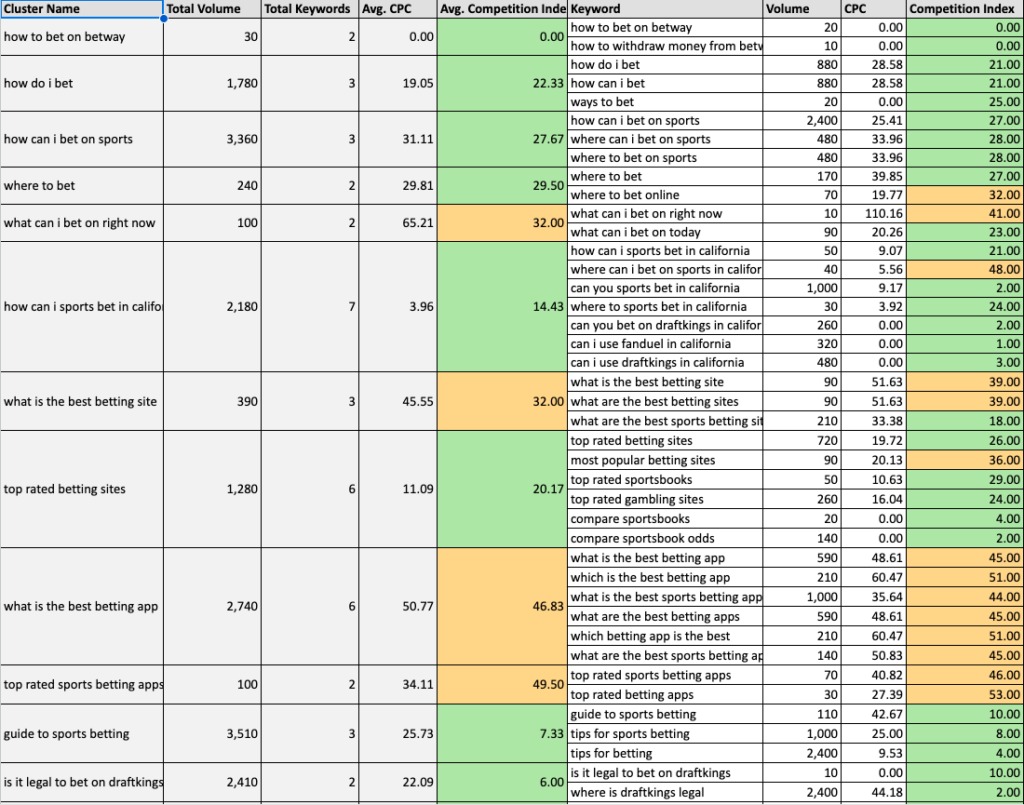
Using AnswerSocrates to automate this:
- Type “free bets” into AnswerSocrates
- Click “Recursive Questions”
- In seconds, the tool generated 173 questions using this exact methodology
- Topics discovered include withdrawal processes, betting requirements, and platform-specific offers

What’s particularly valuable is how these results reveal the actual search journey users take when researching this topic – connections you’d never find through traditional keyword research.
Similarly, when it comes to SEO for local small businesses, the recursive method can uncover the hidden search behavior of local customers. By understanding the specific questions people are asking about your local services, you can create content that directly addresses these needs and better engage with your community.
The Mortgage Rates Example from Steve Toth
Steve Toth’s original example perfectly demonstrates this technique:
Initial Search: “best mortgage rates” Clear Search Bar Completely Type Only: “when” (without “mortgage rates”)
First Level Questions Discovered:
- When does the Fed meet again?
Clear Search Bar Again Type Only: “how does” (without any previous terms)
More Questions Discovered:
- How do interest rates affect mortgages?
- How much do rates change after Fed meetings?
This natural progression of questions would be nearly impossible to discover using traditional keyword research tools, yet it perfectly maps to the user’s journey.
Implementing the Method in Your SEO Strategy
Using AnswerSocrates.com
Quick Start:
- Visit AnswerSocrates.com
- Enter your main keyword
- Select your target location (e.g., United States)
- Click “Recursive Questions” (this automatically implements the clear-and-use-modifiers technique)
- Once generated, click “Cluster Keywords” to organize results
- Download the CSV for further analysis
Manual Approach (For Understanding)
If you want to understand the mechanics behind the tool or do this yourself:
Step-by-Step Process:
- Search for your main keyword in Google (e.g., “best running shoes”)
- Clear the search bar completely
- Type only a question modifier like “how can” (without your original keyword)
- Note the suggested questions that Google provides
- Try another modifier like “what does” (again, without your original keyword)
- Continue with different question modifiers: who, what, where, when, why, how
- Record all the questions that Google suggests
Modifiers to Try:
- How does…
- When should…
- What makes…
- Why does…
- Where can…
- Who should…
Creating Content from Your Findings
The real power of recursive keyword research comes in how you use it. Here’s a proven process:
Topic Clustering
- Group related questions based on the clusters identified
- Identify main themes and subtopics
- Map the user journey from basic questions to more specific ones
Content Planning
- Create comprehensive guides that address multiple related questions
- Address question progressions in a logical order
- Build internal linking structures between related topics (use these tools to help)
Content Organization
- Use questions as H2/H3 headers
- Create FAQ sections for closely related questions
- Build topic hubs around main themes
Benefits for Your SEO Strategy
Implementing the recursive keyword method offers several significant advantages:
- User Journey Mapping: You’re literally discovering the exact path users take when researching a topic
- Topical Authority: By covering all related questions and subtopics, you build stronger topical authority in Google’s eyes
- Information Gap Filling: You’ll identify content gaps that your competitors are missing entirely
- Content Efficiency: Instead of creating dozens of thin content pages, you can create fewer, more comprehensive resources that address multiple related queries
- Better Rankings: Pages that thoroughly address related questions tend to rank better as they more completely satisfy user intent
As mentioned in the video, this approach is particularly valuable in the current AI-driven landscape, where Google increasingly favors comprehensive content that answers multiple related queries on a single page rather than splitting information across many thin pages.
Advanced Tips for Better Results
Think in Topics, Not Just Keywords
- Look for patterns in questions
- Identify topic clusters that form natural content pieces
- Map user journey stages from awareness to decision
Leverage User Intent
- Group questions by intent type (informational, navigational, transactional)
- Create content tailored to each stage of the journey
- Build clear progression paths between related topics
Scale Your Research
- Use AnswerSocrates.com’s bulk export functionality
- Create templates for analyzing clusters
- Track patterns over time to identify trending topics
Common Mistakes to Avoid
Ignoring Question Relationships
- Don’t treat questions in isolation
- Map how questions connect to form a complete topic
- Understand the logical progression between related queries
Missing Content Opportunities
- Each question cluster represents a potential content piece
- Look for gaps in your current content
- Consider multiple content formats (guides, FAQs, videos)
Poor Implementation
- Not organizing findings systematically
- Ignoring user intent signals
- Creating separate pages for closely related topics instead of comprehensive resources
Conclusion
The recursive keyword method, especially when powered by Answer Socrates, represents a significant leap forward in keyword research. It’s not just about finding more keywords – it’s about understanding the complete picture of how users think about and search for information in your niche.
By revealing the natural progression of queries that users follow, you gain insight into the entire search journey, not just isolated keywords. This allows you to create more comprehensive, valuable content that truly satisfies user intent.
Taking Action
- Start using Answer Socrates for your keyword research
- Follow Steve Toth (@steve_toth) for the latest insights on recursive searching
- Begin implementing this method in your content strategy
- Track and measure your results to refine your approach
- Share your findings with the SEO community
Remember: The most powerful SEO strategies often come from understanding not just what people search for, but how their questions evolve throughout their journey. The recursive method gives you exactly that insight – and now it’s easier than ever to implement with AnswerSocrates.com.
Share:
About the Author

