If you’ve ever relied on AlsoAsked for keyword research, you’ve probably felt the frustration: the visuals are neat, but People Also Ask data is limited, and not that actionable.
These questions are essential for building FAQs, but they’re not an entire keyword research system. The keyword “relationships” aren’t always that helpful, and AlsoAsked’s free plan doesn’t let you download your results.
The best AlsoAsked alternative is Answer Socrates because it provides full keyword searches, recursive exploration, and clustering – even on the free plan.
Answer Socrates does almost everything AlsoAsked does and more – though admittedly without the same slick design.
Still, no single tool fits every workflow. I’ve narrowed things down to the 7 best alternatives worth your time.
Best AlsoAsked Alternatives: Comparison Table
| Tool | Best For | Free Plan | Data Sources | Starting Price |
| Answer Socrates | Comprehensive keyword research & clustering | 3 searches/day, recursive, CSV, clustering credits | Google Suggest, PAA, Trends, Recursive | $9/mo |
| Keyword Sheeter | Bulk keyword lists | Unlimited autocomplete pulls | Google & Bing Autocomplete | $9/mo |
| Ahrefs | Enterprise-level SEO & analytics | Ahrefs Webmaster Tools (limited) | Proprietary keyword DB + SERPs | $129/mo |
| KeywordsPeopleUse | Community-driven insights | One-time 15 credits | Google, Reddit, Quora | $15/mo |
| Moz | Beginner-friendly SEO platform | 3 searches/day | Moz proprietary DB | $49/mo |
| BuzzSumo | Trends & content performance | Limited (content discovery only) | Social + content performance data | $199/mo |
| Semrush | All-in-one SEO & marketing suite | 10 reports/day, 10 tracked keywords | Proprietary keyword DB + SERPs | $139.95/mo |
| AlsoAsked | Visual PAA maps | 3 searches/day, PNG export only | Google PAA only | $15/mo |
1. Answer Socrates: Best AlsoAsked Alternative Overall
Answer Socrates is the best alternative to AlsoAsked because it provides broader keyword data, automatic clustering, and free CSV exports – making it faster and more practical for building content strategies.
Pros
- Pulls from Google Suggest, PAA, and Trends (not just PAA)
- Recursive, long-tail, LSI, and semantic searches
- Keyword clustering organizes content hubs in seconds
- CSV exports (even on free plan) with search volume and CPC
- Affordable plans that scale from solo users to agencies
Cons
- Limited to Google data
- No API access or multi-user plans
- Clustering occasionally needs manual cleanup
AlsoAsked vs Answer Socrates
If AlsoAsked gives you question trees, Answer Socrates gives you full-blown keyword ecosystems.
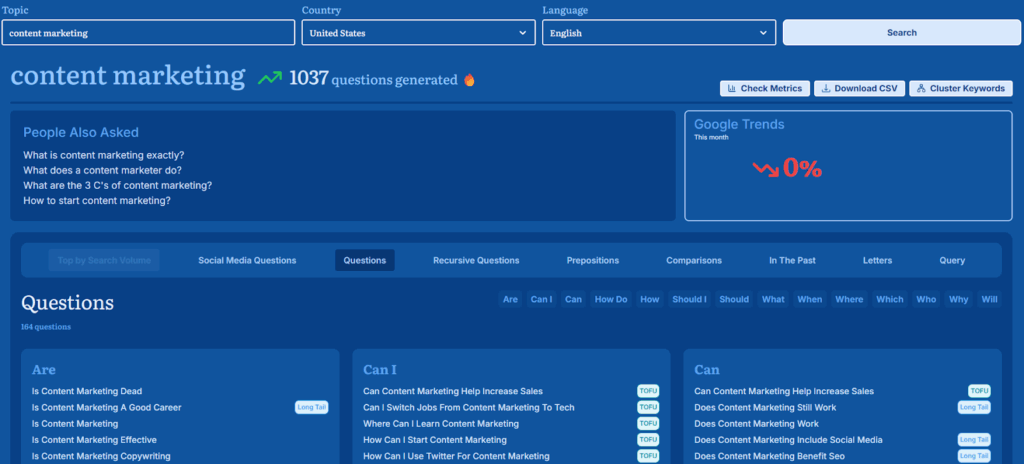
Answer Socrates starts with keyword research from multiple sources, giving you far more than the surface-level PAA tree. When I ran a search for “content marketing,” I got 1,037 questions including “how does content marketing build trust” and “how are content marketing and seo connected”.
Each keyword is automatically labelled according to search intent (TOFU/MOFU/BOFU), so you can easily understand how to position your message around it.
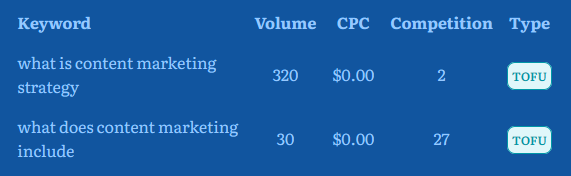
A single click adds search volume, CPC, and competition data so you can find those golden high-volume, low-competition opportunities.
The recursive search digs deeper, showing follow-up questions people ask next. This is what a lot of other keyword research tools miss by only looking at one level of keywords.
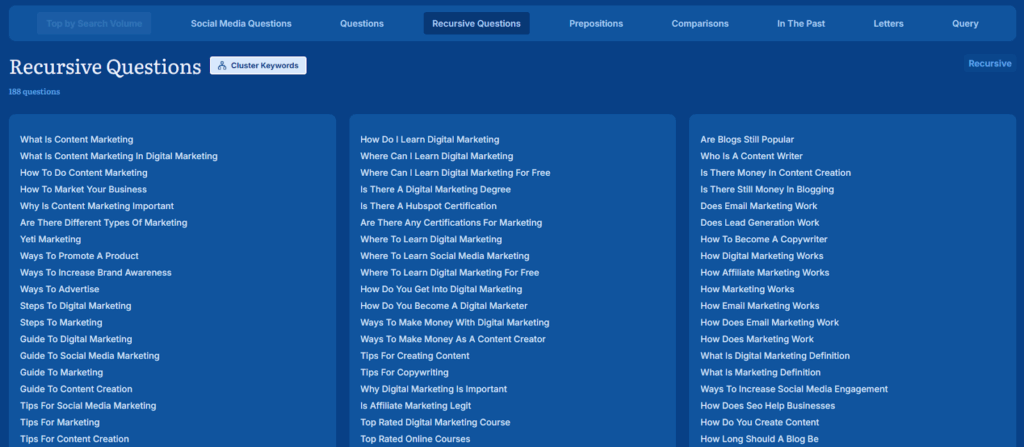
“How long should a blog be” and “what are content pillars” are excellent examples of how Answer Socrates’ recursive search helps you cover your topic in more depth.
Optional searches make the dataset richer:
- Long-tail keywords: longer, specific queries that are usually easier to rank for.
- LSI keywords: context-related terms that help Google understand topical depth.
- Semantic keywords: natural variations of queries so you cover how people phrase things differently.
Once you’ve gathered everything, clustering groups the results into logical topics for articles, with metrics for each cluster.
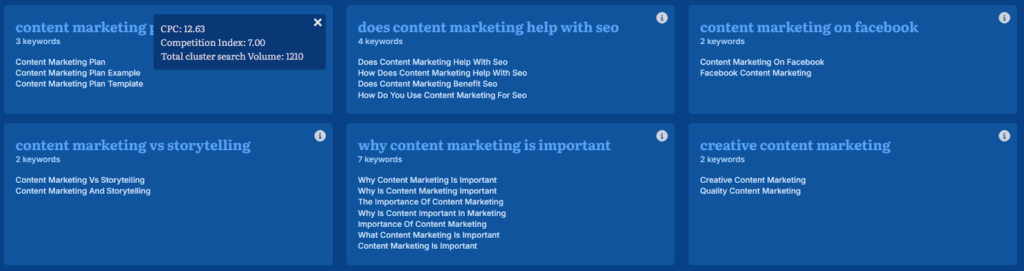
I used to spend hours doing this manually, and now it just takes a few minutes to sense-check the recommendations and make a few edits. It’s such an important step because it reduces the risk of publishing posts that cannibalize each other. For agencies or in-house teams, this feature alone makes the tool pay for itself.
Finally, you can download your data as a CSV (even on the free plan) and get to work planning your content. There’s even a set of AI helpers (title generators, statistics finders) that speed up drafting when deadlines are tight.
Pricing
- Free: 3 searches/day, 1 recursive, 1 CSV, 1,500 clustering credits
- Lite ($9/mo): 100 searches, 30 recursive, 3,000 clustering credits, unlimited CSVs, SEO metrics
- Seneca ($29/mo): 500 searches, 100 recursive, 12,000 clustering credits, SEO metrics
- Aurelius ($49/mo): Unlimited searches, 500 recursive, 40,000 clustering credits, SEO metrics
In short, Answer Socrates covers more ground than AlsoAsked by pulling from multiple data sources, offering recursive and semantic searches, and automatically clustering keywords into usable content hubs. It also makes exports and metrics available on the free plan, while delivering more features at a lower price point than AlsoAsked’s paid tiers.
2. Keyword Sheeter: Best for Quick Bulk Lists
If you need thousands of keyword ideas fast, this is your tool. It’s basic, but that’s kind of the point.
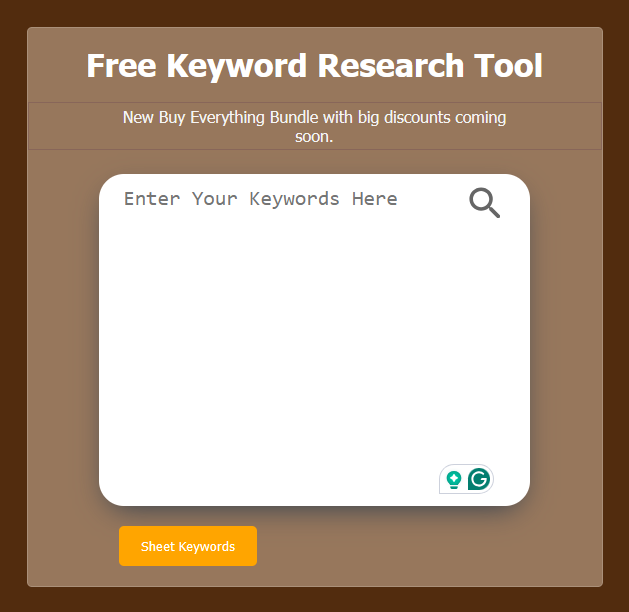
Keyword Sheeter is a simple but powerful tool that streams thousands of autocomplete suggestions in seconds, making it useful when you need raw keyword lists quickly.
Pros
- Generates very large lists at high speed
- Works across Google and Bing autocomplete
- Easy CSV export
- Supports multiple languages
Cons
- No clustering or deeper context
- Outdated interface
- Many irrelevant results that need manual filtering
AlsoAsked vs Keyword Sheeter
Compared to AlsoAsked, Keyword Sheeter is almost the opposite: instead of neat diagrams, you get unfiltered bulk data. This can be handy at the brainstorming stage, when you want to cast a wide net before narrowing down.
It doesn’t give the structured clusters or exports that Answer Socrates does, but if you like starting broad and doing more of the manual work yourself, it can spark unexpected content ideas.
Pricing
- Free: Unlimited autocomplete pulls
- Keyword Planner Basic ($9/mo): 10,000 queries for search volume/CPC
- Keyword Planner Pro ($299/mo): 10,000 queries including keyword difficulty, SERP, volume, CPC
- Sheet Coins (pay-as-you-go): Buy specific reports as needed
Side note: Answer Socrates also has a free keyword sheeter tool that spits out unstructured keyword lists in just the same way.
3. Ahrefs Keyword Explorer: The Premium Option
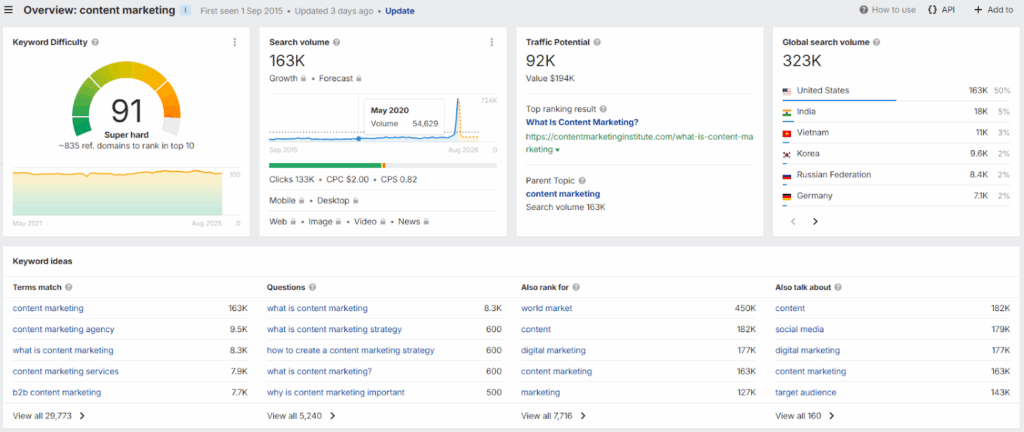
Ahrefs is one of the most comprehensive SEO suites, best known for its backlink data and competitor analysis. It includes a Keyword Explorer alongside tools for site audits, rank tracking, and content research.
Pros
- Industry-leading backlink and competitor data
- Accurate search volumes and click metrics
- Massive keyword database
- Deep reporting and historical data
Cons
- Expensive, especially for smaller teams
- Learning curve for beginners
- Overkill if you only need keyword ideation
AlsoAsked vs Ahrefs
Against AlsoAsked, Ahrefs plays in a completely different league. It’s far more than a PAA research tool – it’s an all-in-one SEO platform.
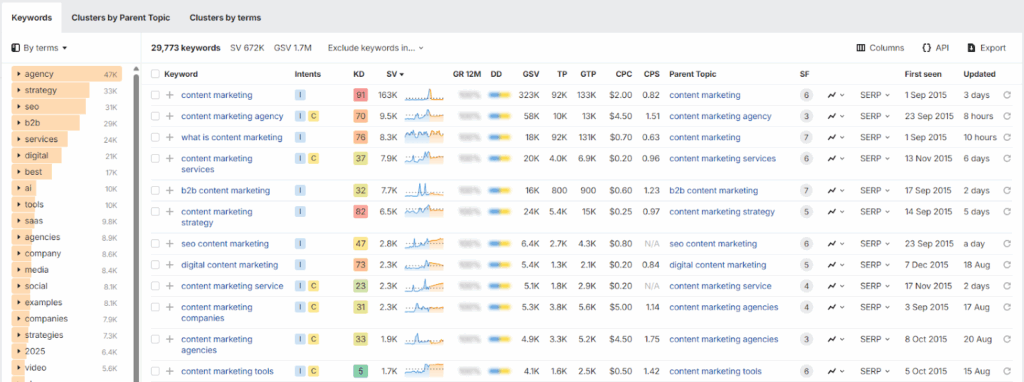
Ahrefs makes sense if you manage clients or need competitor insights and link data. But if your main need is fast, structured question research, Answer Socrates is much more affordable.
Pricing
- Lite ($129/mo): 5 projects, 750 keywords, 100k crawl credits
- Standard ($249/mo): 20 projects, 2,000 keywords, 500k crawl credits
- Advanced ($449/mo): 50 projects, 5,000 keywords, 1.5m crawl credits
- Enterprise ($1,499/mo): API, SSO, unlimited projects
I actually use both Ahrefs and Answer Socrates in my day-to-day work and find they complement each other well.
I’ve written about more Ahrefs alternatives here so you can check these out if you’re interested in a full SEO tool.
4. KeywordsPeopleUse: Best for Community-Driven Insights
KeywordsPeopleUse surfaces queries from Google alongside platforms like Reddit and Quora, giving you a more conversational angle on what people are asking.
Pros
- Pulls data from multiple sources beyond Google
- Simple clustering option
- Affordable entry-level plans
Cons
- Free plan is just a one-time 15-credit trial
- Limited history and alerts on lower tiers
- Interface is basic
AlsoAsked vs KeywordsPeopleUse
Compared to AlsoAsked, KeywordsPeopleUse casts a wider net into community platforms. This can be valuable when you want to hear how people phrase questions in forums or niche communities. It does also have a dedicated People Also Ask tool, like AlsoAsked.
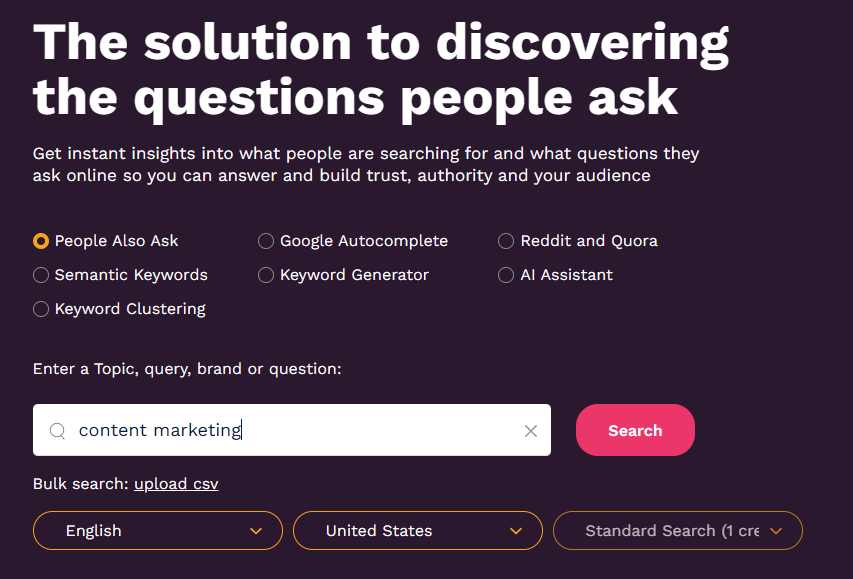
Like Answer Socrates, KeywordsPeopleUse offers semantic keyword search and keyword clustering. There’s also a deep search option, similar to Answer Socrates’ recursive search. However, this is only available to paid users, whereas Answer Socrates users get 1 free recursive search per day.
KeywordsPeopleUse has a free trial with 15 credits. But once they expire, you need to pay to keep using it. There’s no ongoing free access, which makes it feel worse value than AlsoAsked and Answer Socrates.
Pricing
- Free: One-time 15 credits
- Lite ($15/mo): 150 credits
- Standard ($39/mo): 500 credits
- Pro ($79/mo): 1,500 credits
- Unlimited ($299/mo): Unlimited credits, unlimited history
There are plenty of KeywordsPeopleUse alternatives that I think offer better value.
5. Moz Keyword Explorer: Best SEO Suite for Beginners
Moz is a long-established SEO toolset with an emphasis on clarity and usability. Its Keyword Explorer isn’t the most powerful tool out there, but it’s one of the easiest ways for beginners to get started with keyword research.

Pros
- Clean, beginner-friendly interface
- Clear keyword difficulty scores
- Strong educational resources
Cons
- Smaller keyword database
- Limited free searches (3/day)
- Pricey for advanced users compared to alternatives
AlsoAsked vs Moz
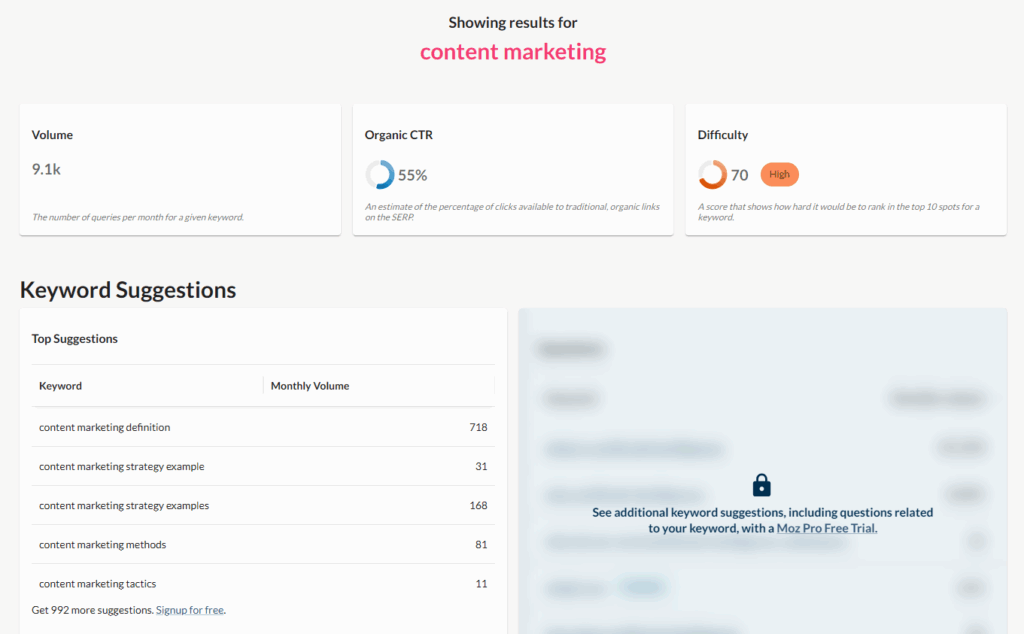
Compared to AlsoAsked, Moz is more of an SEO starter toolkit. It doesn’t do question mapping or clustering, but it gives simple, understandable metrics like difficulty and volume.
Moz is a good choice if you’re new to SEO and want to learn without being overwhelmed. But more advanced teams will outgrow it quickly and might be better suited to Ahrefs or Semrush.
There is a free option with 3 searches/day, but you might become frustrated with how much data is hidden behind a paywall.
Pricing
- Free: 3 searches/day
- Starter ($49/mo): 1 site, 75 keyword queries
- Standard ($99/mo): 3 sites, 150 queries
- Medium ($179/mo): 10 sites, 5,000 queries
- Large ($299/mo): 25 sites, 15,000 queries
Moz isn’t the most powerful tool out there, but it’s probably the easiest to understand. Perfect if you’re just getting started.
6. BuzzSumo: Best for Viral Content Ideas
BuzzSumo is less of a traditional SEO tool and more of a way to find content ideas.
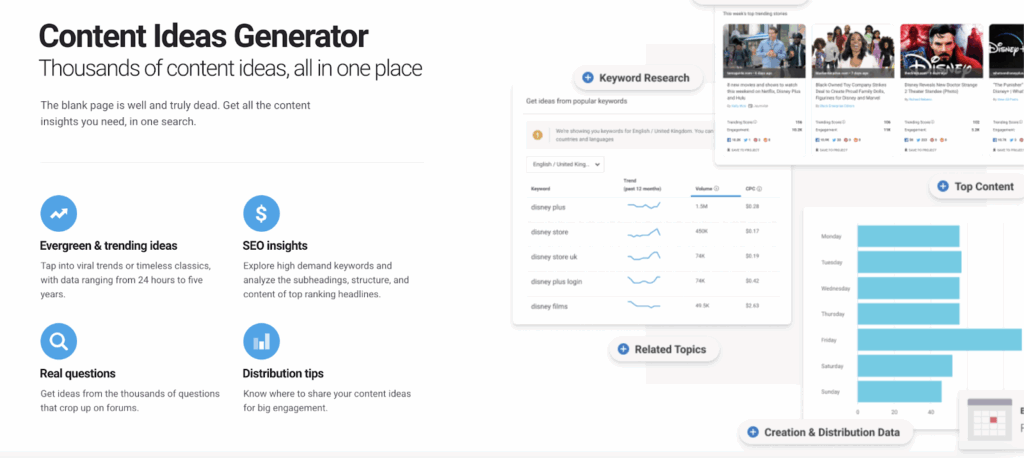
It’s designed to show what content performs best online and who’s amplifying it. For content teams chasing trends or PR opportunities, it’s a strong companion to keyword research.
Pros
- Excellent for content trend tracking
- Social performance and influencer data
- Strong journalist and outreach tools
Cons
- Expensive starting point
- Not a question discovery tool
- Overkill if you just need SEO keywords
AlsoAsked vs BuzzSumo
BuzzSumo solves a different problem to AlsoAsked. Instead of mapping questions, it helps you validate what’s already performing in your niche and who can amplify it via its media database. It’s valuable if you need content validation and promotion rather than just research. But for content ideation itself, Answer Socrates is more actionable.
Pricing
- Content Creation ($199/mo): Content discovery, 1 user
- PR & Comms ($299/mo): Adds journalist database, 5 users
- Suite ($499/mo): 10 users, extended data
- Enterprise ($999/mo): 30 users, API, full support
If you like the idea of creating content this way but don’t have the budget, Answer Socrates’ trending topics tool is a great place to start. It shows you the topics that are trending right now in your chosen location, and from there you can dig deeper into content ideas.
7. Semrush: Best All-In-One Marketing Suite
Semrush is another heavyweight, bundling SEO, PPC, content marketing, and competitive intelligence into one platform. It’s particularly popular with agencies who want a single login for everything.
Pros
- Huge range of SEO, PPC, and content tools
- Strong competitor and SERP analysis
- Regular updates and integrations
Cons
- Expensive for smaller teams
- Interface can feel cluttered
- Keyword data less precise than Ahrefs
AlsoAsked vs Semrush
Semrush doesn’t map PAA into pretty diagrams like AlsoAsked, but will show you all the question-based queries for your seed keyword and supply a whole bunch of useful metrics.
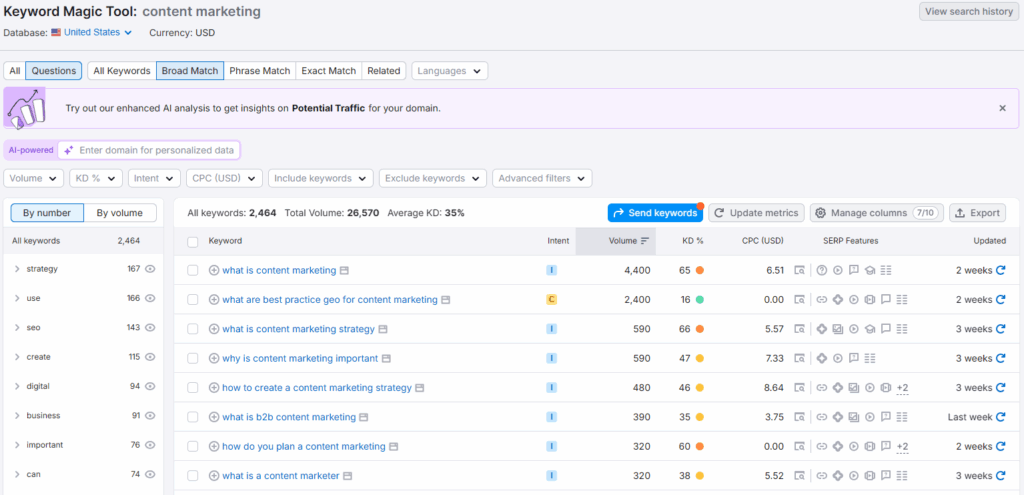
From there, you can explore search results, run competitor analysis, and set up keyword tracking.
It comes with a hefty price tag though, so Semrush works when you’re running multi-channel strategies and need reporting at scale. For focused question discovery, Answer Socrates is simpler and cheaper.
Pricing
- Free: 10 reports/day, 10 tracked keywords
- Pro ($139.95/mo): 500 keywords, 5 projects
- Guru ($249.95/mo): 1,500 keywords, 15 projects, historical data
- Business ($499.95/mo): 5,000 keywords, 40 projects, API access
Final Verdict: The Best AlsoAsked Alternative
Here’s a quick rundown of my top alternatives to AlsoAsked:
- Answer Socrates (Best Overall Alternative): Multi-source keyword research, recursive searches, clustering, and free CSV exports.
- Ahrefs (Best Premium Alternative): Enterprise-level data, backlink analysis, and competitor insights.
- Keyword Sheeter (Best for Bulk Ideas): Generates massive lists instantly, great for brainstorming.
- KeywordsPeopleUse (Best for Community Insights): Pulls queries from Reddit, Quora, and Google for real conversational phrasing.
If you need a tool that finds question-based keywords fast and helps you understand what to do with them, Answer Socrates is the best AlsoAsked alternative. For larger teams who have the budget for a full SEO tool, Ahrefs is my top pick.
FAQs
Is AlsoAsked really worth paying for?
It can be worth it if your primary need is polished, visual maps of PAA questions for presentations. But if you’re trying to plan content at scale, it’s not the most helpful question-based keyword research tool.
Does AlsoAsked show keyword relationships?
AlsoAsked’s keyword ‘tree’ shows the relationship between questions as they appear in Google’s People Also Ask feature, but this is not always representative of how they should be used in your content plan.
What is the best free AlsoAsked alternative?
The best free alternative to AlsoAsked is Answer Socrates. Its free plan includes 3 searches per day, 1 recursive search, clustering, and CSV exports. AlsoAsked’s free tier only allows PNG diagrams, which aren’t very practical for content planning.
Which paid tools are better than AlsoAsked?
Several paid tools outperform AlsoAsked depending on your needs. Answer Socrates Lite ($9/mo) is the best value, offering clustering and CSV exports at a lower price than AlsoAsked’s comparable plan. For full-suite SEO, Ahrefs and Semrush provide backlink analysis, audits, and competitor data – making them stronger for advanced teams.
Is Answer Socrates better than AlsoAsked?
For most SEOs and content marketers, yes. Answer Socrates pulls from Google Suggest, People Also Ask, and Trends, then adds recursive search and clustering. AlsoAsked is handy for visual diagrams, but its limited exports and narrower dataset make it harder to turn research into actionable content strategies.
Share:
About the Author