Finding link opportunities
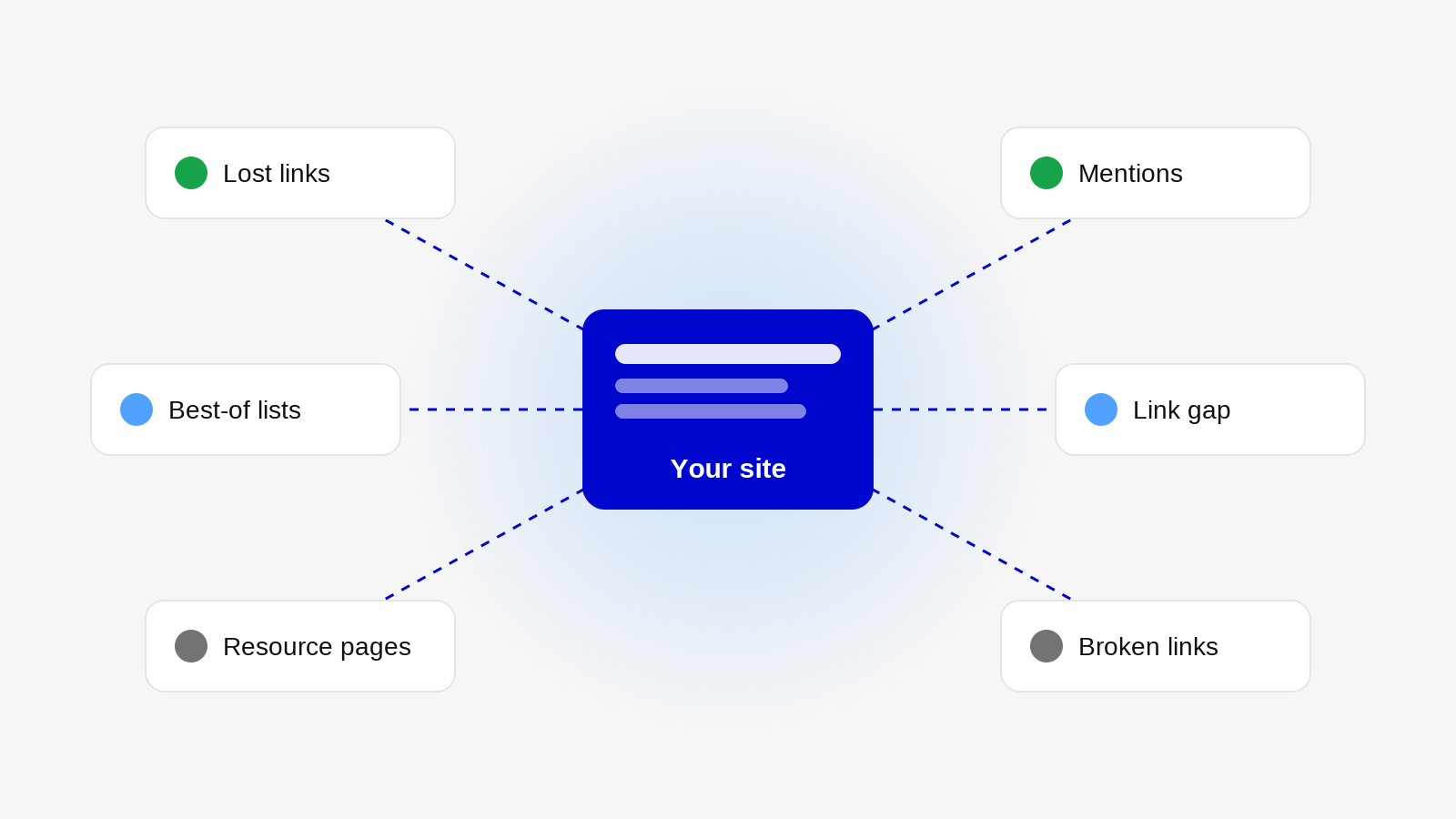
A link opportunity is a page with a real reason to link to you and a person you can ask: a lost link, an unlinked mention, a broken link, a best-of list or a site that links to your rivals. Starting with the warmest ones gets you more links for less outreach.
Key takeaways
- Six link types are realistic for most sites: lost links, unlinked mentions, broken links, "best X" lists, competitor link gaps and digital PR, roughly in that order of effort.
- Judge every prospect on three checks before you pitch: relevant to your buyers, real search traffic, and not a link farm selling posts.
- Google's spam policies treat paid links, excessive link swaps and low-quality directory links as link spam unless paid links carry rel="sponsored" or rel="nofollow".
- Answer Socrates Link Building runs ten tactics in three groups (Quick wins, Competitors, New sites), and most of them check each page live before saving it.
- In Ask Socrates, "get me backlinks" works down the project's plan, Reclaim and Mentions first, running at most two tactics per turn with the credit cost shown.
Six kinds of link you can realistically get
A link opportunity is a page that has a real reason to link to you and a person you can ask. "A big news site" is not an opportunity. "A 2024 list of the best coffee grinders that names three of your rivals and not you" is one.
Links also help Google find you: it finds most new pages by following links from pages it has already crawled [4]. Most links that small sites win come from six places:
- Lost links and dead pages. Links you already earned that stopped working: a page on your site was deleted, or a site removed its link. Fixing the first needs no email at all, just a redirect (a rule that sends visitors from the old address to a live page).
- Unlinked mentions. Pages that name your brand but do not link to it. The writer already knows you, so the ask is small.
- Broken links. Pages in your niche that link out to pages that no longer work. You offer your page as the replacement, which fixes a problem for the site owner.
- "Best X" lists. Articles like "15 best project management apps" that name your competitors. These send buyers as well as links, because readers of a best-of list are choosing what to buy.
- Competitor link gaps. Sites that link to two or more of your competitors but not to you. If they link to several rivals, they cover your topic and may add you.
- Digital PR. A story built on new data (a survey, a study, a ranking) that journalists want to cover. It takes the most work and fails often, but one hit can bring links from sites you could never email cold.
Resource pages (curated lists of useful links, such as a library guide or a "tools we use" page) sit between broken links and best-of lists: easy to find, slower to win.
Effort and odds: which link type to start with
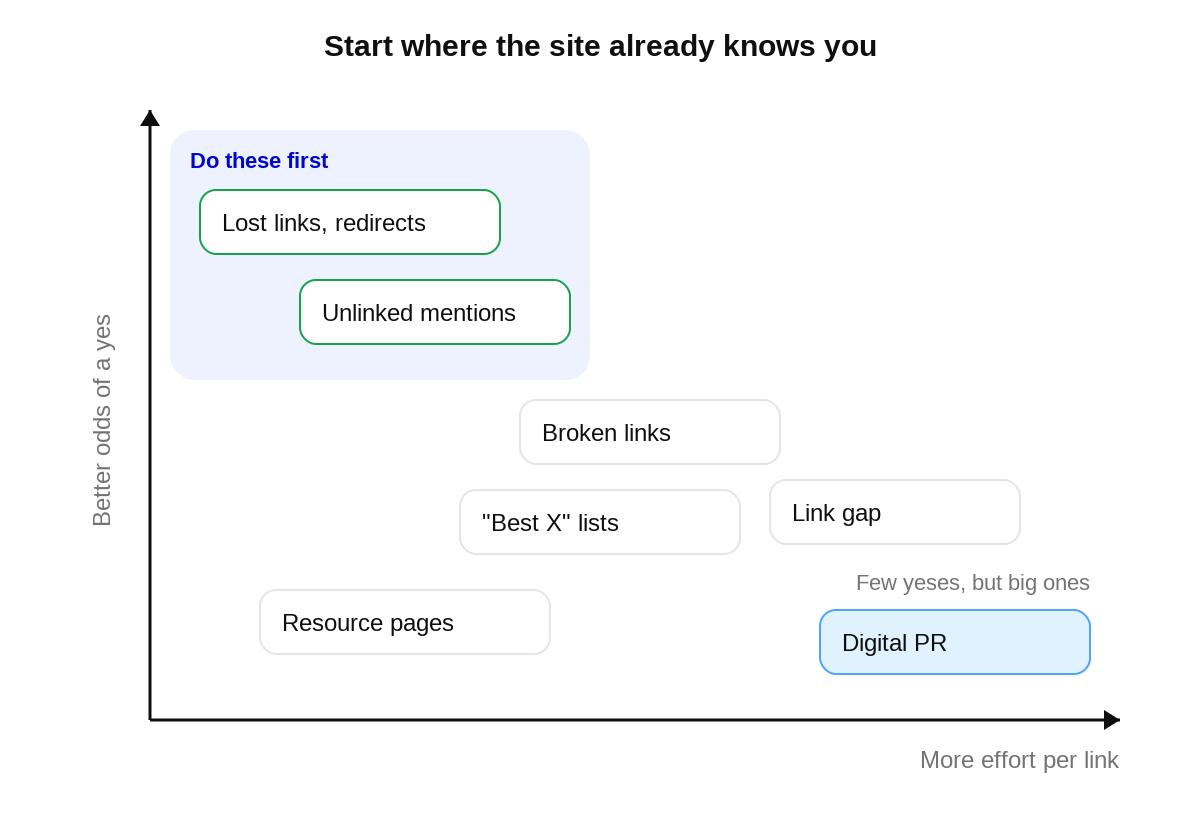
There are no honest win-rate percentages for these tactics. Reply rates depend on your niche, your page and your email, and any single figure you see online is one practitioner's numbers, not proof. What you can compare is the shape of each tactic: how warm the site is to you, and how much you have to make before you ask.
| Link type | Effort per link | Odds of a yes | What you need first |
|---|---|---|---|
| Lost links and dead pages | Very low | Highest (a redirect needs nobody's permission) | Access to your own site |
| Unlinked mentions | Low | High: they already chose to write about you | A brand people mention |
| Broken links | Medium | Medium: you fix their problem | A page that truly replaces the dead one |
| "Best X" lists | Medium | Medium, higher if the list is updated often | A product that belongs on the list |
| Competitor link gap | Medium | Mixed: depends on why they link to rivals | A page as good as the one they link to |
| Resource pages | Low to find, slow to win | Low to medium | A genuinely useful free page |
| Digital PR | High | Low per pitch, big when it lands | Original data and a story |
How to judge a prospect before you pitch it
A long list is not the goal. One link from a relevant site with real readers is worth more than ten from pages nobody visits. Before you send anything, run three checks.
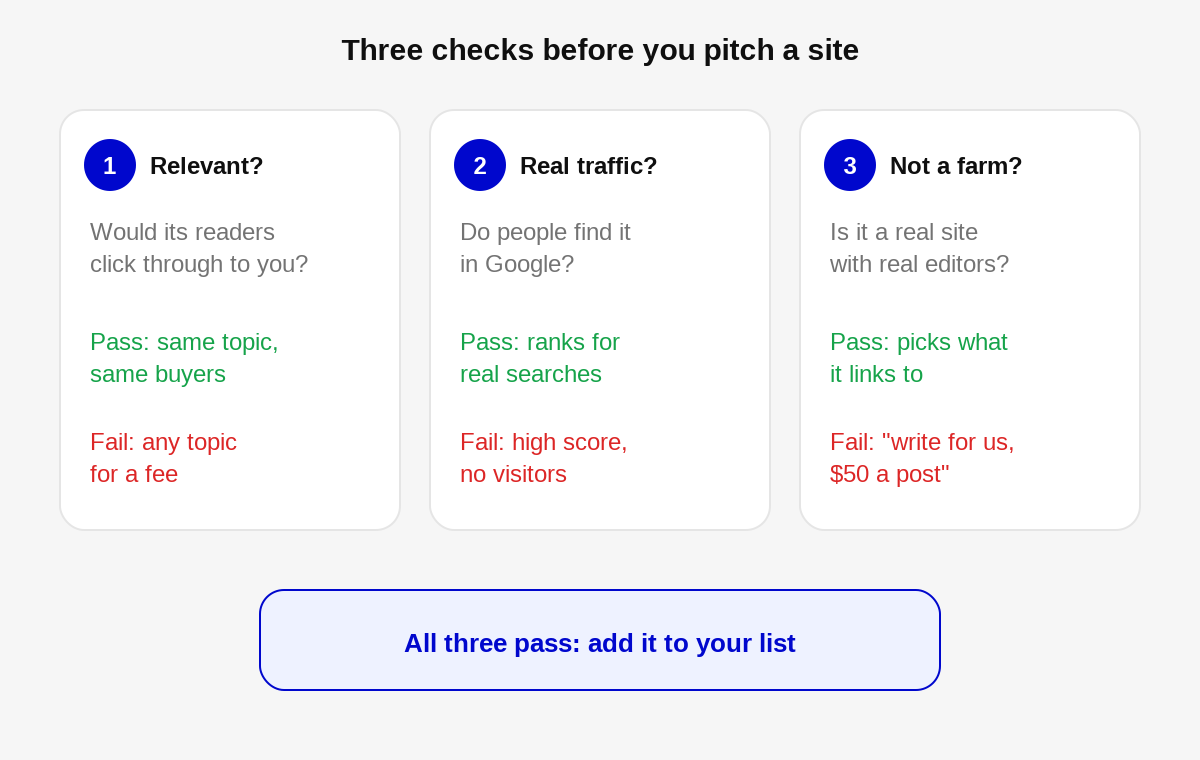
1. Relevance. Would the site's readers click through to you and find what they expected? A coffee blog linking to a coffee roaster passes. A "general news" site that publishes anything for a fee fails, however strong it looks.
2. Real traffic. Strength scores measure links, not readers. Ahrefs' Domain Rating (DR), the 0 to 100 score many tools show, is "purely link-based" and does not account for search traffic, and Ahrefs says it does not filter out spam links [3]. So a site can score high and still have no visitors. Check that it ranks for real searches before you trust the score.
3. Not a link farm. A link farm is a site that exists to sell or swap links. The signs: posts on every topic, a "write for us" page with a price, and outbound links in almost every paragraph. Google's spam policies name paying for links, excessive link exchanges, links from low-quality directories, and guest posts with ranking-passing links bought for that purpose as link spam [1]. Paid placements are fine only when the link is marked rel="sponsored" or rel="nofollow" [1][2], and then it passes no ranking credit.
Where Answer Socrates looks for links
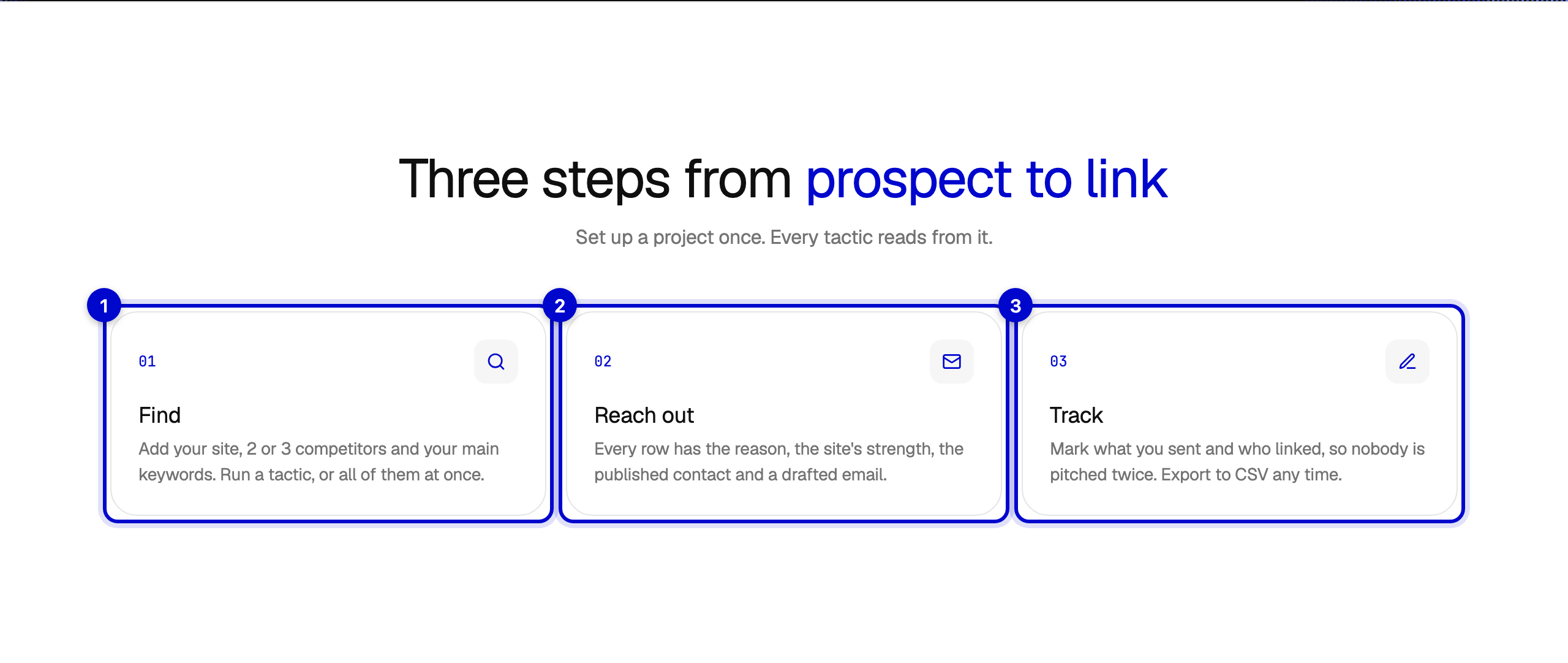
The Link Building section of Answer Socrates runs ten tactics, grouped the way you should work through them: quick wins first, then competitors, then sites new to you.
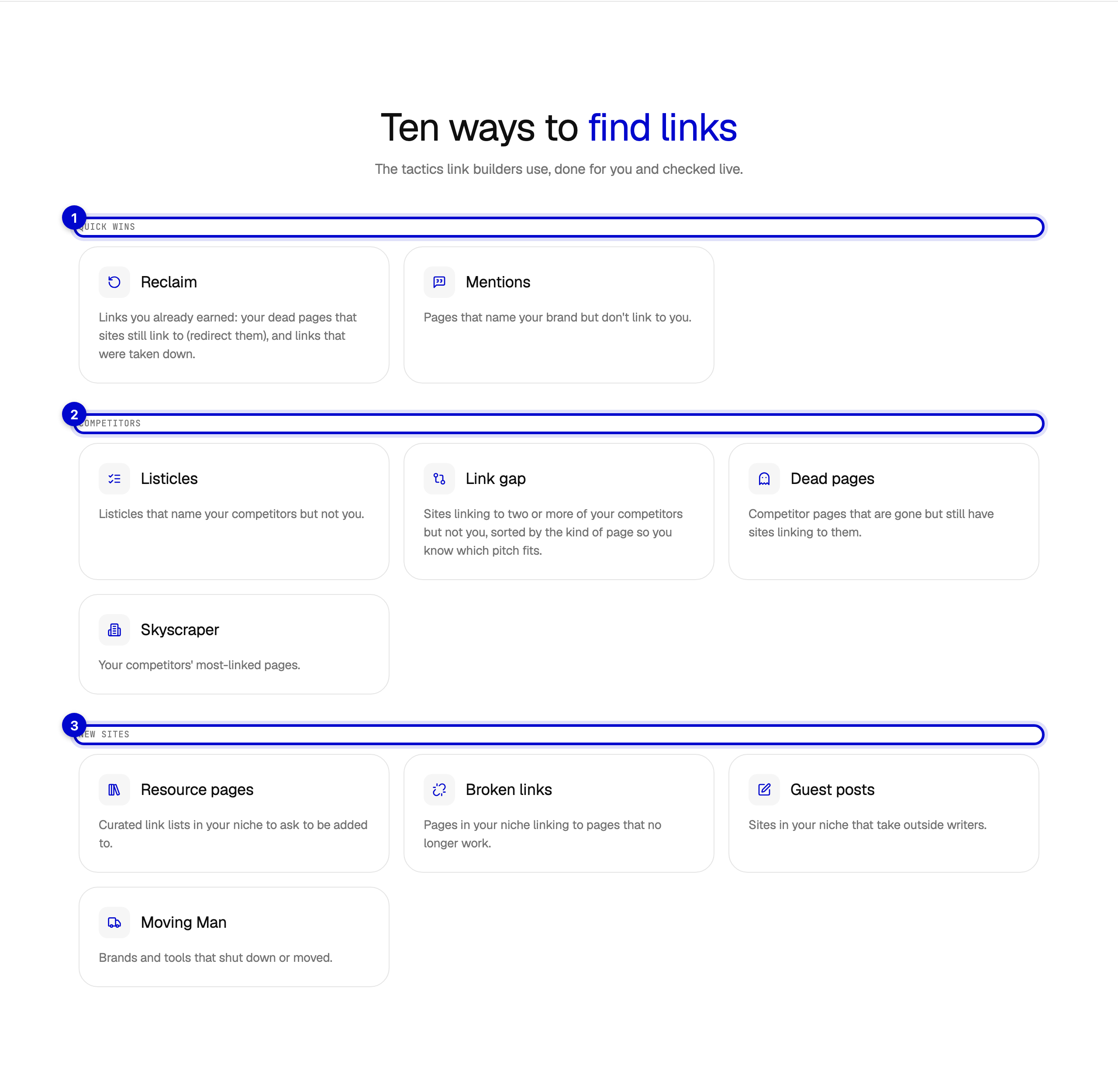
Here is what each one actually checks:
| Tab | What it finds | How |
|---|---|---|
| Reclaim | Your dead pages that other sites still link to, and links that were removed | Pulls your backlink data, then checks each dead page and each removed link live |
| Mentions | Pages that name your brand (or your domain as text) without linking | Searches Google for each brand name, skipping your site, your competitors and social sites, then reads each page for a link |
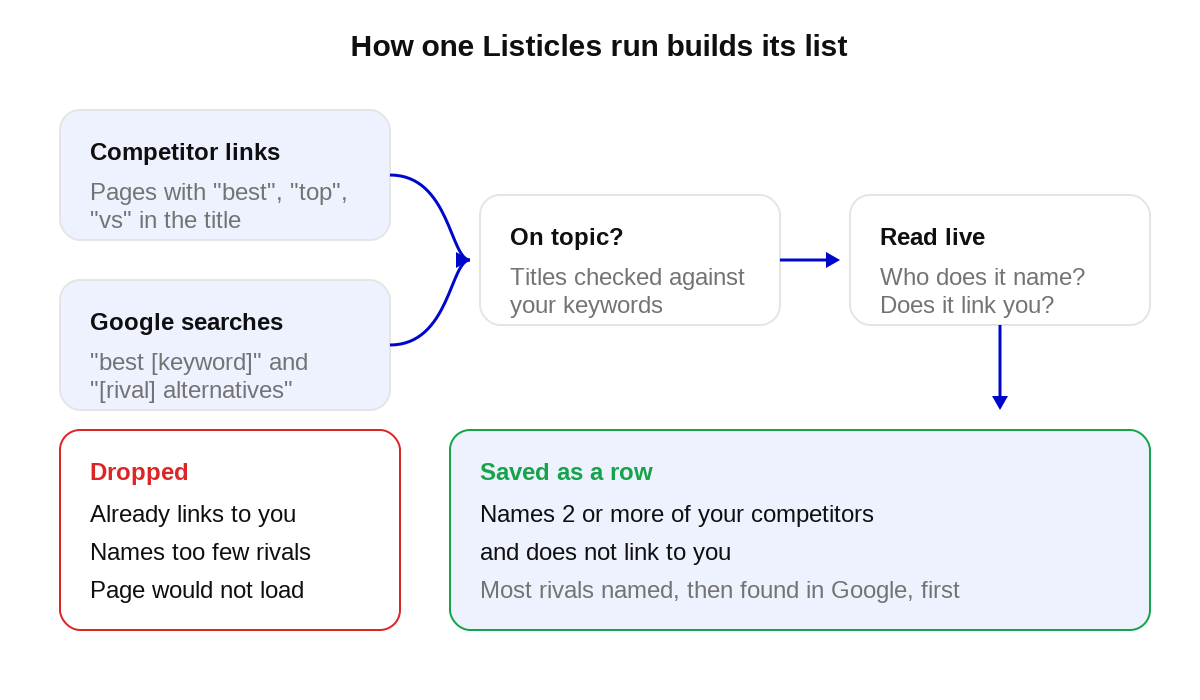
| Listicles | "Best X" and comparison articles that name two or more competitors but not you | Competitor backlinks with list-style titles, plus Google searches for "best [keyword]" and "[competitor] alternatives" |
| Link gap | Sites linking to two or more competitors but not you | Compares up to three competitors' backlinks, labels each page as a listicle, resource page, guest post or article, and removes spam and directories |
| Dead pages | Competitor pages that are gone but still have three or more linking sites | Pulls competitors' dead pages, then checks each one is still dead |
| Skyscraper | Competitors' pages with 20 or more linking sites | Pulls their top pages by linking sites |
| Resource pages and Broken links | Curated link pages in your niche, and the dead links on them | Searches footprints like "keyword" plus "useful links" or "further reading", then checks every outbound link |
| Guest posts | Sites that take outside writers | Reads guideline pages and flags sites that mention paid posts |
| Moving Man | Brands that closed or moved, linked from the lists you already found | Checks the linked sites for closed, parked or redirected domains |
Social networks, forums and big generalist sites (Facebook, Reddit, Quora, Wikipedia, Amazon, G2, Capterra and others) are never saved as prospects. Most tabs also check each page live before saving it, because backlink data can be weeks old. Link gap and Skyscraper rows come straight from the backlink data, so open those pages yourself before you pitch.
Digital PR is not one of the ten tabs. It starts with a story, not a list of pages, so it has its own lesson: Digital PR with data studies.
How to do it in Answer Socrates
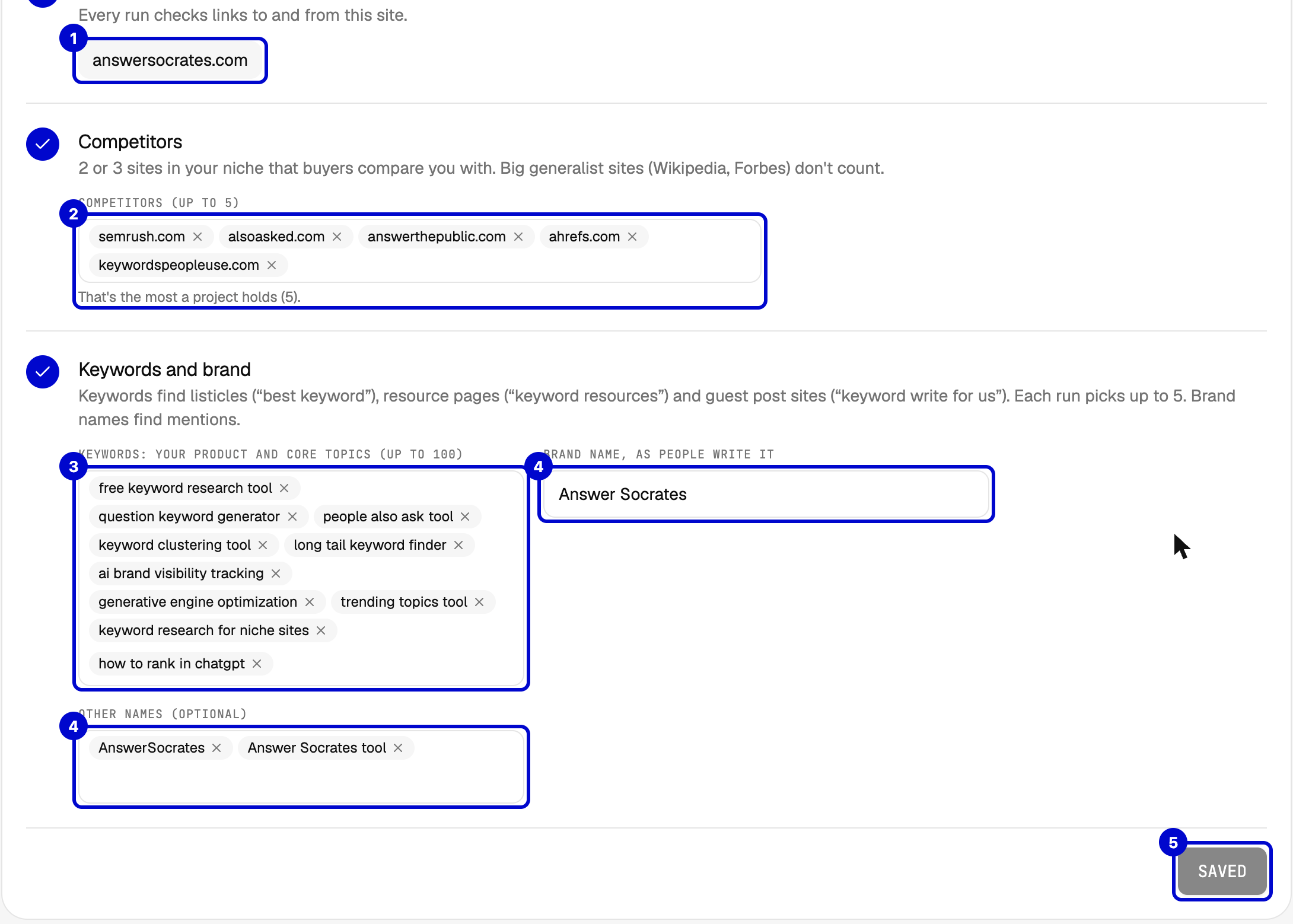
Step 1: Set up the project. Open Link Building from the app sidebar (it lives at /link-building/opportunities). Add your website, two or three competitors and your main keywords, then your brand name "as people write it" plus any other names (a product name, the founder, a common misspelling). The setup is saved per project and every tactic reads from it.
Not sure who your competitors are? The competitor picker has a Find more button (1 credit) that lists sites ranking for the same Google keywords as you, with how many keywords you share. Add only the ones that sell to the same people.
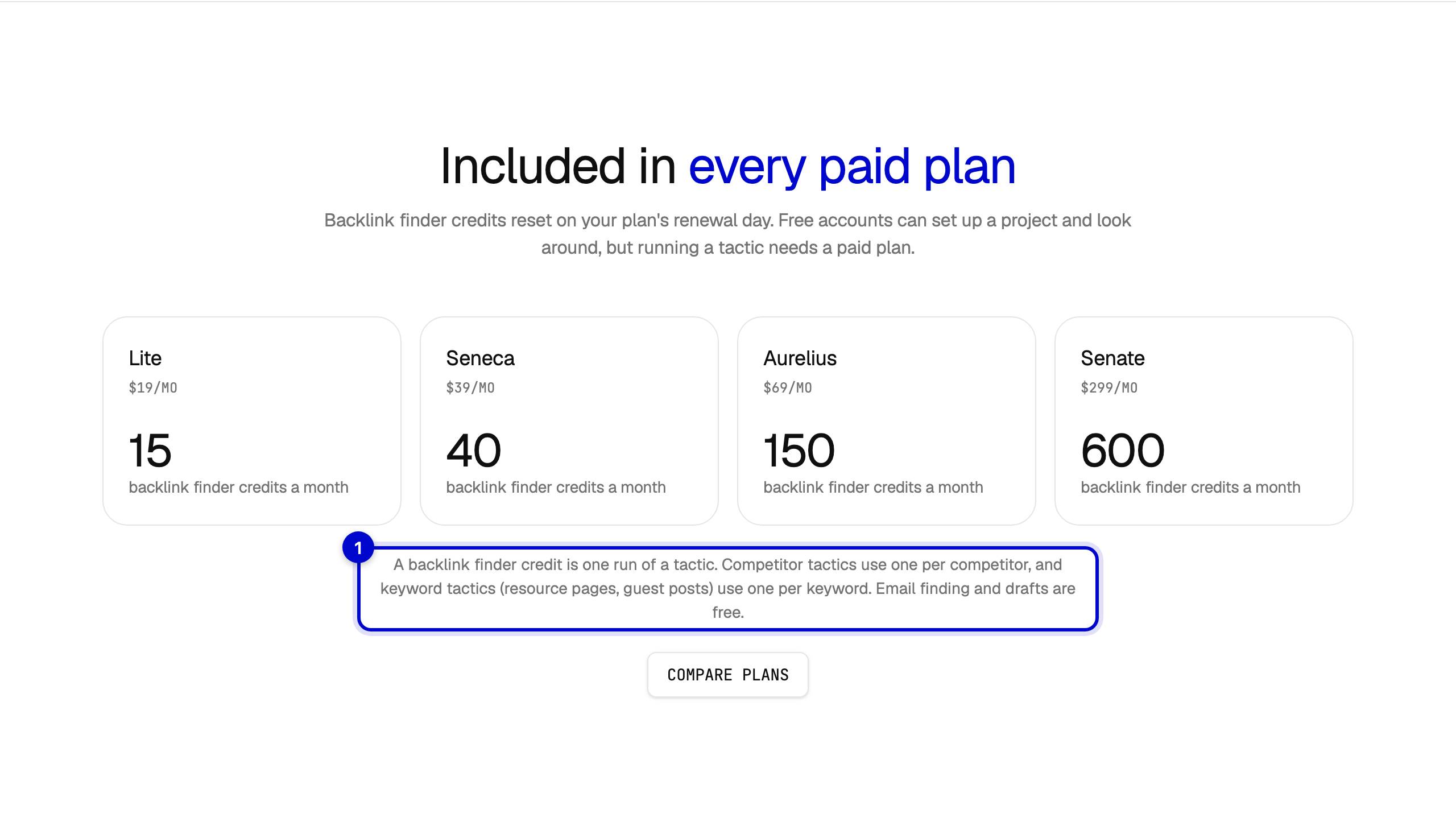
Step 2: Run a tactic. Pick a tab and press its run button, or use Run all, which lists every tactic it will run, what it skips and why, and the total credits before you confirm. Most tactics take about a minute; resource pages and broken links take two to three. You can leave the page and a notice appears in the bell when it is done.
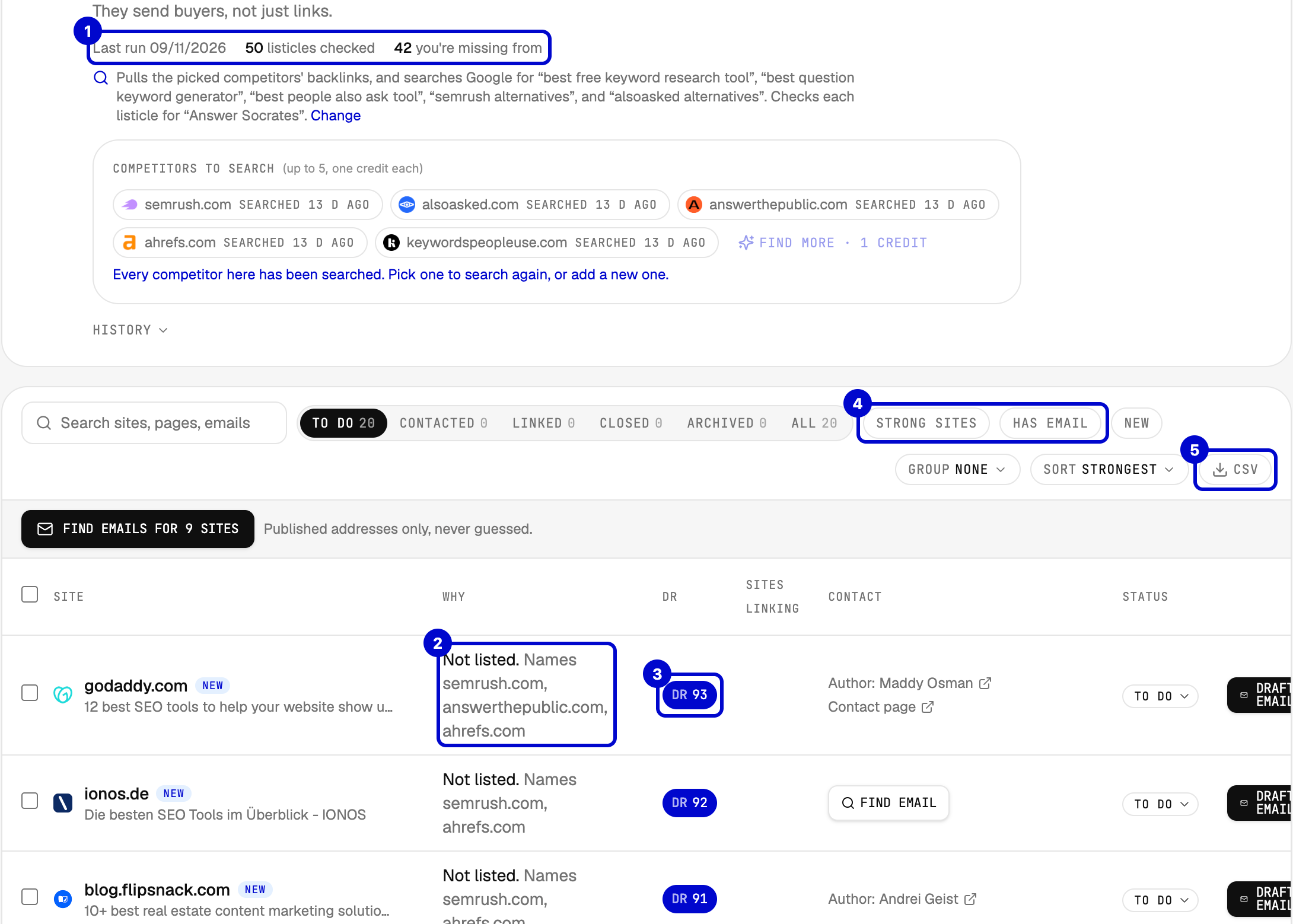
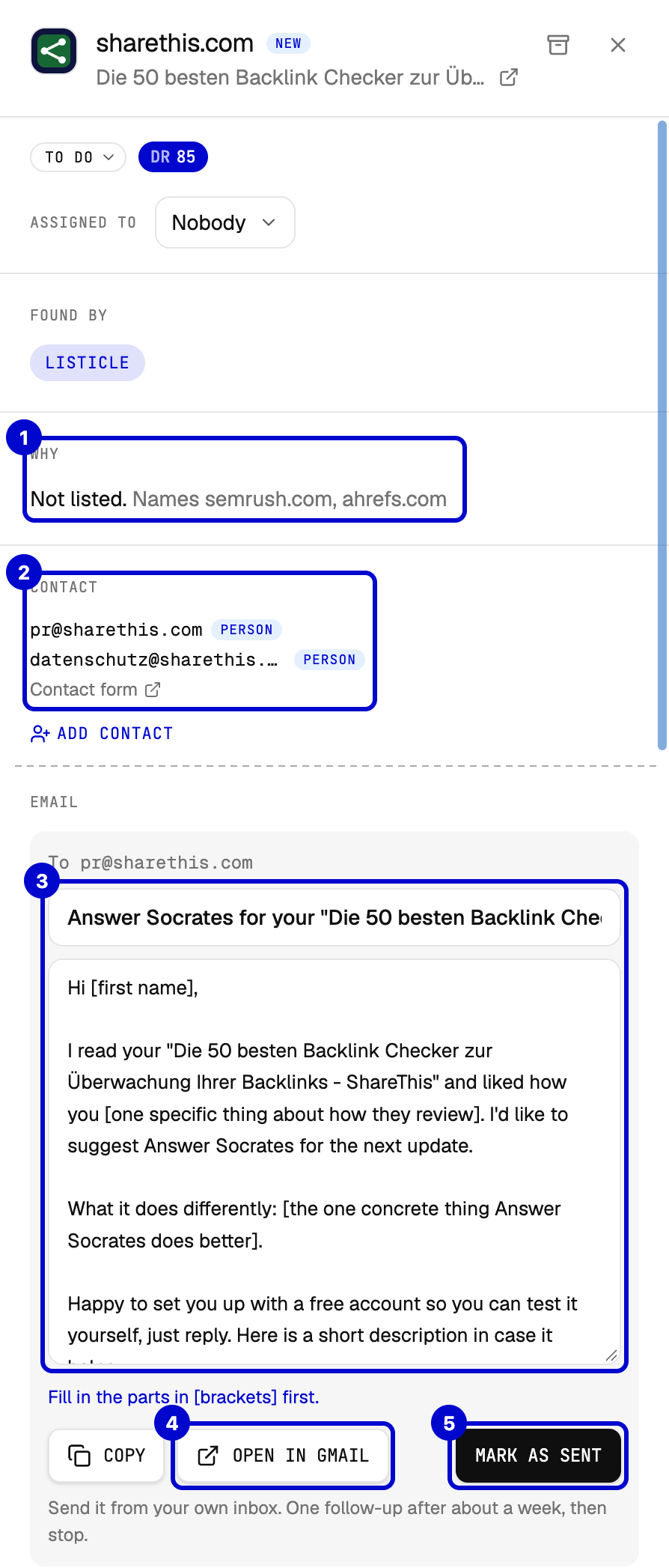
Step 3: Read the list, best first. Each row shows the site, why it fits (for example "Not listed. Names semrush.com, ahrefs.com"), a strength badge and a contact. Strength is the site's Ahrefs DR when available (50 and up shows as strong, 20 and up as medium) and otherwise a strength label from the backlink data. Filter by Strong sites or Has email, sort by Strongest, Newest or Site A to Z, and export to CSV for free.
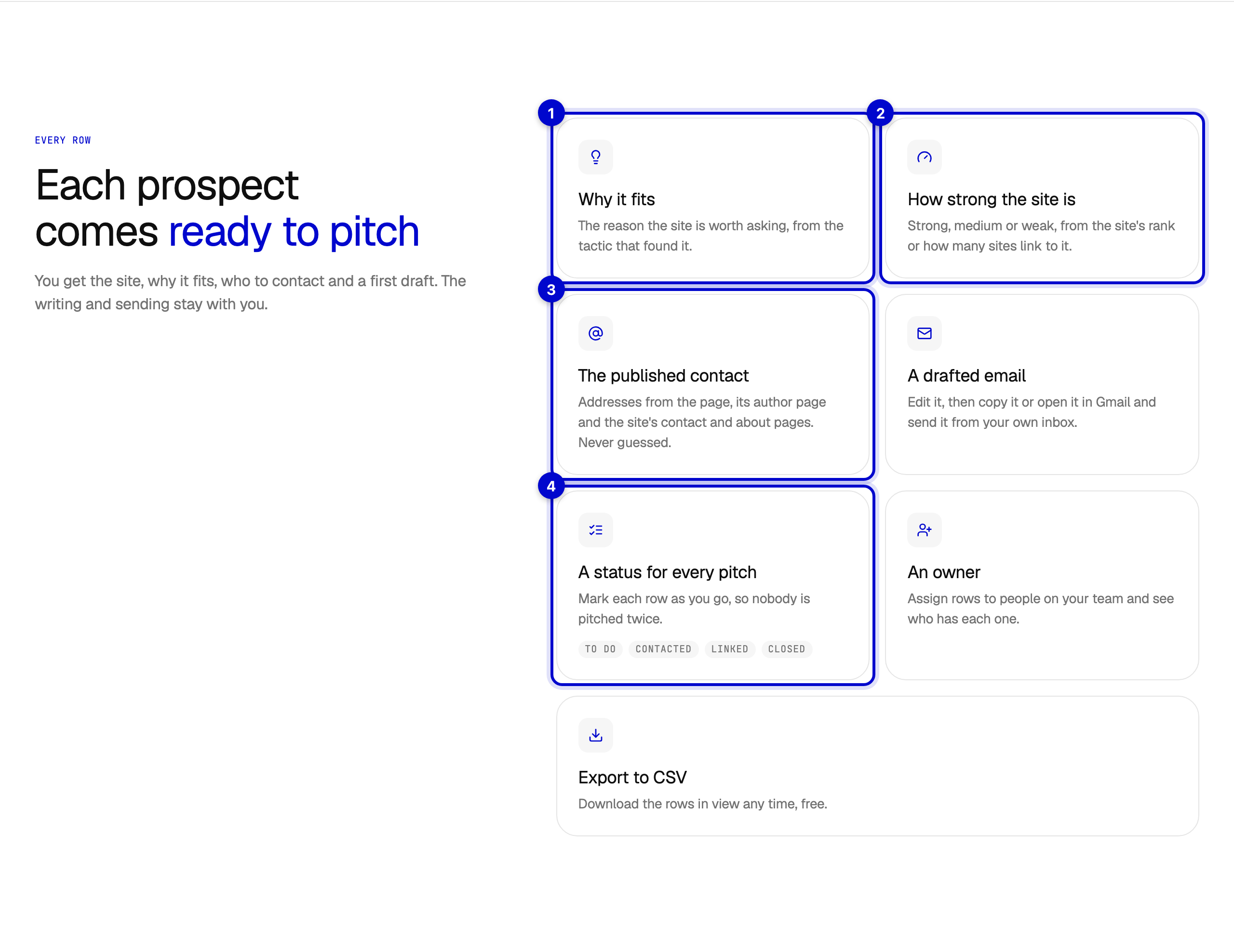
Step 4: Find the contact and draft the email. Open a row to find emails. The finder only uses addresses the site publishes: the page, its author page, and the site's contact and about pages. It never guesses. The row then has a draft email you edit, copy or open in Gmail. Nothing is sent for you; replies come to your own inbox.
Step 5: Track it. Set the row to Contacted when you send and Linked when the link goes live, or to Not interested or No reply when it goes nowhere. For dead competitor pages and skyscraper pages, a row can go straight to Content Studio as an article, with the original page and who links to it as notes for the writer.
A made-up example: a coffee roaster's first week
A made-up example: a small coffee roaster sells beans online and competes with two bigger roasters. They set up the project with their domain, both competitors, the keywords "specialty coffee beans" and "coffee subscription", and the brand name plus the founder's name.
They run the quick wins first. Reclaim finds an old brewing guide they deleted that a few sites still link to, so they redirect it to their current guide, with no emails needed. Mentions finds a local food blog that named them in a gift guide without a link: a short, friendly email.
Then Listicles. It finds a "best coffee subscriptions" article that names both competitors and not them. That one gets a careful pitch with a real reason to be added (they roast to order and ship within days). Link gap turns up a recipe site that links to both rivals' cold brew pages. Before pitching, the roaster checks it against the three tests: on topic, ranks for real recipes, and no "sponsored post" price list. It passes.
They skip a "write for us" site flagged for paid posts. That one fails test three.
The same thing in Ask Socrates
Ask Socrates, the chat in Answer Socrates, runs the same tactics as the Link Building section and saves new prospects to the same project. Type something like:
Get me backlinks for my coffee roastery. What can we win first?
The chat reads the project's link building plan first: every tactic in order, quickest and warmest first (Reclaim, then Mentions, then Listicles and Link gap, then the rest), with what has already run. It says what is done, then runs the next one or two tactics (at most two per turn). A card shows the credit cost and asks for approval when needed. When a run finishes, it names the best three to five prospects and why, finds published contacts for that tactic, and ends with a button for the next step. A named ask runs that tactic: "who links to my competitors" runs Link gap, and "best X lists" runs Listicles.
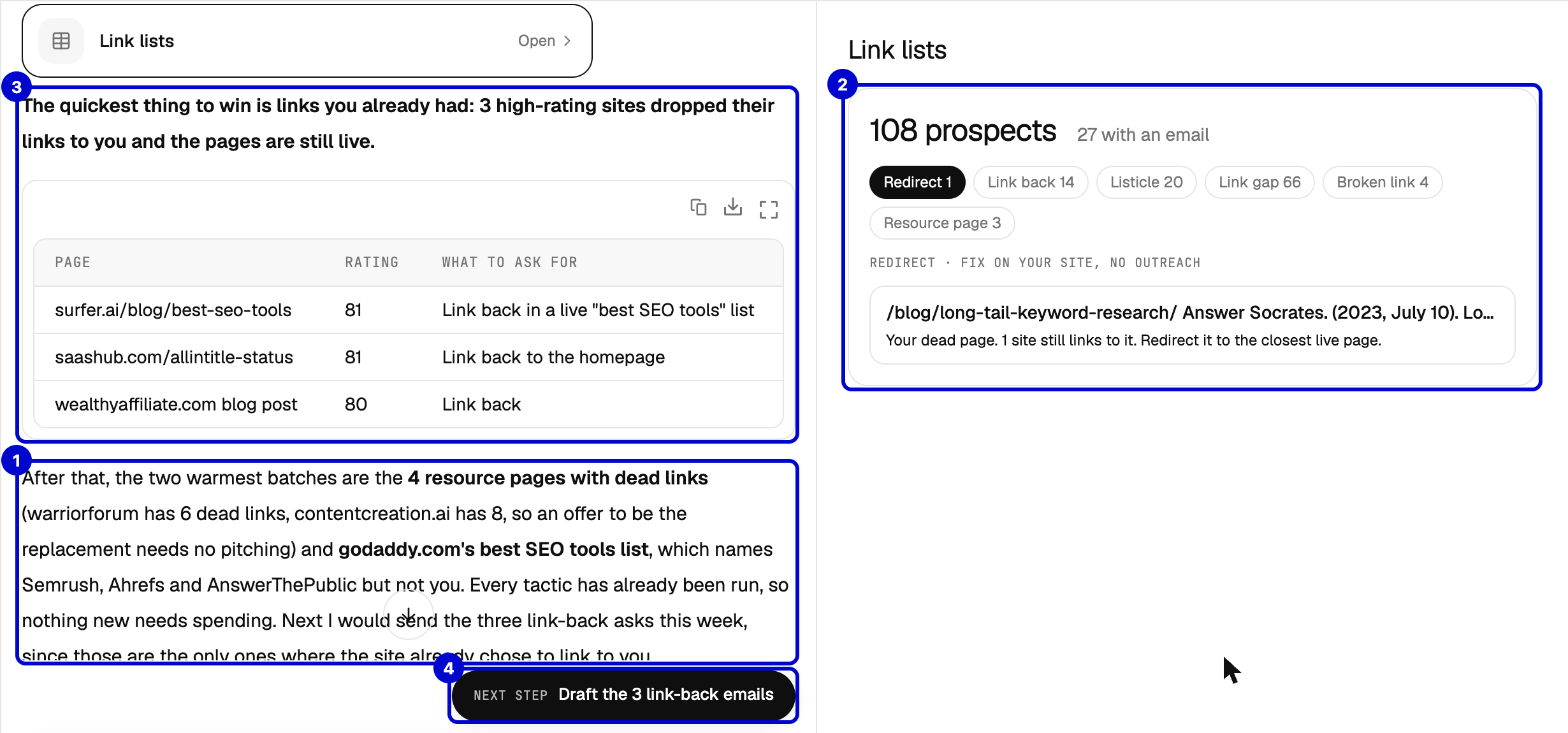
Two chat-only extras are useful here. You can ask for the domain rating of up to 20 sites at once, which is free, to size up prospects quickly. And if Ask Socrates has checked your prompts in AI answers, you can say "add these cited pages to my link prospects" to turn the pages AI engines cite into rows.
What the tool will not do for you
The tool finds and checks pages. It does not judge your page. If your replacement for a dead page is thinner than the original, or you are not a fit for a best-of list, no list fixes that.
It also does not check each prospect's traffic. The strength badge comes from links, so for any site you plan to pitch, look at whether it ranks for real searches (test two above). And when a site blocks the live check, its row still shows in the table like any other (the chat's Link lists panel does flag it). Open any row you plan to pitch before you count it.
Where to go next
| If you want to... | Read |
|---|---|
| Understand why links count at all | What backlinks are and why they still matter |
| Win the warmest links first | Turning unlinked brand mentions into links |
| Replace dead pages people still link to | Broken link building |
| Earn links from journalists | Digital PR with data studies |
| Write the email itself | Writing outreach emails that get replies |
| Run the whole thing from chat | Link building with Ask Socrates |
Sources
- Spam policies for Google web search (Link spam), Google Search Central, 2025
- Qualify your outbound links to Google, Google Search Central, 2025
- Domain Rating (DR): What It Is and How to Use It, Ahrefs, 2025
- SEO Starter Guide, Google Search Central, 2025
