Getting your pages cited in AI answers
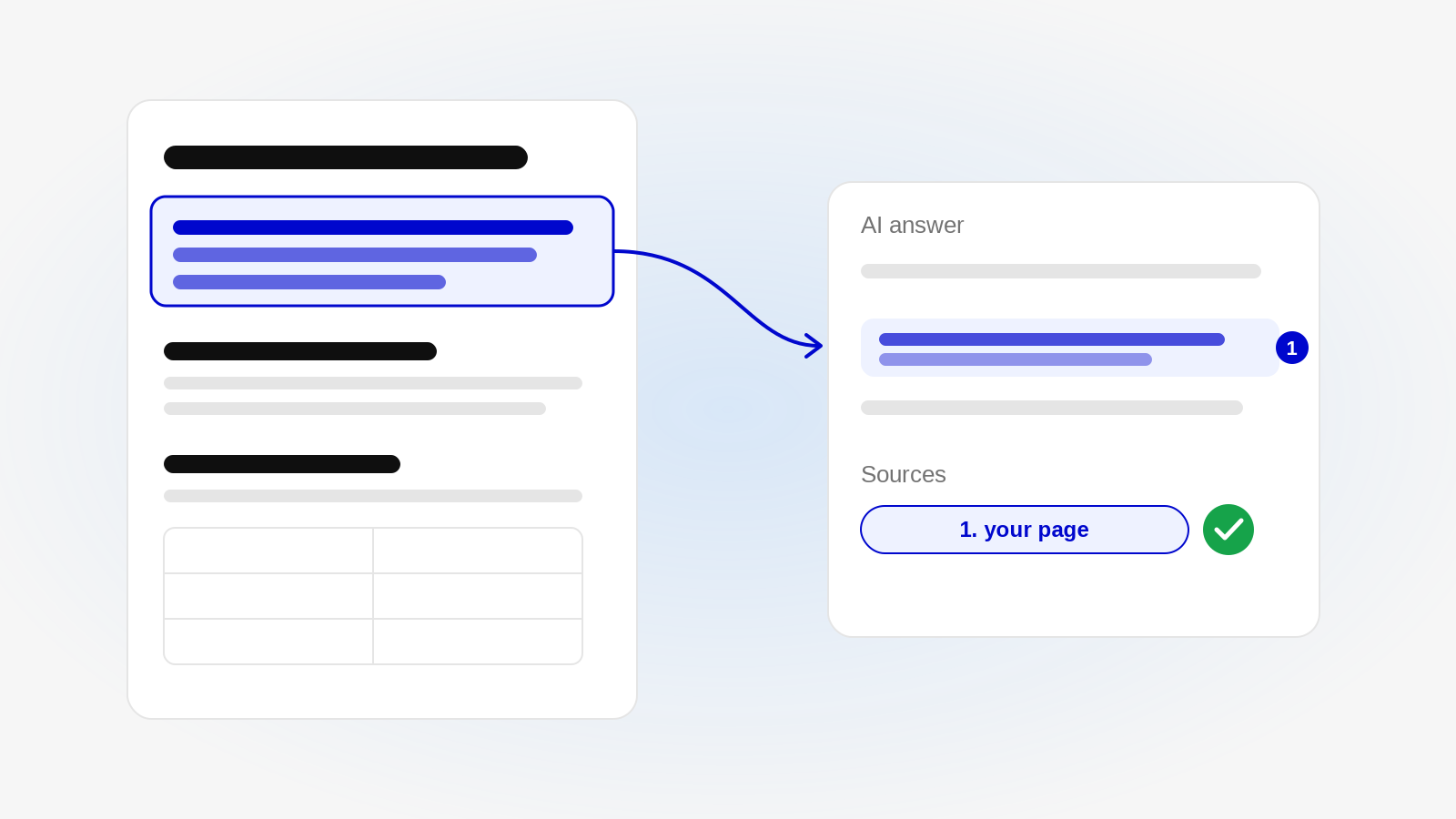
Getting cited in AI answers means letting each engine's search bot read your page, answering the prompt in words it can quote, and getting onto the lists and threads the engines already rely on. Most of it is SEO you can check, and you prove it worked by re-running the same prompts, not by one lucky answer.
Key takeaways
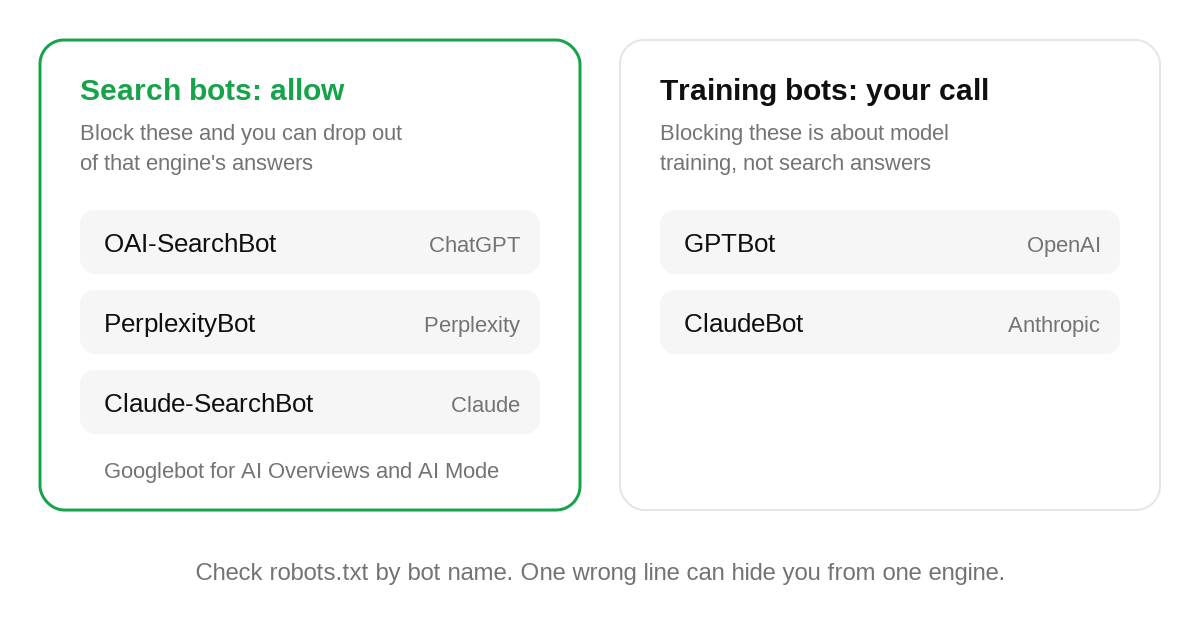
- Allow OAI-SearchBot, PerplexityBot, Claude-SearchBot and Googlebot; for Google AI features a page only needs to be indexed and eligible for a snippet.
- Put a two-sentence answer at the top, use the prompt's words in the title and H1, and give each follow-up search its own heading.
- Google's advice is unique, non-commodity content; the GEO lab study found quotes, statistics and sources helped and keyword stuffing hurt.
- Not every citation can be yours: get onto sticky best-of lists, directories and threads, found under Targets in the tracker's Citations page.
- In Ask Socrates, Fix this page runs a free check of Title, H1, Headings, Opening and Body against the prompt, then can send the change to Content Studio.
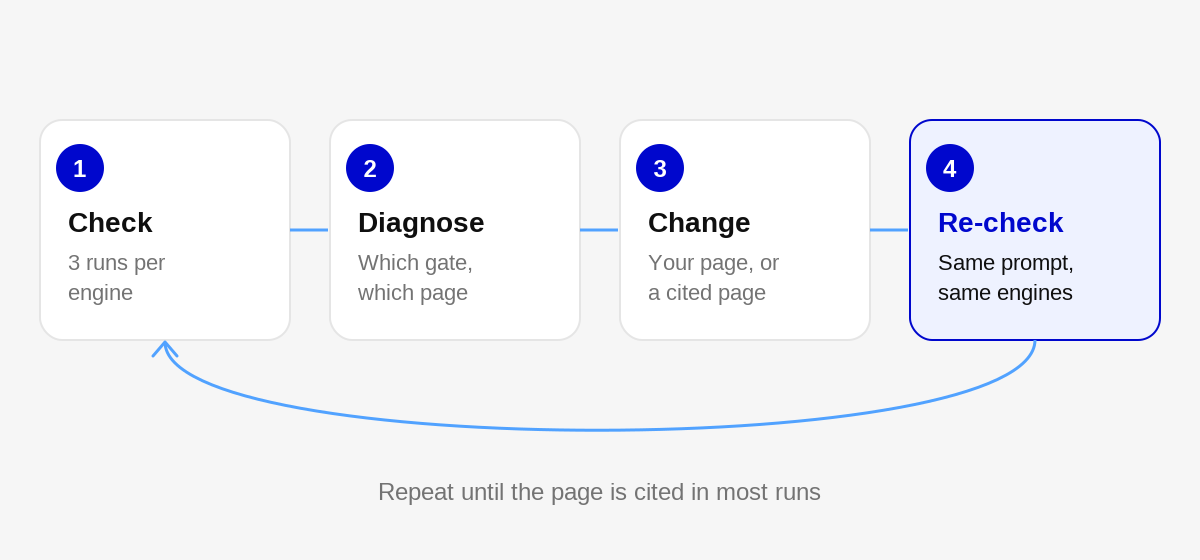
Getting cited means fixing the gate you failed
A page gets cited in an AI answer when the engine may crawl it, finds it with one of its searches, reads it and decides to use it. The lesson Why AI cites some pages and not others calls these the four gates. This lesson is the fixing half: what to change, in what order, and how to tell whether it worked.
The work splits two ways. Some of it is on your own page: make it readable, make it answer the prompt, give it facts nobody else has. The rest is on other people's pages: many answers are built from best-of lists, directories and forum threads, and you will not replace those with a better blog post. You get onto them.
One honest warning before the steps. No AI company publishes a list of ranking factors for citations. OpenAI's help page says ChatGPT ranks results "using multiple factors" and "placement is not guaranteed" [4]. Everything below is either documented by the platforms (and labelled so), backed by one study (labelled so), or plain good practice that makes a page easier to quote.
First make sure every engine can read the page
This part is documented, cheap to check and the most common silent failure. Run through it for every page you want cited.
| Check | Pass | Fail |
|---|---|---|
| ChatGPT | robots.txt allows OAI-SearchBot | OAI-SearchBot blocked: "will not be shown in ChatGPT search answers" [3] |
| Perplexity | robots.txt allows PerplexityBot | Blocked, against Perplexity's advice "to ensure your site appears in search results" [5] |
| Claude | robots.txt allows Claude-SearchBot | Blocked, which "may reduce your site's visibility" [6] |
| Google AI Overviews and AI Mode | Indexed and eligible for a snippet [1] | noindex, not indexed, or a nosnippet rule |
| Text | The answer is in the page's text | The answer only appears in an image, video or behind a click |
| Markup | Structured data matches what the page shows [1] | Markup claims things the page never says |
Google states there are "no additional requirements" for its AI features beyond this, and no special schema or AI text files to add [1]. If a guide tells you an llms.txt file is the key to Google's AI answers, Google's own page says otherwise.
Answer the prompt in the opening lines
Once an engine can read you, give it a sentence it can lift. Here is a made-up example. Harbour Plumbing, a small firm in Leeds, wants to be cited for the prompt "should I repair or replace a leaking water heater". Its current page is called "Water Heater Services" and opens with the company's history.
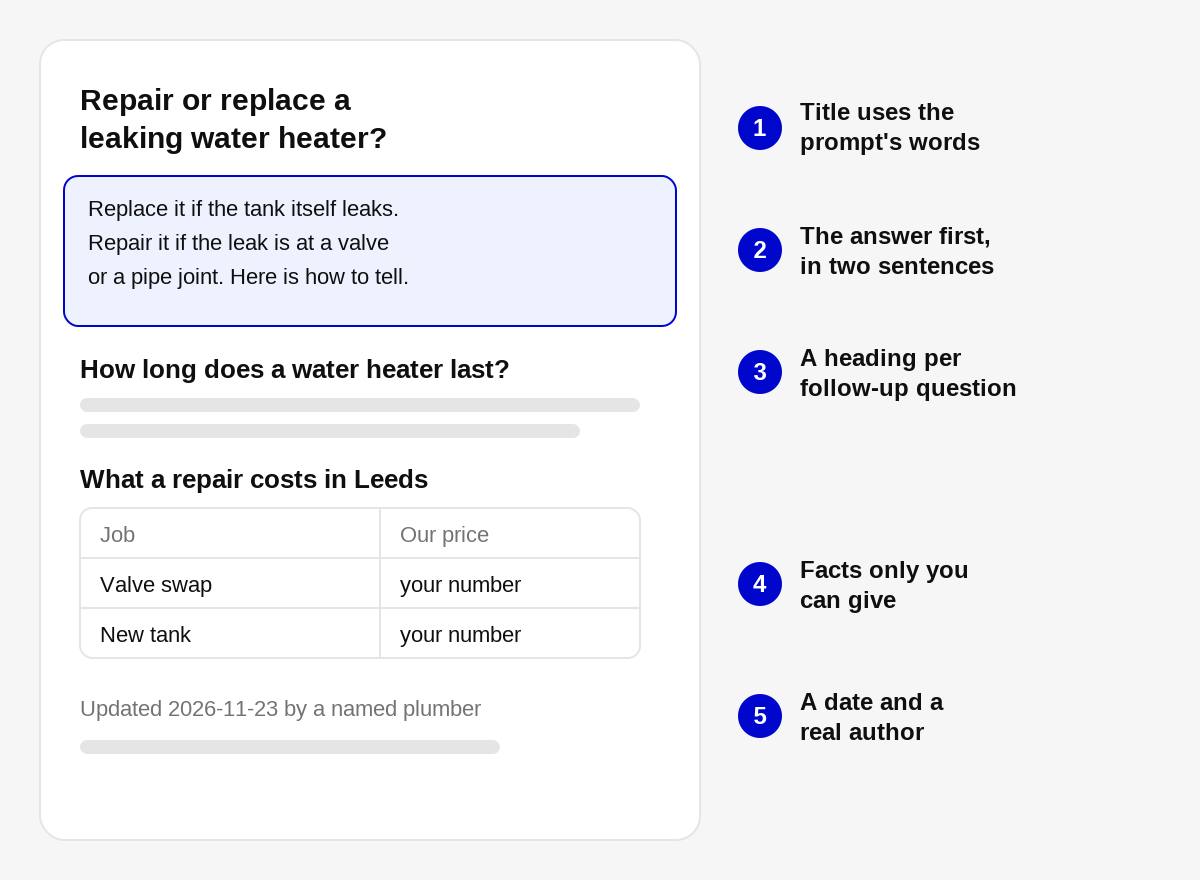
The rewrite does five things:
- The title and main heading use the prompt's words ("repair or replace", "leaking water heater"), so the page matches the search the engine runs.
- The first two sentences answer the question on their own: replace if the tank leaks, repair if it is a valve or joint.
- One heading per follow-up question, written as the question.
- Facts only Harbour can give: its own prices in Leeds, what it sees on real jobs.
- A date and a named author, so a reader (and a quote) can be checked.
To be clear about the evidence: no engine documents that it prefers an answer in the opening lines. The reason to do it is practical. A sentence that answers the prompt without needing the paragraphs around it is easy to quote, and an opening that rambles gives the engine nothing to use. This is also what Ask Socrates checks when you ask it to fix a page, shown further down.
Cover the follow-up searches with headings
Google says AI Mode issues "multiple related searches concurrently across subtopics" [8], and both AI Overviews and AI Mode may use this fan-out [1]. OpenAI says ChatGPT rewrites a question into "one or more targeted queries" [4]. Your page can be found through any of them.
For Harbour Plumbing, the follow-up searches might be "how long does a water heater last", "water heater leaking from the bottom", "cost to replace a water heater in Leeds" and "is a leaking water heater dangerous". Each one deserves either a heading on this page or a page of its own. A heading that repeats the search in plain words helps both a reader skimming the page and an engine matching it to a sub-search.
You do not have to guess the follow-ups. The Radar in the LLM Brand Tracker lists Fanout Queries, the extra searches the models ran, and Ask Socrates' page check lists the follow-up searches no heading on your page covers.
Add facts that only you can give
Google's advice for its AI search features, in its May 2025 post: "Focus on making unique, non-commodity content" [2]. A commodity line is one every competing page already says ("water heaters do not last forever"). A non-commodity line is one only you can write ("the leaks we are called out for most are at the pressure relief valve, which is a repair, not a replacement").
The GEO study points the same way, with a caveat. On a simulated answer engine built on GPT-3.5, adding quotations, statistics and cited sources to a page raised how much of the answer it supplied, and keyword stuffing did worse than no change [7]. Every page in that test was already one of five sources the engine read, so it shows what helps once you are read, not how to get found. It is one lab study, not a guarantee.
| Instead of this | Write this |
|---|---|
| "Prices vary" | Your actual price range, with the date you set it |
| "Many customers ask..." | The question, as a heading, with your answer under it |
| "Studies show" | The study's name and a link |
| A stock photo | A photo from a real job, with a caption that says what it shows |
| The keyword five times | The keyword once in the title and heading, then plain writing |
Get onto the pages the engines already cite
Some prompts are answered almost entirely from other people's pages. For "best coffee subscription" or "best keyword research tool", the cited sources are often roundups, review sites, forum threads and videos. A better page of your own may never displace them. Getting named on them can.
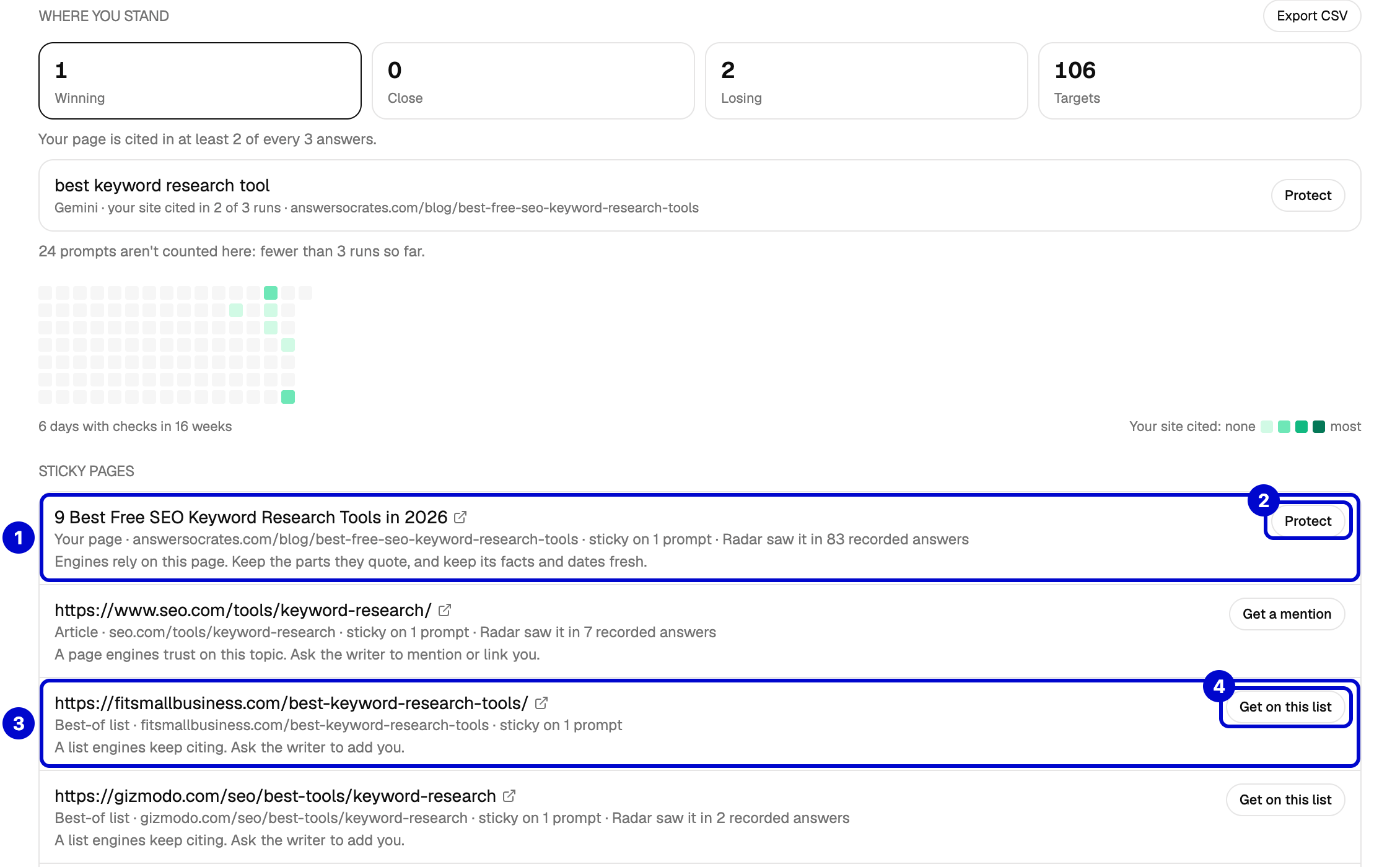
Answer Socrates sorts cited pages by type and suggests one action for each. This table is taken from the actions the citations panel shows:
| Cited page | Action | What it means |
|---|---|---|
| Your page, sticky | Protect | Keep the parts engines quote, and keep facts and dates fresh |
| Your page, not sticky | Fix this page | Tighten the opening answer and headings |
| Competitor's own page | Compare with mine | See what it says that yours does not |
| Forum thread | Answer there | Add a helpful answer that names you |
| Directory or review site | Get listed | Get a listing and reviews on it |
| Best-of list | Get on this list | Ask the writer to add you |
| Video | Pitch the creator | Ask for a mention, or make your own |
| Article | Get a mention | Ask the writer to mention or link you |
Start with pages that are sticky (cited in at least 2 of every 3 runs), because the engines rely on them. A list cited once in ten runs is not worth a week of outreach. For how to approach writers, see Writing outreach emails that get replies; for forums, follow the community's rules and say who you are.
How to do it in Answer Socrates
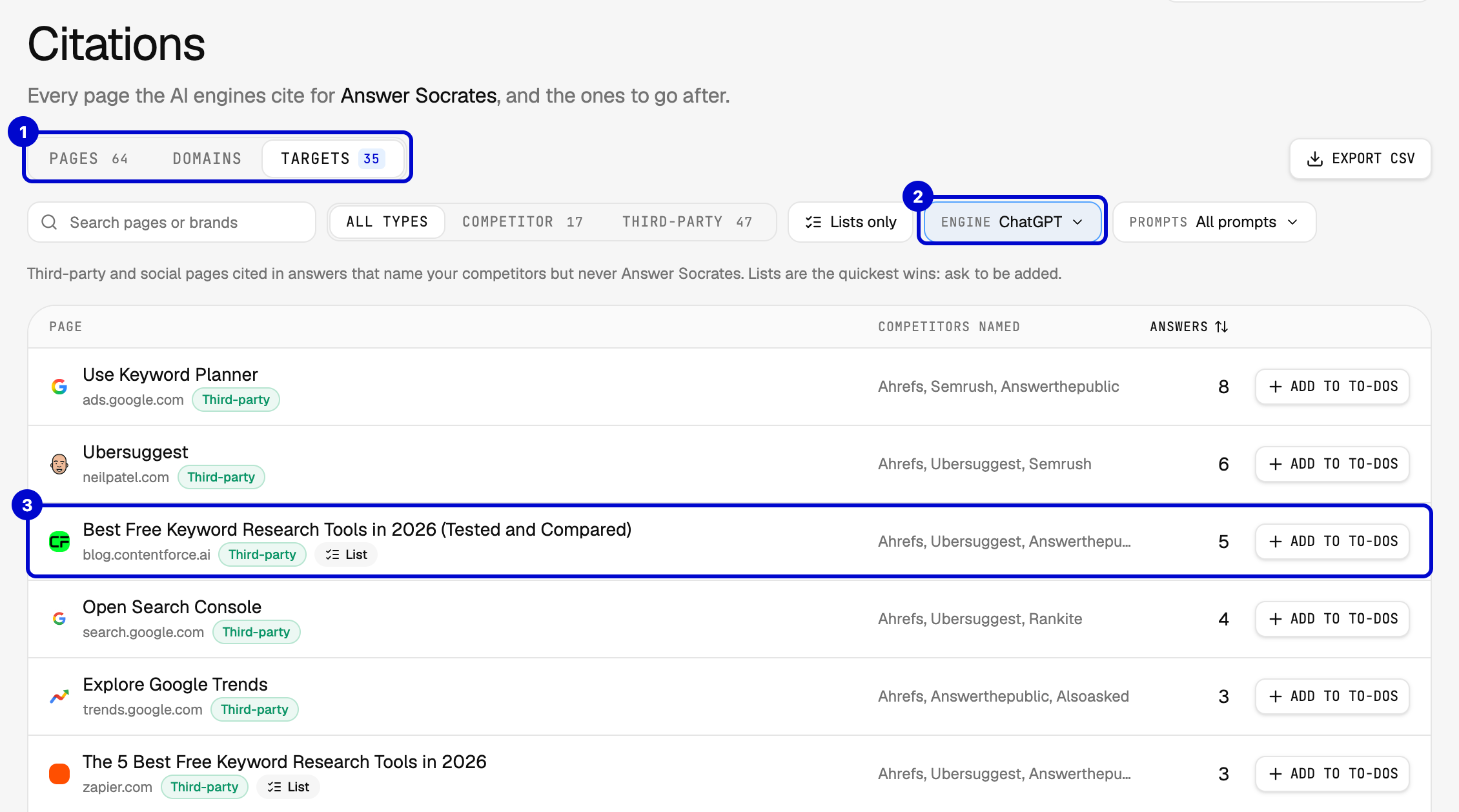
Step 1. Find the pages to go after. In the LLM Brand Tracker, open Citations and switch to Targets: third-party and social pages cited in answers that name your competitors but never you. Filter by engine, turn on Lists only for roundups, and press Add to To-dos on the ones you will work on.
Step 2. Work the board. To-dos is a board with Suggested, To do, In progress and Done columns. Suggested holds ideas waiting for a yes or no, and the best citation targets are added there for you.
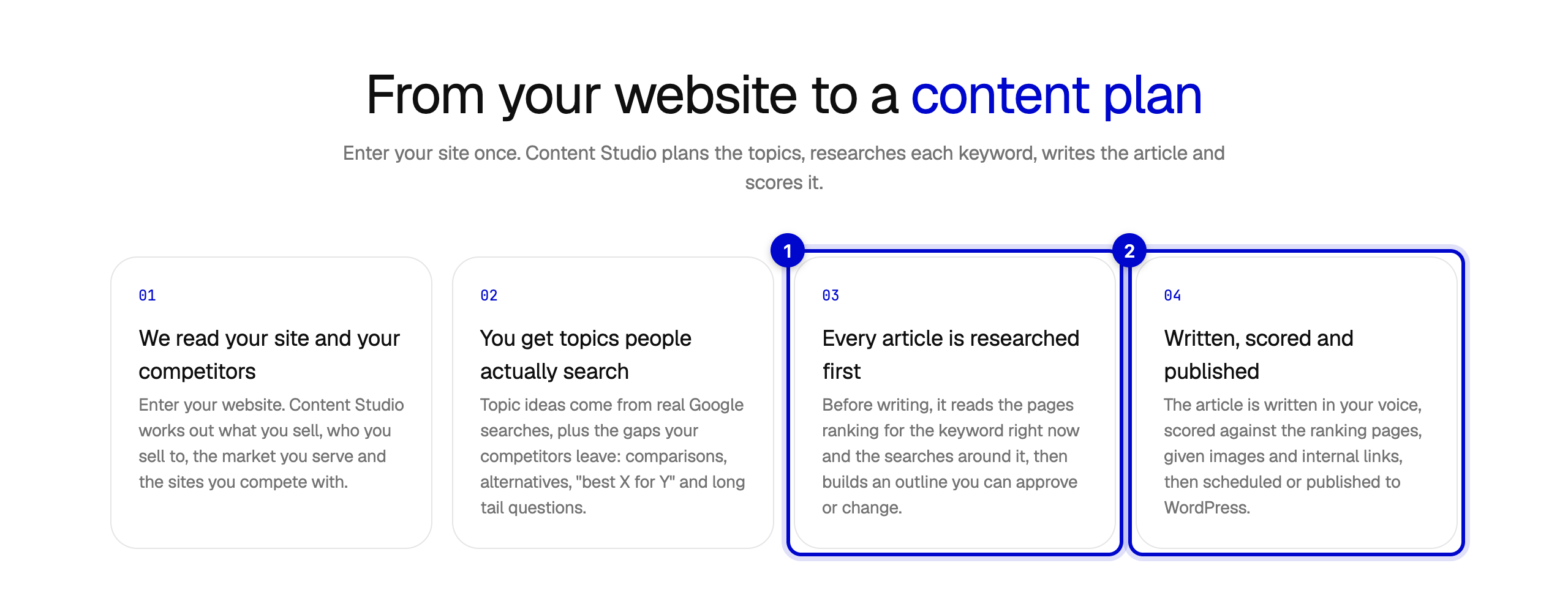
Step 3. Write or rewrite the page in Content Studio. When the fix is a new page or a rewrite, Content Studio researches before it writes: it reads the pages ranking for the keyword and the searches around it, builds an outline you approve, then writes and scores the article and can schedule or publish it to WordPress. The full walk-through is in Writing with Content Studio, step by step.
Step 4. Check again, the same way. Re-run the same prompt on the same engines, or set it to repeat weekly. Compare the share of runs that cite your page, not one answer.
The same thing in Ask Socrates
Ask Socrates, our chat, runs the whole loop from one conversation. Start with:
The citations panel is free (it reads saved checks). Each cited page has its action button from the table above. Fix this page asks the chat to fix that page for that prompt "so it gets cited every time".
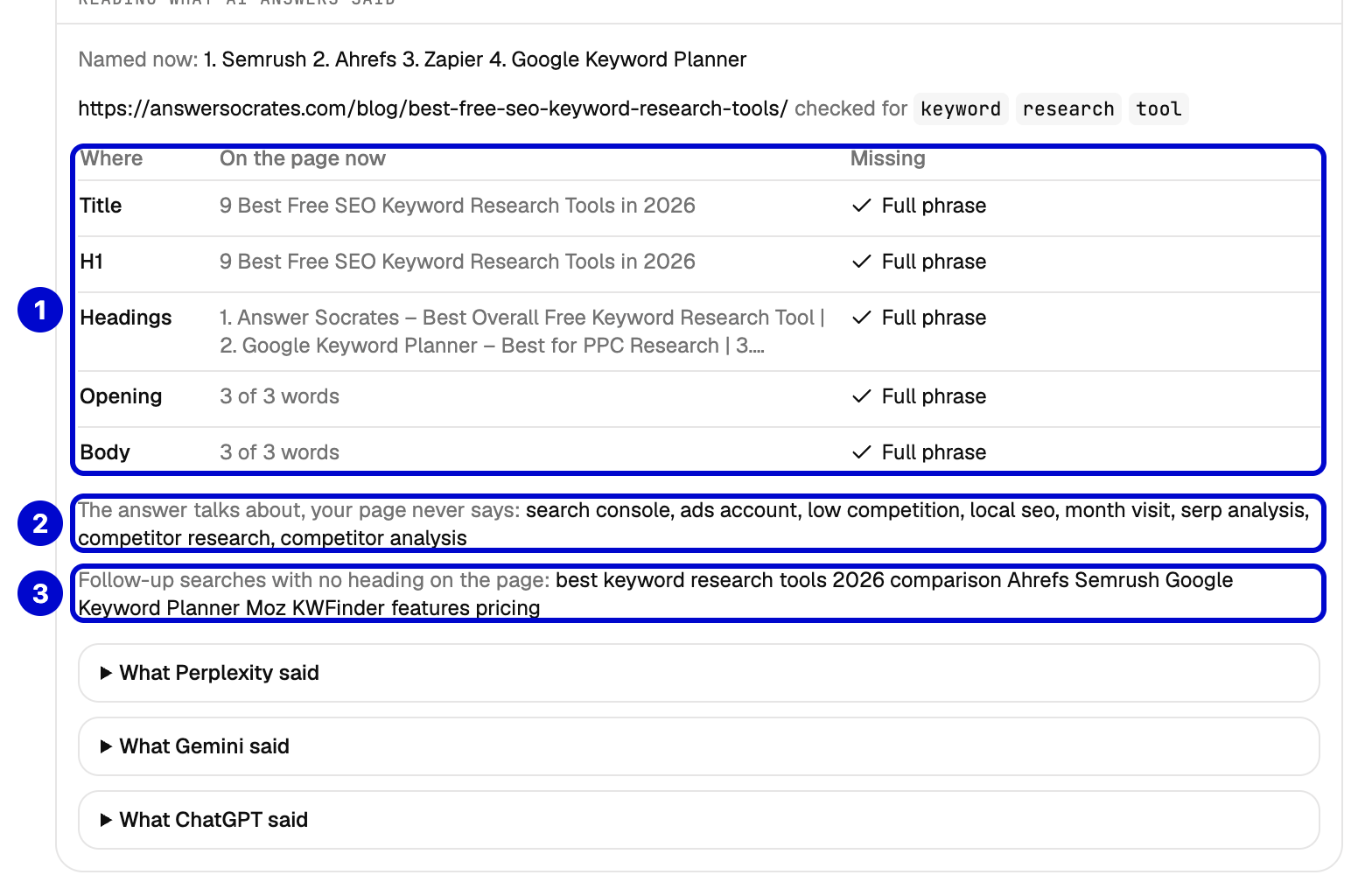
The fix runs a free page check against the prompt. It reads your page and shows, for the Title, H1, Headings, Opening and Body, which of the prompt's main words are there and which are missing. Under the table it lists what the AI answers talk about that your page never says, and the follow-up searches with no heading on the page. Then it shows what each engine answered and who it named.
From there you can say "plan this change in Content Studio", which puts it in Content Studio as a planned article with the brief as notes, free until you write it. Or say "write it": the chat writes the draft after you approve the article credits on a card (1 article credit per 2,500 words; standard length is 1,500 words). Nothing is published until you publish it.
Once the page has been live a while, ask "did the article work?". The chat compares the AI checks on its target prompts before and after it went live, for free, and says so when a prompt has not been checked since.
Where to go next
| If you want to... | Read |
|---|---|
| Understand why some pages are cited | Why AI cites some pages and not others |
| Find the gap the top pages leave | Information gain: adding what other pages lack |
| Write the page step by step | Writing with Content Studio, step by step |
| Find lists and pages to get onto | Finding link opportunities |
| Measure whether it is working | Tracking AI visibility over time |
Sources
- AI features and your website, Google Search Central, 2026
- Top ways to ensure your content performs well in Google's AI experiences on Search, Google Search Central Blog, 2025
- Overview of OpenAI Crawlers, OpenAI, 2026
- Searching the web with ChatGPT, OpenAI Help Center, 2026
- Perplexity Crawlers, Perplexity, 2026
- Does Anthropic crawl data from the web, and how can site owners block the crawler?, Anthropic Help Center, 2026
- GEO: Generative Engine Optimization (Aggarwal et al., KDD 2024), arXiv, 2024
- Expanding AI Overviews and introducing AI Mode, Google, 2025
- Introduction to robots.txt, Google Search Central, 2026
