SEO vs AI search: what changes and what does not
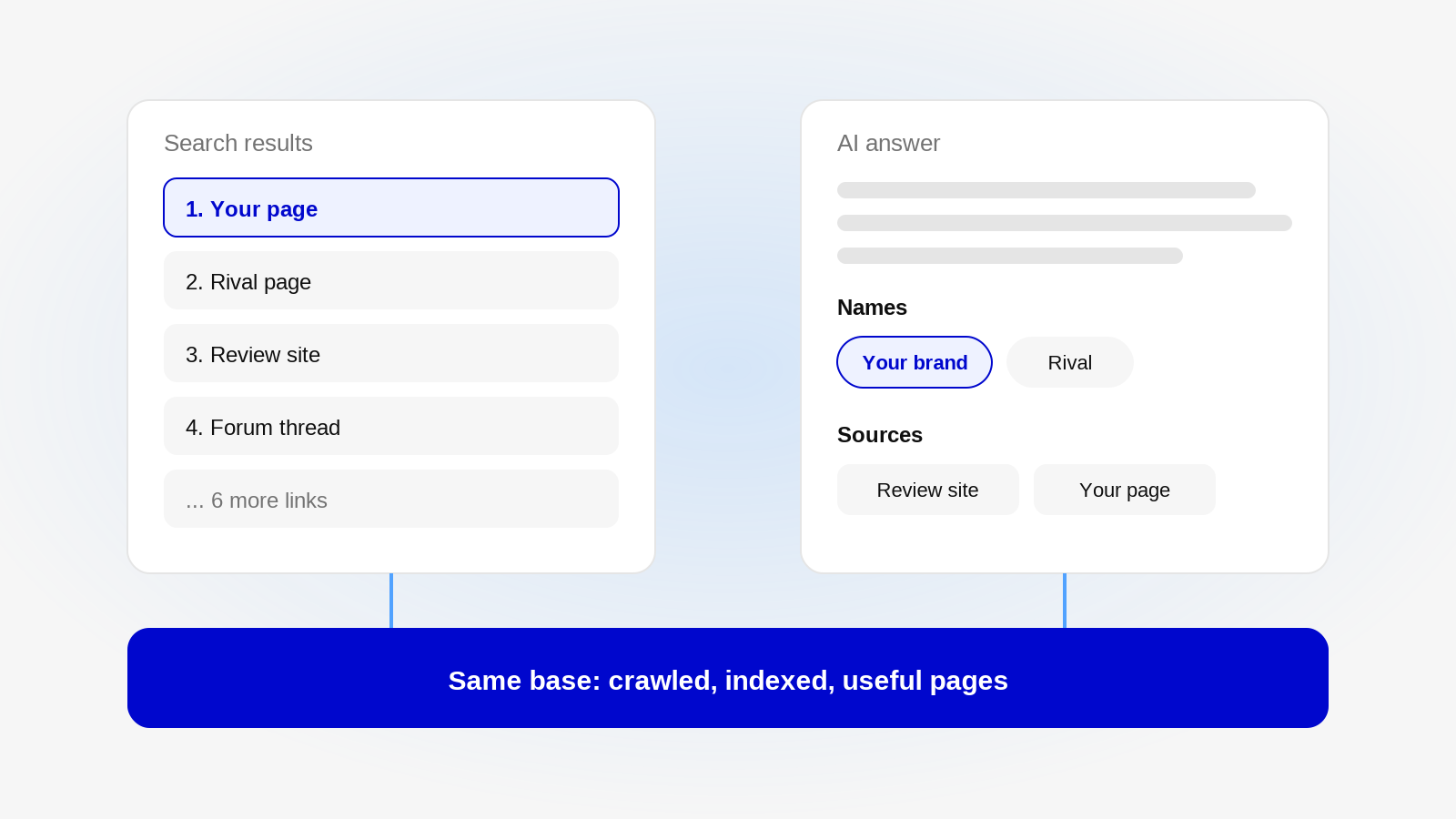
AI search runs on top of ordinary search, so the SEO that gets a page crawled, indexed and ranked is also what gets it read by AI Overviews and ChatGPT. What changes is the question (longer), the result (one answer naming a few brands) and the click (rarer), which adds prompt research and answer checks to your work.
Key takeaways
- Google says SEO best practices still apply to AI Overviews and AI Mode, with no extra requirements and no special schema to add.
- In Pew's March 2025 browsing study, people clicked a result link on 8% of Google visits with an AI summary, against 15% without one.
- Ahrefs found only 37.9% of URLs cited in AI Overviews rank in the top 10 for the same search, so answer the follow-up questions too.
- The new work is prompt research, repeated answer checks across engines and getting onto the sites AI engines cite.
- One Answer Socrates keyword search gives both lists: question groups to rank for and an AI Prompts section to check in AI answers.
AI search is built on top of SEO, not instead of it
Here is the short answer to "SEO or AI search?": you need both, and most of the work is shared. AI answers in Google and ChatGPT are written from pages a search engine has already found, so the page that earns a ranking is usually the page the AI gets to read.
Google says this plainly in its guide for site owners. "The best practices for SEO remain relevant for AI features in Google Search," and there are "no additional requirements to appear in AI Overviews or AI Mode, nor other special optimizations necessary" [1]. ChatGPT works the same way from the other side: it sends your question to search providers, reads what comes back and writes an answer, as the lesson on what AI search is explains.
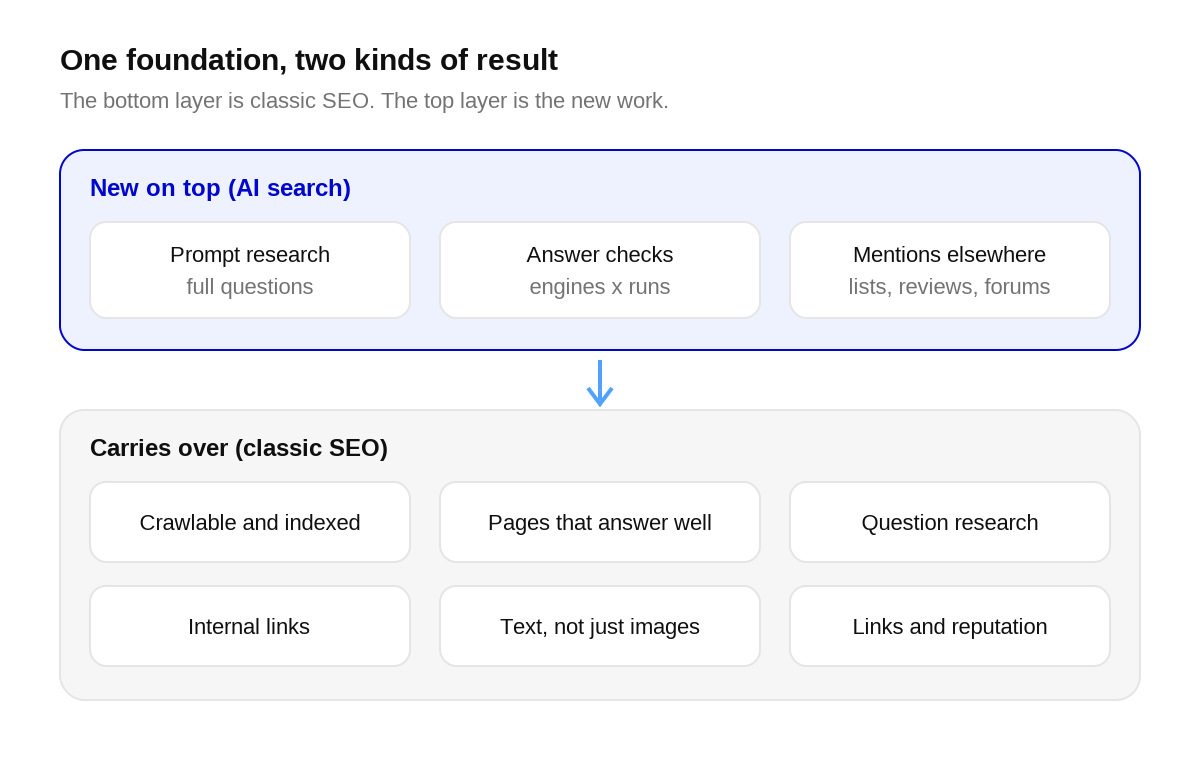
So the useful question is not "which one?" It is "what carries over unchanged, what changes, and what is new work?" This lesson answers those three in turn.
What carries over unchanged
Google lists the SEO basics that still apply to its AI features [1]. Each one is ordinary SEO you may already do:
- Let crawlers in. Allow crawling in robots.txt "and by any CDN or hosting infrastructure" [1]. A firewall rule that blocks Googlebot keeps you out of the AI answer too.
- Link your pages together. Make content "easily findable through internal links" [1].
- Put the important part in text. Google asks that important content be "available in textual form" [1]. A price list that lives only in an image cannot be quoted.
- Keep structured data honest. Your structured data should match "the visible text on the page", and there is "no special schema.org structured data that you need to add" [1].
- Keep Merchant Center and Business Profile up to date if you sell products or serve a local area [1].
Google's blog post on doing well in its AI experiences adds one more, which is really the oldest SEO advice there is: focus on "making unique, non-commodity content" that people find helpful [2]. A page that only repeats what ten other pages say gives an AI nothing it cannot get elsewhere.
The controls carry over too. The same nosnippet, max-snippet and noindex rules that limit what Google shows from your page in normal results also apply to its AI features [1]. And the traffic is counted in the same place: clicks from AI Overviews and AI Mode appear in Search Console's Performance report under the Web search type, mixed in with normal results [1].
What changes: the question, the answer and the click
Three things are different enough that you have to adjust how you work.
The question gets longer. Google says people are "asking longer and more specific questions" and asking follow-ups "to dig even deeper" [2]. A keyword like "trail shoes" becomes "best trail shoes for wide feet on rocky ground". That is why the next lessons treat the prompt, not the keyword, as the unit of research.
The answer is one block of text, not ten links. A results page gives ten places to appear. An AI answer names a handful of brands and links a few sources. You are either in it or you are not, and "position 4" stops meaning much.
The click gets rarer. In a Pew Research study of 900 US adults' real browsing in March 2025, people clicked a normal result link on 8% of Google visits that showed an AI summary, against 15% of visits without one. They clicked a link inside the summary itself on about 1% of visits [3].
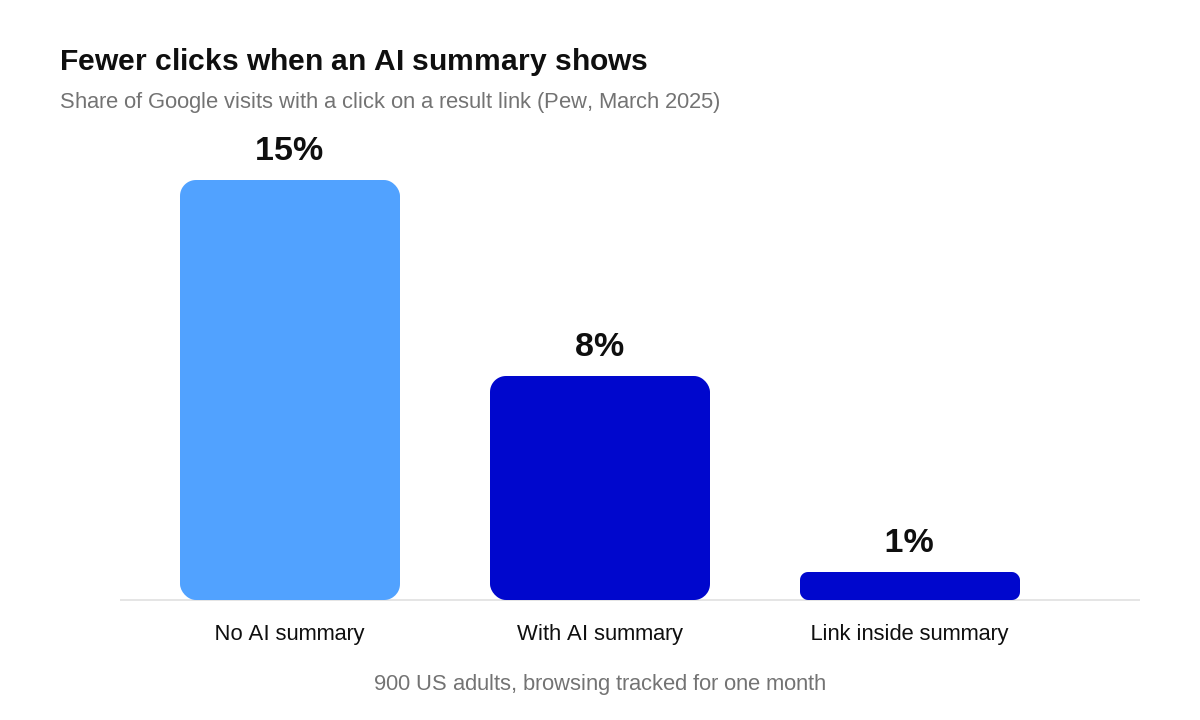
Google's own view is that the clicks it does send from AI Overviews are "higher quality", meaning people spend more time on the site [1]. Both can be true. You get fewer visits from the same search, so being named in the answer matters more, and you judge success by what visits do (sales, sign-ups, enquiries), which is also Google's advice [2].
Ranking still matters, but not one to one
If AI answers are built from search results, you might expect the cited pages to be the top ten results for the same search. Most of the time they are not.
Ahrefs looked at 4 million URLs cited in Google AI Overviews across 863,000 searches, in an update published in March 2026 [4]. Only 37.9% of the cited URLs also appeared in the first ten results for that search. About 31% ranked between 11 and 100, and about 31% ranked below the top 100 [4].
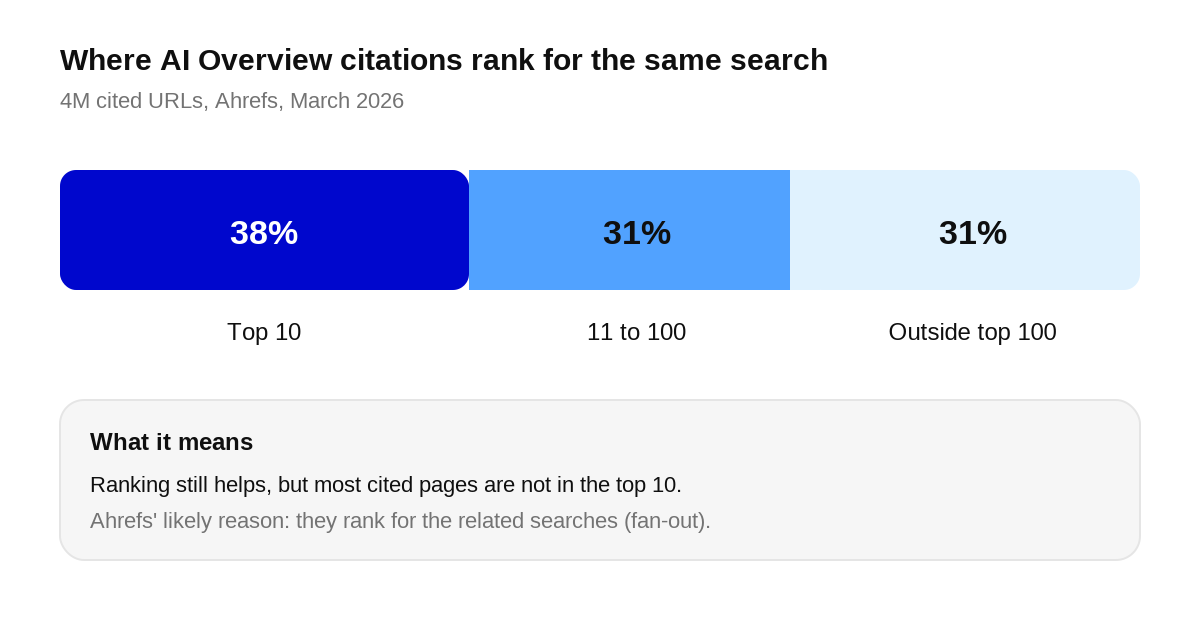
Ahrefs' likely explanation, which it presents as a guess rather than a proven cause, is query fan-out: the AI splits the question into related searches and cites pages that rank well for those, not for the original words [4]. Google confirms that AI Overviews and AI Mode may run "multiple related searches across subtopics and data sources" [1].
For your work, that means two things:
- Rank for the follow-up questions, not only the head term. A page that answers "how long do trail shoes last" can be cited for "best trail shoes" because the AI searched the first while writing about the second.
- A top-ten ranking is not a guarantee. It helps, but you still have to check whether the answer names you.
The new work on top
This is the part classic SEO does not cover. Here is how each familiar task changes, and what is new.
| Classic SEO task | AI search version | New or adjusted? |
|---|---|---|
| Keyword research | Prompt research: the full questions buyers ask an assistant | Adjusted |
| Rank tracking | Answer checks: is your brand named, in how many answers, on which engines | New |
| One check of a ranking | Several runs, because AI answers change each time you ask | New |
| Link building | Getting onto the pages AI engines cite: best-of lists, reviews, forums | Adjusted |
| Traffic reports | Judge AI visits by what they do, not how many there are | Adjusted |
| Technical SEO | The same, plus checking you do not block AI search crawlers | Mostly the same |
Two of these deserve a sentence more.
Answer checks need repeats. A ranking is fairly stable from one hour to the next. An AI answer is not. Ask the same question twice and you can get a different list of brands, which is why the lesson on checking brand mentions asks for several engines and several runs per prompt.
Mentions elsewhere count more. An AI can name your brand because a review site or a "best of" list names you, even if your own page is never read. So the pages that write about your category become targets in their own right, much like link prospects.
A worked example: one store, two reports
A made-up example: a running shoe store with a strong blog. Its SEO report for "trail running shoes for wide feet" looks good: position 3, steady for months.
Then the owner checks the same need as a prompt in three AI engines, three runs each: "What are the best trail running shoes for wide feet?" The store's brand is named in 1 of 9 answers. Two rival stores and one review site are named in most of them, and the review site is cited as a source in 6 of the 9.
The two reports disagree because they measure different things:
| SEO report | AI answer check | |
|---|---|---|
| Unit | The search "trail running shoes for wide feet" | The prompt "best trail running shoes for wide feet?" |
| Result | Position 3 | Named in 1 of 9 answers |
| What it says | Google trusts the page | The engines learn about this topic from a review site |
| Next step | Keep the page fresh | Get the store's shoes onto that review site; answer the fan-out questions (sizing, toe box width) on the blog |
Neither report is wrong. The SEO report says the page is healthy. The AI check says the brand is missing from the conversation, and points at the one site that shapes it.
How to do it in Answer Socrates
You can do the shared research and the new checks from the same starting point. Here are the steps.
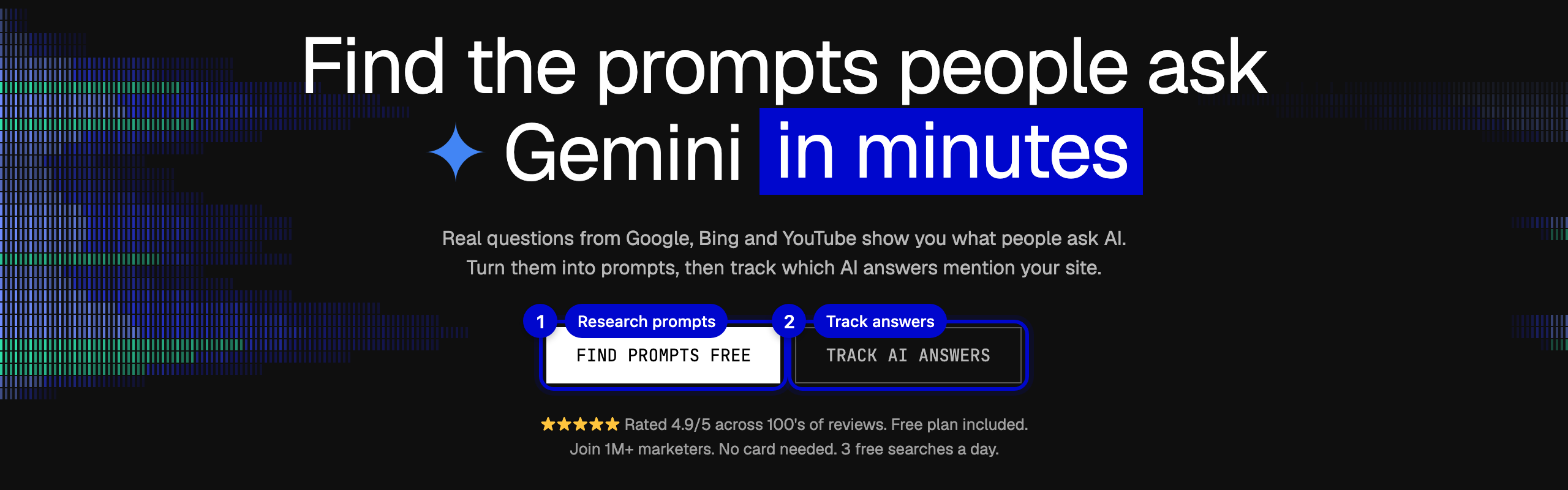
Step 1. Start from the homepage. The two buttons map to the two halves of the job: find what people ask, then see what AI answers say.
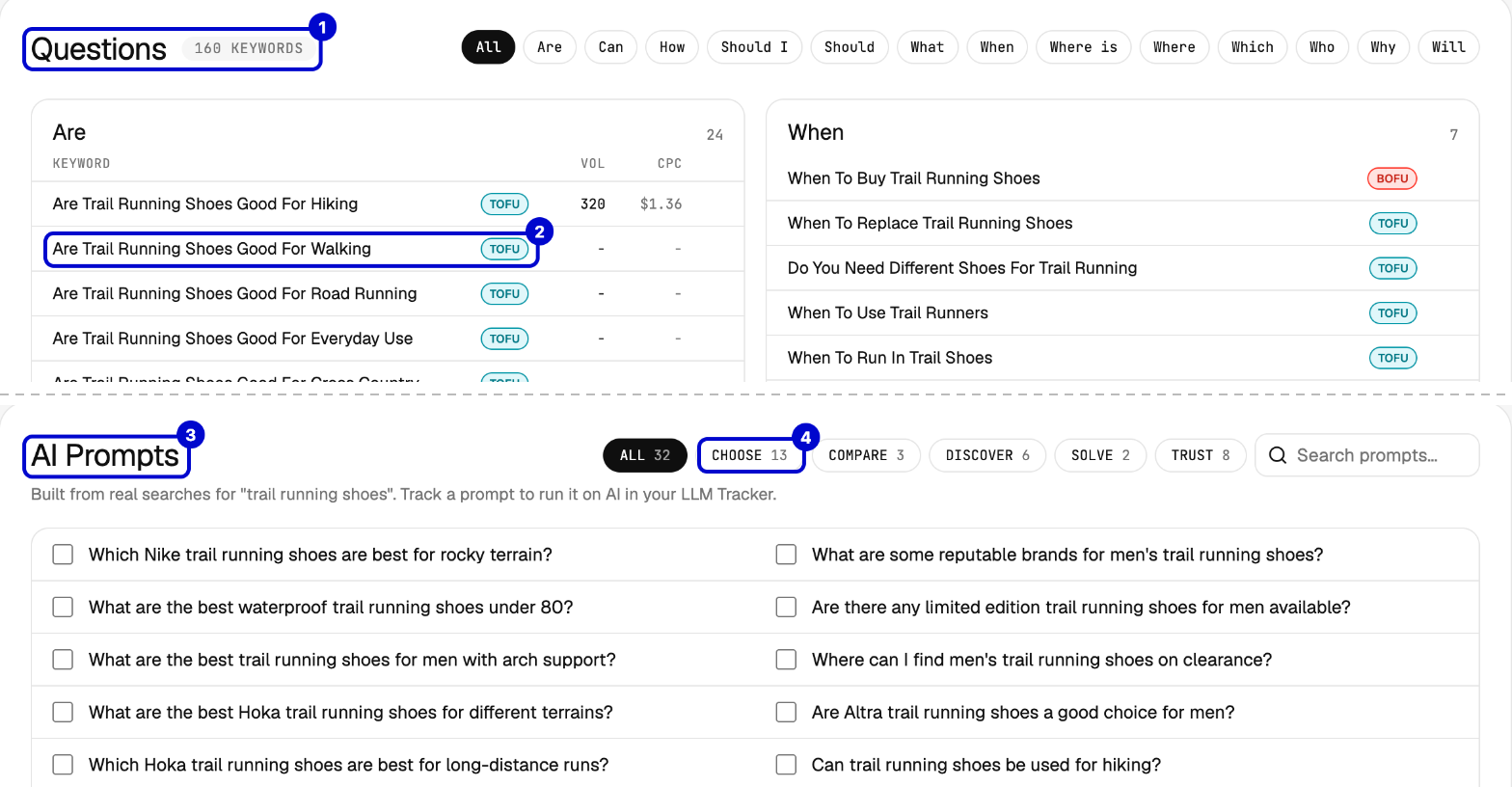
Step 2. Run one keyword search for both jobs. Type your topic, pick your country and language, and search. The classic question groups (Questions, Prepositions, Comparisons, Autocomplete) are your SEO list: each is a search to rank for, and many are the follow-up questions fan-out runs. Further down the same page, the AI Prompts section turns those real searches into full prompts, tagged Choose, Compare, Discover, Solve or Trust.
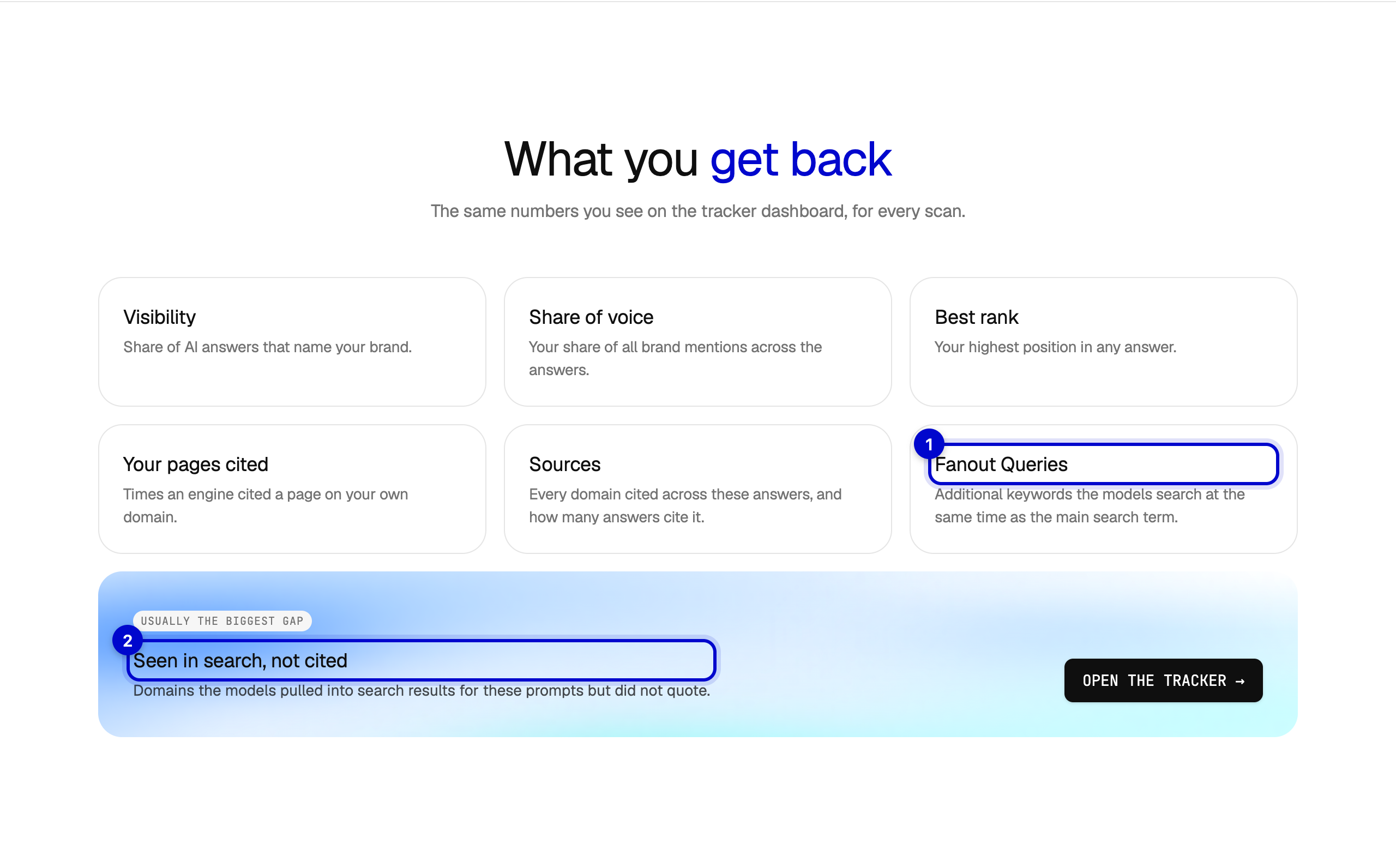
Step 3. Check what AI already says about your domain. Open the LLM Brand Tracker, type your domain and press Run my Radar. The count of recorded ChatGPT and Google AI Overview answers that name your site is free with an account. The results also list the Fanout Queries the models searched and the domains Seen in search, not cited.
Step 4. Check a few prompts live. From the AI Prompts section, click the + on a Choose or Compare prompt and choose Track in AI, or use New Scan in the tracker. A live scan asks the engines you pick at 1 credit per engine, and needs a paid plan.
The same thing in Ask Socrates
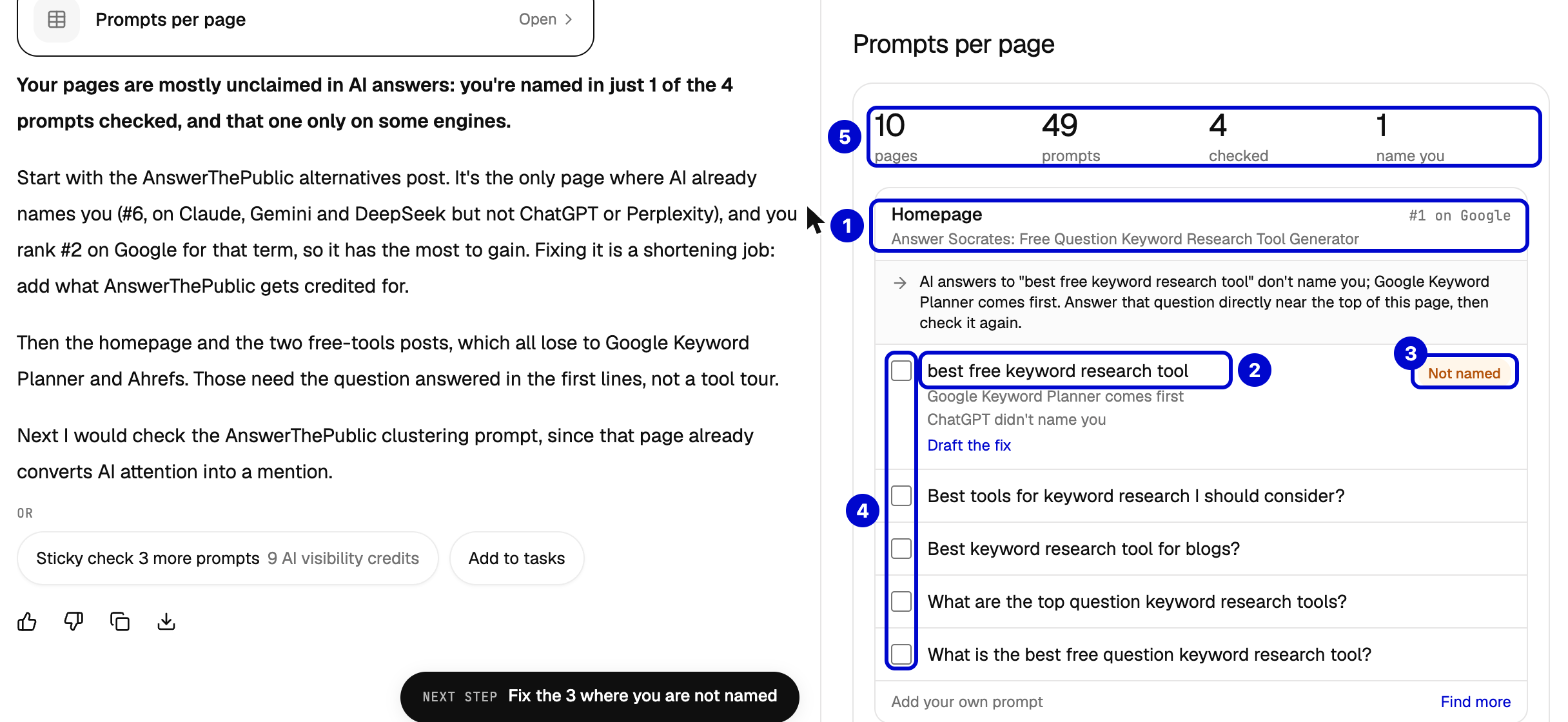
Ask Socrates, our chat, can join the two halves for the pages you already have. Open a project with your website saved and type:
The chat picks your site's most important pages, reads each page's title and headings, finds real searches about what the page offers and writes short prompts people would ask an assistant. For each page it shows whether its prompts were checked, whether the answers named you, who came first, and the searches ChatGPT ran behind those answers. Suggesting the prompts is free. Checking them against the engines costs AI visibility credits, under your spending setting.
Where to go next
| If you want to... | Read |
|---|---|
| Understand how AI answers are put together | What is AI search? ChatGPT, AI Overviews and AI Mode |
| Research the questions people ask AI | AI prompts: the new keywords |
| Build a prompt list for your own business | Finding the prompts your buyers type |
| Check whether AI names your brand | Is AI mentioning your brand? How to check |
| Measure what AI visits are worth | Measuring traffic from AI search |
Sources
- AI features and your website, Google Search Central, 2026
- Top ways to ensure your content performs well in Google's AI experiences on Search, Google Search Central Blog, John Mueller, 2025
- Google users are less likely to click on links when an AI summary appears in the results, Pew Research Center, 2025
- Update: 38% of AI Overview Citations Pull From The Top 10, Ahrefs, 2026
