Turning unlinked brand mentions into links
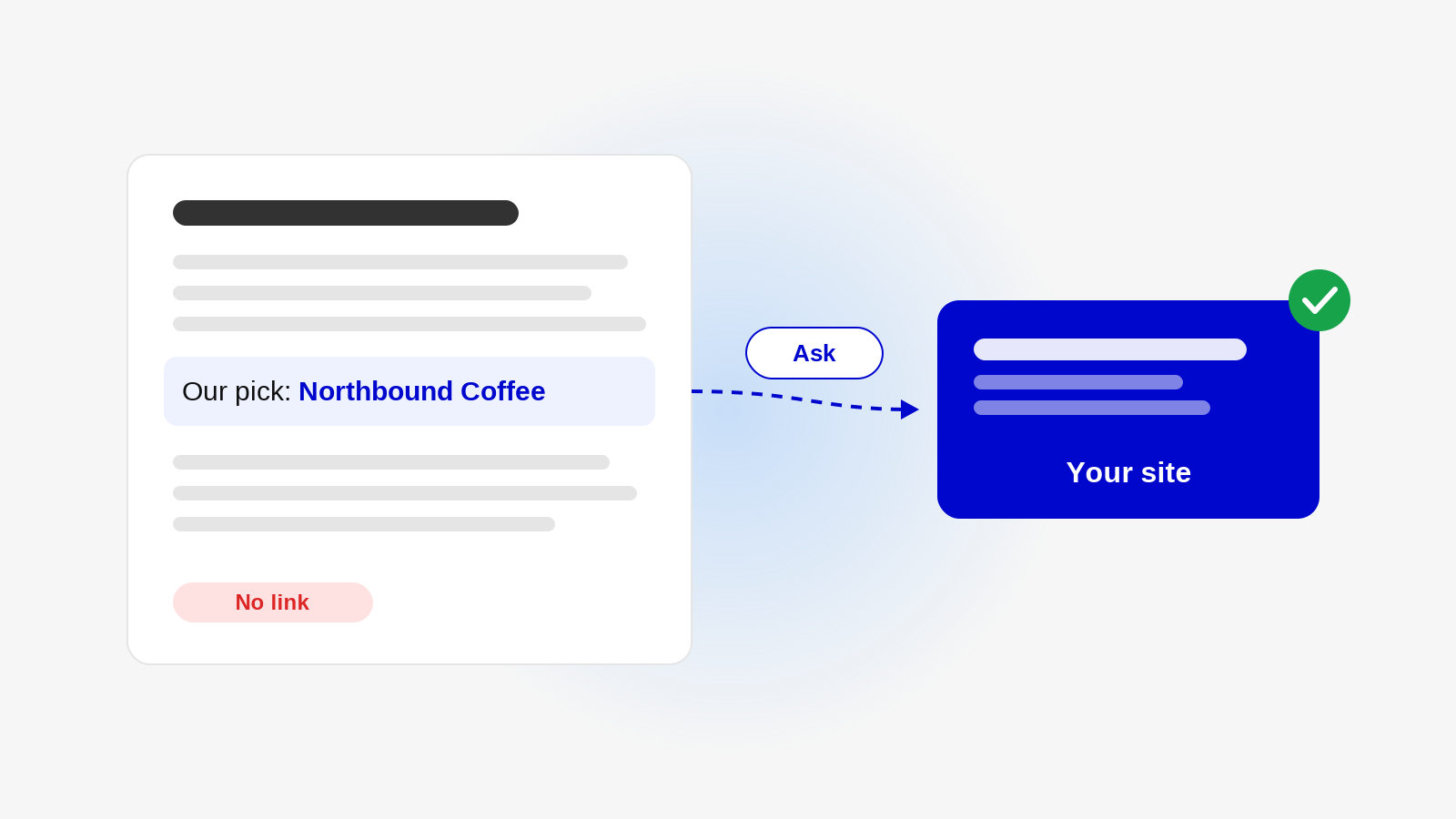
An unlinked mention is a page that names your brand but does not link to you, and asking the writer to add the link is the warmest request in link building. They already chose to write about you, so the ask is one small edit.
Key takeaways
- Search your brand in quotes with -site:yourdomain.com, plus your other names and your domain as plain text, then open each page to see if it links.
- Ask about praise, best-of lists, interviews and news; skip complaints, forums, scraped copies and any site that wants payment for the link.
- Ask for one specific page with your name as the anchor: Google's spam policies count trading goods or services for links as link spam.
- The Answer Socrates Mentions tab searches your names, skips social sites and competitors, and reads up to 40 pages live for 1 backlink finder credit.
- In Ask Socrates, asking for pages that mention you without linking runs the same tactic and picks the best rows; the emails are sent from Link Building.
An unlinked mention is a link half-earned
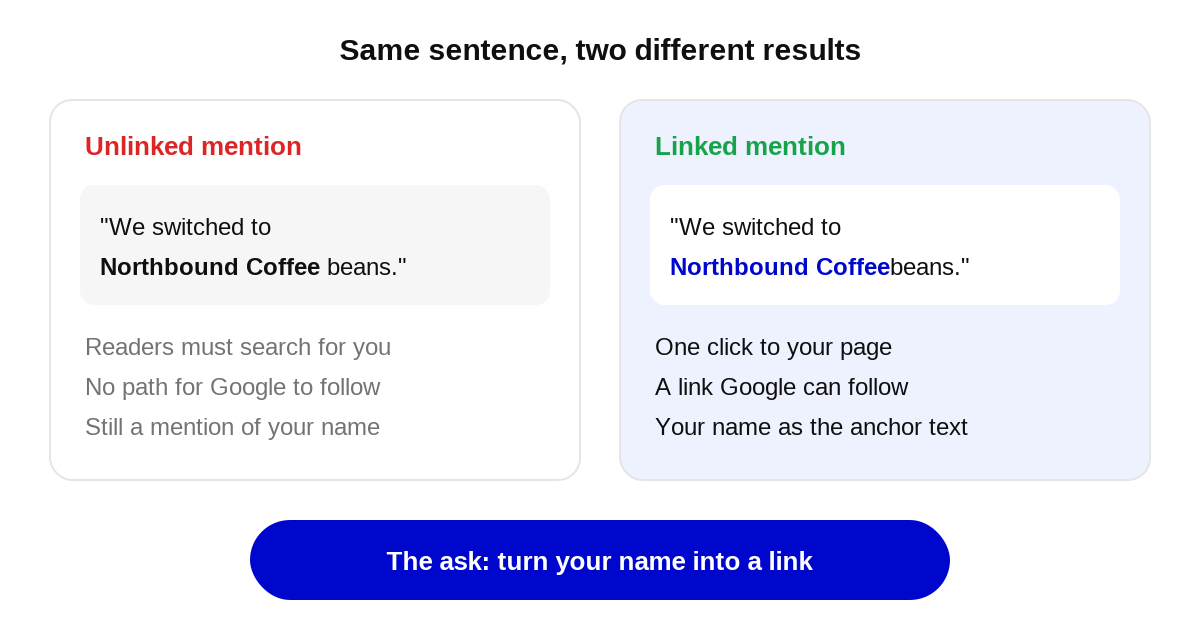
An unlinked mention is a page that names your brand, your product or your domain but does not link to you. A food blog writes "our favourite beans this year came from Northbound Coffee" and stops there. The writer chose you. They just did not add the link.
That gap matters for two reasons. Readers who want to find you have to go and search for you, and some never do. And Google uses links "as a signal when determining the relevancy of pages and to find new pages" [1], so a name in plain text gives it less to go on than a link does.
This is why unlinked mentions sit near the top of any link plan. In the effort and odds table in Finding link opportunities, they come straight after fixing links you already lost. Whether a mention with no link still helps you in AI answers is a separate question, covered in Links vs mentions in the age of AI. This lesson is about getting the link.
Where unlinked mentions come from
Most brands that sell anything have more of these than they think. They come from places like:
- Reviews and recommendations. A blogger tried your product and liked it.
- "Best of" lists and gift guides. Your name is one of ten picks, and only some of the picks are linked.
- Interviews and podcasts. The show notes name you or your founder, with no link.
- News and local press. A story about a new shop opening, a hire or an award.
- Event and partner pages. A sponsor list, a stockist list, a supplier page.
- Your domain as text. People write "northboundcoffee.com" without making it a link. That is often the easiest ask of all.
- Other names. An old brand name, a product name, the founder's name, or a common misspelling.
A list that names you without a link deserves a flag of its own. The writer has already put you in front of buyers comparing options, so the link turns those readers into visits.
Finding them by hand with Google
You can find most mentions with free tools before you touch any app.
1. Search your exact name, minus your own site. Put the name in quotes and exclude your domain:
"Northbound Coffee" -site:northboundcoffee.com
Then add exclusions for the places that fill results but are rarely worth an email, such as -site:facebook.com -site:instagram.com -site:youtube.com. Run the same search for each other name and for the domain itself ("northboundcoffee.com").
2. Open each result and check for a link. Use find-in-page for your name, then see whether it is a link and where it points. If it already links to you, move on. That includes links marked rel="nofollow" or rel="sponsored": Google says links with these attributes "will generally not be followed" [3], but they still send readers to you, and asking a writer to change one is rarely worth an email.
3. Set up an alert for new ones. Google Alerts emails you "when new results for a topic show up in Google Search" [2]. Create one for each brand name in quotes. Under "Show options" you can set how often it emails you, the sources, the language, the region and how many results you get [2]. New mentions are the best ones to ask about: the writer remembers the piece and may still be editing it.
Which mentions are worth an email
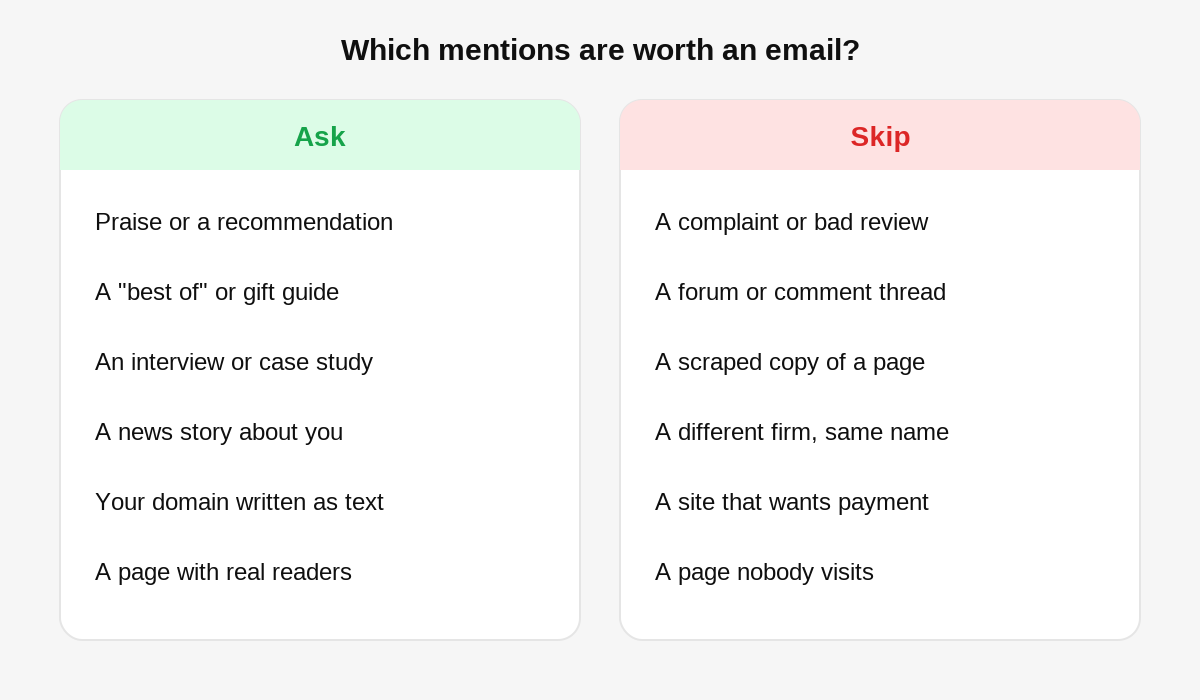
A list of mentions is not a list of asks. Some pages are worth a careful email. Some are worth nothing, and a few could make things worse.
| The mention | Ask? | What to ask for |
|---|---|---|
| A blog post that recommends you | Yes | A link on your name to the page they described |
| A gift guide or "best X" list | Yes | A link to the product they picked, not the homepage |
| An interview or podcast page | Yes | A link in the bio or show notes, usually the homepage |
| A news story | Usually | A link to the page the story is about; some newsrooms have a policy against it |
| Your domain as plain text | Yes | Making the text clickable; this is the easiest yes |
| A complaint or bad review | No | Fix the problem instead |
| A forum thread or comments | No | Join the conversation only if you can help |
| A site asking for payment | No | Walk away |
Pick the target page with care. If a gift guide names your cold brew kit, the right link is the cold brew kit page. A link that lands where the reader expects is an easier yes for the writer.
How to do it in Answer Socrates
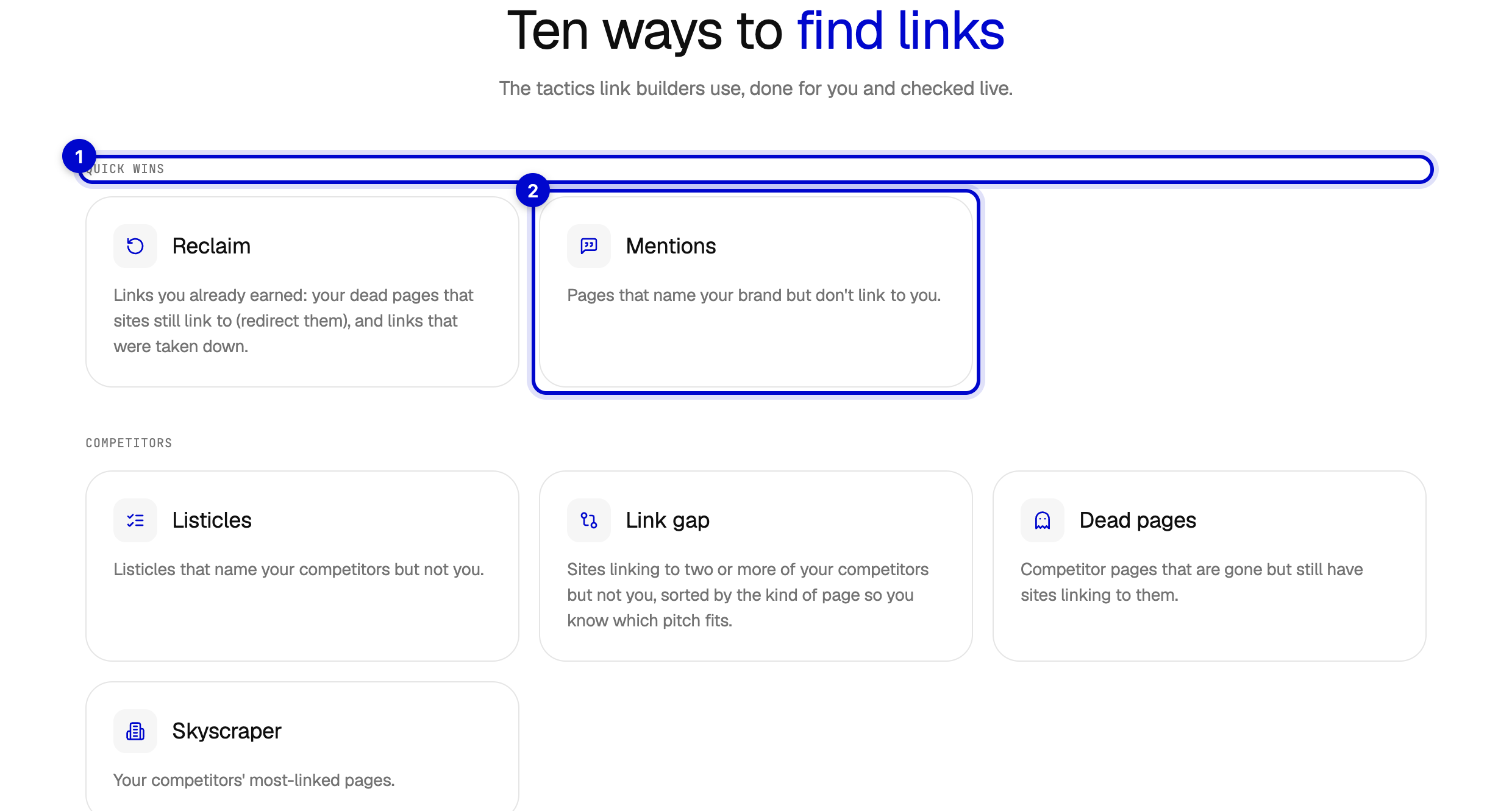
The Link Building section of Answer Socrates has a Mentions tab that does the searching and checking above for you. It sits in the "Quick wins" group, next to Reclaim.
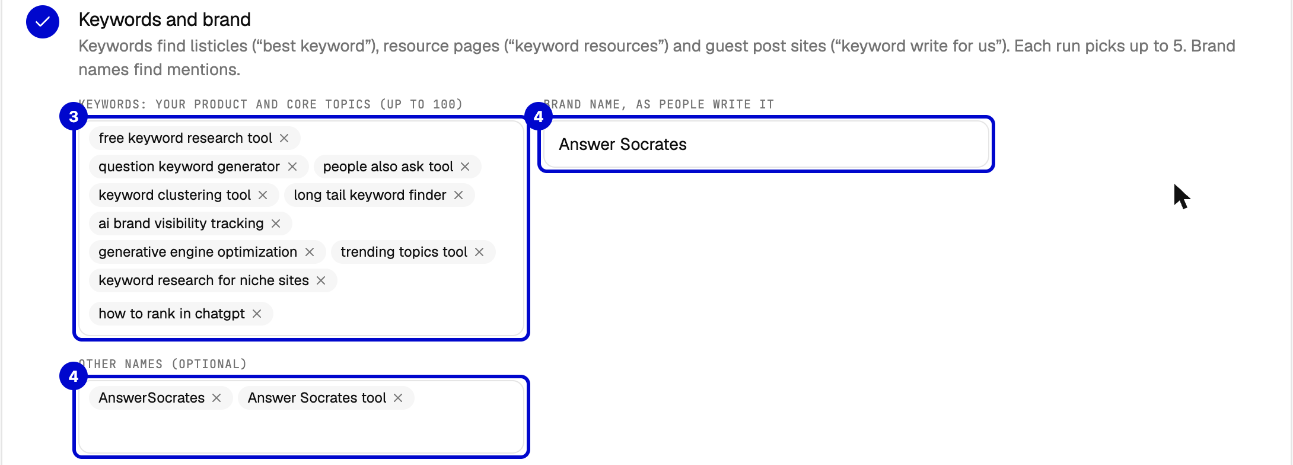
Step 1: Give it every name people use. Open Link Building from the app sidebar and fill in the project setup. The Mentions tab searches for your brand name "as people write it" and the other names you add (up to three: a product name, the founder, a misspelling). It also searches your domain as plain text, so you do not need to add that yourself.
Step 2: Run Mentions. Press Find mentions on the Mentions tab. One run uses one backlink finder credit, however many names you saved, and takes about a minute. Link Building is included in paid plans: Lite has 15 backlink finder credits a month, Seneca 40, Aurelius 150 and Senate 600. If a run fails, the credit comes back.
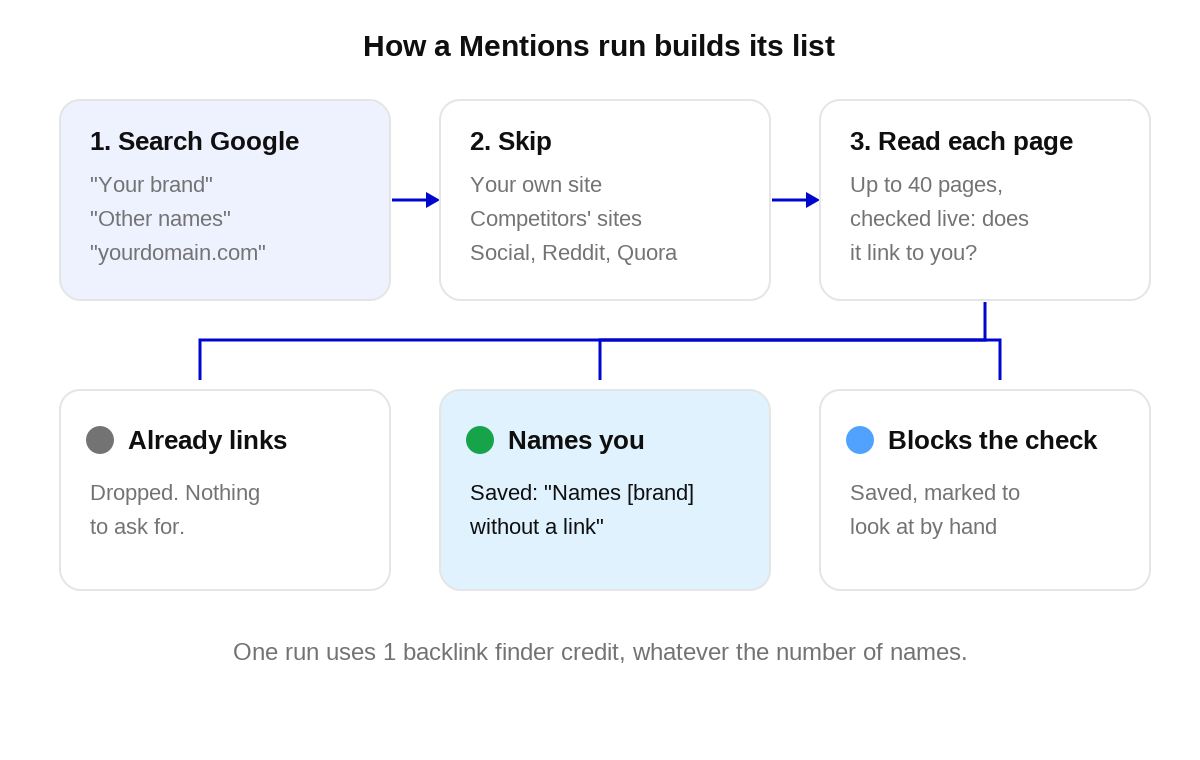
Here is what happens in that minute. It searches Google for each name in quotes, leaving out your own site and the big social sites. It drops results from your competitors and from sites that are never prospects (such as Facebook, Reddit, Quora, Medium, Wikipedia, Amazon, Trustpilot, G2 and Capterra). Then it reads up to 40 of the remaining pages live. A page that links to your domain anywhere is dropped. A page that names you in its text without a link is saved. A page that will not let the check read it is saved too. In the Mentions table its row looks like any other; in the chat's Link lists panel it reads "this site blocks our check. Look at it yourself before asking." So open each row before you count it.
Step 3: Read the list. The tab shows how many pages it checked and how many mention you without a link. Each row says why it is there.
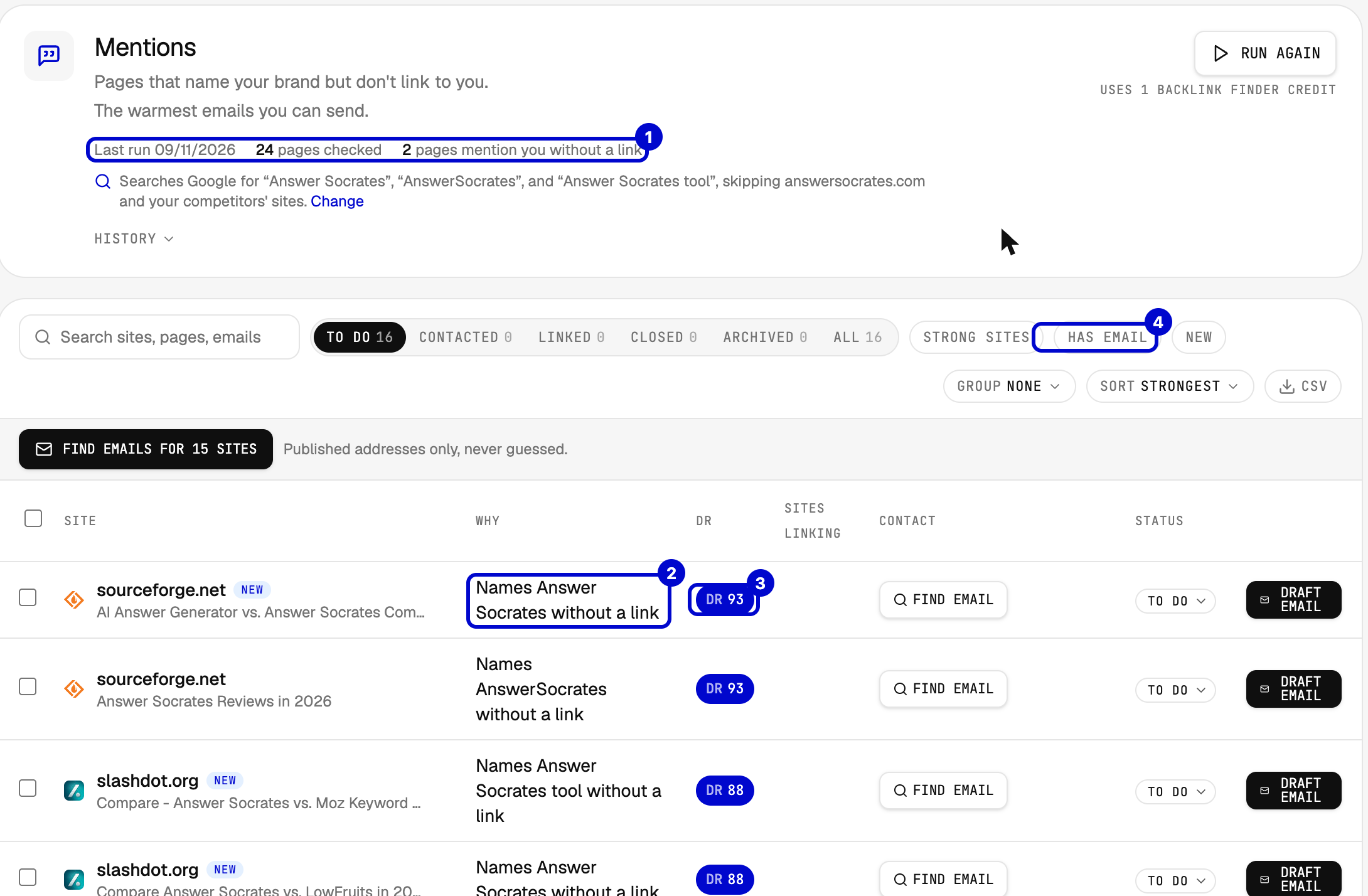
Best-of lists that name you without linking also turn up in the Listicles tab, marked "Already names you on this list, without a link." Treat those as mentions too.
Step 4: Open a row and send the ask. The row panel finds published contact emails (the page, its author page and the site's contact and about pages) and shows a draft email for a mention. Edit it, copy it or open it in Gmail. Nothing is sent for you.
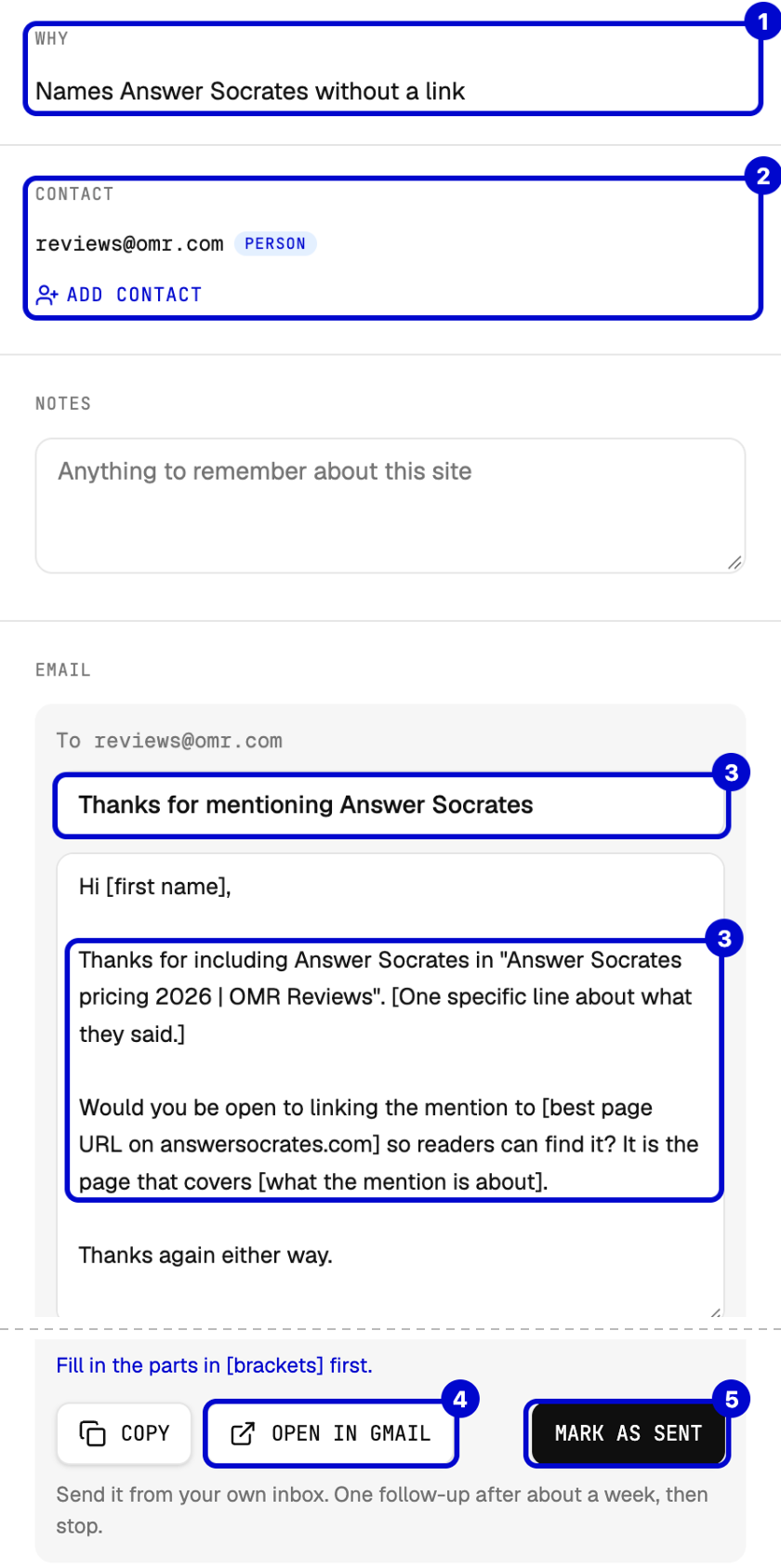
Step 5: Track it. Mark the row Contacted when you send, and Linked when the link goes live. A team that tracks status never emails the same writer twice.
Writing the ask
The draft in the app follows a shape that works for mentions: thank them, show you read the piece, ask for one specific link, and make it easy to say no. Its key line is "Would you be open to linking the mention to [best page URL on yourdomain.com] so readers can find it?"
Four things make that email work:
- Be specific. Quote the line where they named you. It proves you read it, and it tells them exactly where the link goes.
- Give one URL. The page the mention is about. Do not add a list of other pages you would like linked.
- Leave the anchor text alone. Your name is the natural anchor. Google's link guidance asks for anchor text that is "descriptive, reasonably concise, and relevant" [1], and your brand name already is. Asking them to swap it for a keyword phrase looks like what Google's spam policies call "optimized anchor text" in articles [4].
- Never pay or trade for it. Google's spam policies list "exchanging goods or services for links" and sending someone a product "in exchange for them writing about it and including a link" as link spam [4].
Send one follow-up after about a week if you hear nothing, then stop. The longer playbook for subject lines and follow-ups is in Writing outreach emails that get replies.
A made-up example: a coffee roaster's mentions
A made-up example: Northbound Coffee, a small roaster, sets up its Link Building project with the brand name "Northbound Coffee", plus "Northbound Roasters" (its old name) and its founder's name as other names.
The Mentions run checks 40 pages. A few already link to the shop and drop out. Of the rest, five stand out:
- A local food blog's winter gift guide names the cold brew kit with no link. Ask, pointing at the cold brew kit page.
- A city news site covered the new tasting room. Ask once, politely, for a link to the tasting room page, and accept a no.
- A small-business podcast interviewed the founder. Ask for a link in the show notes, to the homepage.
- A review page under the old name complains about a late delivery. Skip. Reply to the customer instead.
- A coffee forum thread compares beans. Skip. It was never a link prospect.
Three emails, one each. Two weeks later the gift guide and the podcast have added links, and the news site has not replied. Two links from three short emails is a made-up week, not a rate to expect, but it shows why this tactic comes early.
The same thing in Ask Socrates
Ask Socrates, the chat in Answer Socrates, can run the Mentions tactic for the chat's project and save the results to the same Link Building lists. Type:
Find web pages that mention Northbound Coffee without linking to us, for link building
An ask about brand mentions for links runs the Mentions tactic directly. A card shows the cost (one link scan, the chat's name for a backlink finder credit). Depending on your spending setting, it either waits for you to approve ("Asks before spending") or runs on its own if you allowed small spends. When the run finishes, the chat picks the best three to five rows and says why. It is told to leave out complaints, negative reviews, forums and scraped copies, and to say when a row has not been confirmed because the site blocked the check. If the run checked few or no pages, it says the search could not look, rather than "nobody mentions you."
It can then look for published emails on those rows, which is free, and add the best ones to your task board as outreach cards.
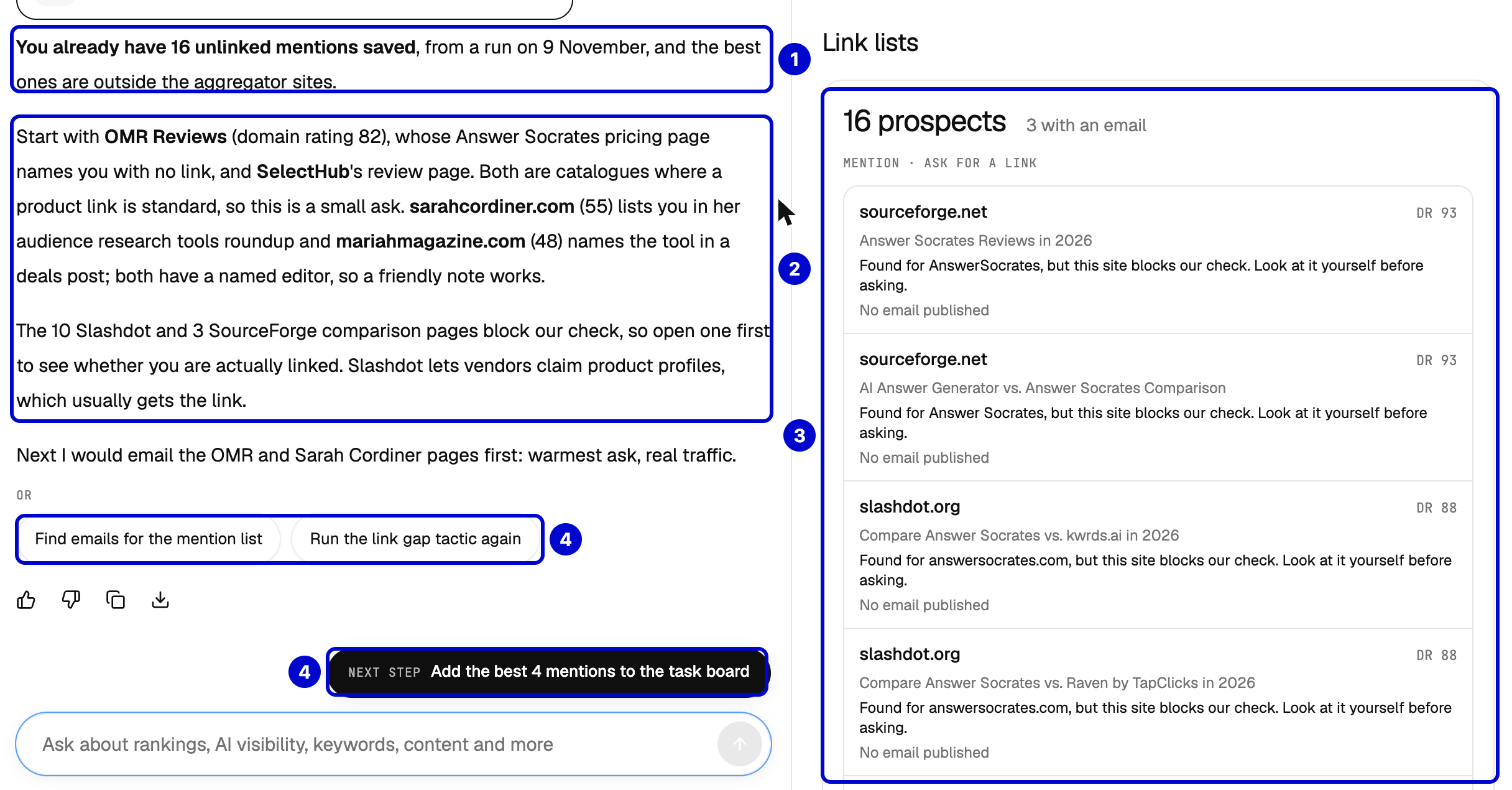
The chat does not write or send the emails. Outreach happens in Link Building, where each row has its draft and its status. For more on what the chat can and cannot do with links, see Link building with Ask Socrates.
Where to go next
| If you want to... | Read |
|---|---|
| See every link tactic and which to try first | Finding link opportunities |
| Know whether a mention with no link still counts | Links vs mentions in the age of AI |
| Write the email so it gets a reply | Writing outreach emails that get replies |
| Replace dead pages people still link to | Broken link building |
| Run the whole link plan from one chat | Link building with Ask Socrates |
| Earn new mentions from journalists | Digital PR with data studies |
Sources
- Link best practices for Google, Google Search Central, 2025
- Create an alert, Google Search Help, 2025
- Qualify your outbound links to Google, Google Search Central, 2025
- Spam policies for Google web search (Link spam), Google Search Central, 2025
